
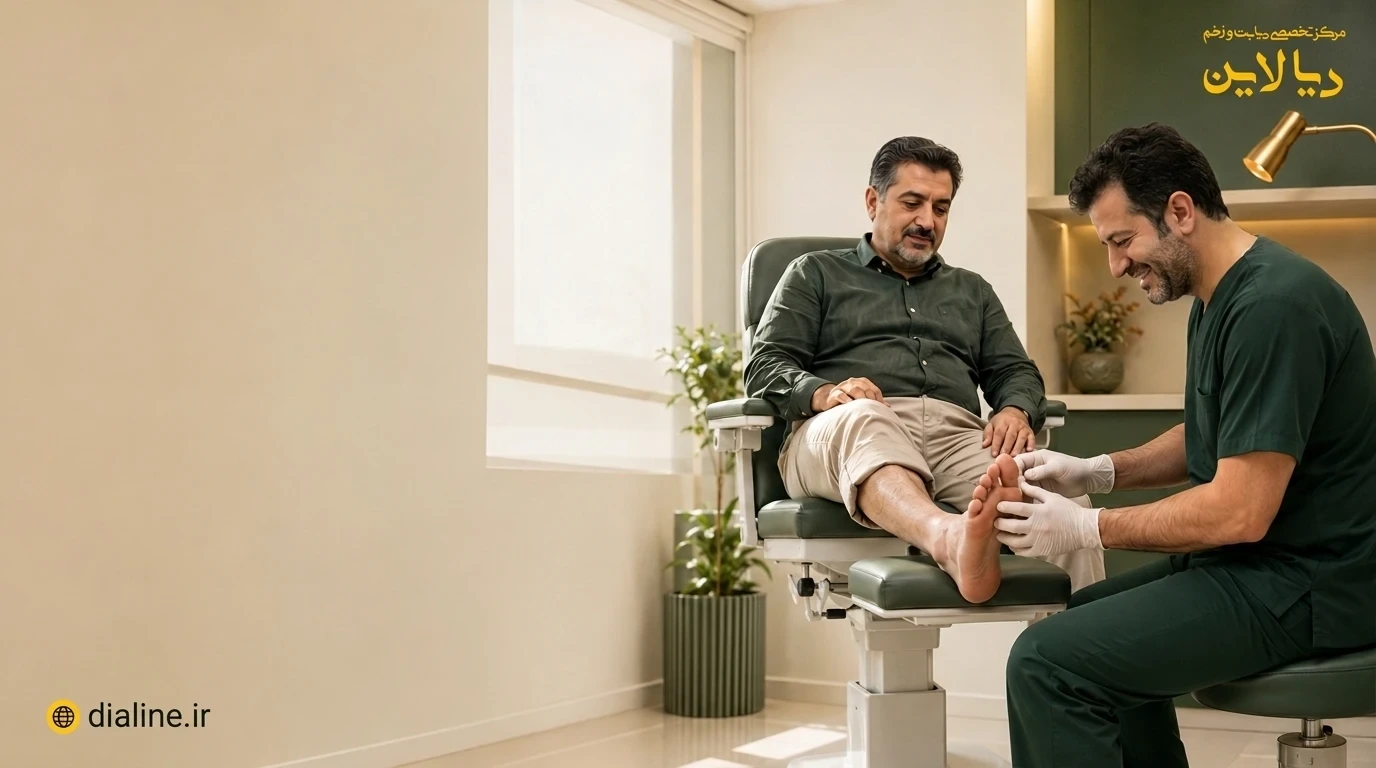
If you or someone close to you has a diabetic foot ulcer, one question probably overshadows all the others: will this lead to amputation? The short, honest answer is no — a diabetic foot ulcer does not in itself mean amputation. When it is treated early and by a specialist team, a diabetic foot ulcer heals without amputation in most cases.
What decides the outcome is not the ulcer itself; it is time. Delay, superficial treatment, and waiting for a wound to close on its own are what turn a simple ulcer into deep infection and tissue death. This article explains when amputation actually enters the conversation, which signs are genuine warnings, and what really prevents it.
The short answer: no, but timing decides
Amputation is not where diabetic wound care begins; it is the last option. Physicians consider it when tissue has been irreversibly lost, or when an infection threatens the patient's life and cannot be controlled any other way.
Most ulcers that reach a specialist centre are still at a stage where treatment has room to work. The difficulty is that many patients stay at home for months with a small wound and come in only once it smells or has turned black.
So the accurate sentence is this: a diabetic foot ulcer is dangerous, but it is treatable — and every week lost makes treatment harder.
Why does a diabetic foot ulcer become dangerous?
Three factors combine to keep a wound open for months that would have closed in days in someone without diabetes.
1. Neuropathy: an ulcer that does not hurt
Years of high blood glucose damage the nerves of the foot. The result is that the patient cannot feel pressure from a shoe, a stone in a sock, or even a cut.
Pain is the body's alarm. Once it is switched off, a wound forms and grows without anyone noticing — which is why so many patients say they have no idea when it started.
If you have numbness, burning or tingling in your feet, our article on diabetic neuropathy and its treatment is a good place to start.
2. Poor circulation: why the wound does not heal
Healing requires blood. Blood delivers oxygen, immune cells and antibiotics to the wound. In diabetes the small and large vessels of the foot narrow and that delivery is impaired — a state called ischaemia (reduced blood supply).
A wound that does not receive enough blood heals slowly no matter how good the dressing is. Possible signs of reduced circulation include cold feet, pale or bluish skin, calf pain when walking, and loss of hair over the toes.
Assessing the blood supply to a foot is a specialist examination and must be done by a physician — it cannot be judged from the appearance of the wound or from a distance.
3. Infection reaching the bone
An open wound on a foot with poor circulation and weakened immunity is an entry point for bacteria. Infection begins superficially, but it can reach deeper tissue and eventually the bone (osteomyelitis).
Bone infection is the stage that makes decisions serious, because treatment is long and sometimes makes removing the affected part unavoidable. Recognising and treating infection early is the single most important thing that prevents reaching that stage.
Read more: diabetic foot infection and its warning signs.
Warning signs: when to seek care
Signs that need immediate attention
If you see any of the following, do not wait for your next appointment — see a physician or go to an emergency department the same day:
- Fever, chills, or feeling generally unwell alongside the wound
- A foul smell and purulent discharge
- A toe or an area of skin turning black
- Redness and swelling that is spreading quickly
- Sudden severe pain in a foot that was previously numb
- Unusual, uncontrollable rises in blood glucose
Signs that are usually underestimated
Many patients take only large wounds seriously. These also need to be seen by a specialist:
- A small wound or crack that has not improved after two weeks
- A callus or corn that is dark or moist underneath
- A blister or graze from new shoes
- An ingrown toenail or nail fungus in a person with diabetes
- Slight discharge that stains a sock
How is an amputation decision made?
This decision is never made from a glance or a photograph. The physician weighs the size and depth of the wound, how much tissue is alive or dead, the severity and spread of infection, the blood supply, and the patient's general health together.
The goal is always to preserve as much of the foot as possible: if removing tissue is unavoidable, as little as possible is removed so that the patient does not lose the ability to walk.
Removing a toe is not the same as losing a foot
These two are not the same and should not be confused when you talk to your physician. Removing a single toe that has already died is a limited procedure whose purpose is to stop infection and save the rest of the foot; many patients return to walking normally afterwards with appropriate footwear.
Amputation at a higher level is an entirely different and far rarer decision, raised only when there is no other way to control the danger.
Why a specialist second opinion is worth having
If you have been told that your foot or toe must be removed, seeking a second opinion from a specialist wound centre is your right and is not unusual. It does not mean questioning the previous physician.
Specialist wound centres work with these wounds daily and have access to methods that are not available everywhere. Sometimes that second assessment changes the treatment path — and sometimes it confirms the original decision, which is reassuring in its own way.
How Dialine treats diabetic foot ulcers
At Dialine's specialist diabetic wound care, the treatment plan is set individually for each wound. The main methods we use:
Specialist debridement and modern dressings
Healing does not begin while dead tissue remains on the wound. Debridement is the methodical removal of that tissue by a trained practitioner, followed by a dressing chosen to match that particular wound.
Read more: modern wound dressings.
Negative pressure wound therapy (NPWT)
In negative pressure wound therapy, a device applies controlled suction that removes excess exudate and helps the wound close. It is used for deep, heavily exuding wounds, and the decision to use it rests with the physician.
A real case: wound healing with NPWT.
Ozone therapy, larval therapy and PRP
In selected cases, and at the treating team's discretion, ozone therapy, larval therapy (the controlled use of sterile larvae to clear dead tissue) or PRP are used as adjuncts alongside the main treatment. None of them replaces debridement, infection control or pressure relief.
Taking pressure off the wound (offloading)
A wound crushed under body weight every day never gets the chance to heal. Offloading — with therapeutic footwear, custom insoles or walking aids — is one of the most decisive parts of treatment, and unfortunately the part most often ignored.
Read more: therapeutic footwear and offloading.
Blood glucose control and treatment at home
No topical treatment produces a lasting result without glucose control, which is why wound care and blood glucose control in wound healing proceed together at Dialine. For patients who find travelling difficult, wound care at home is also available.
How do you keep it from reaching this stage?
Prevention in the diabetic foot comes down to a few simple daily habits that together make a large difference:
- Look at the soles of your feet and between your toes every day; use a mirror or ask a family member if you need to.
- Wash your feet daily, dry them thoroughly — especially between the toes — and keep dry skin moisturised.
- Never walk barefoot, even indoors.
- Check the inside of your shoes with your hand before putting them on.
- Do not trim calluses or corns yourself, and do not use caustic topical remedies.
- Cut nails straight across and not too short, never down at the corners.
- Keep your blood glucose within the range your physician has set, and stop smoking.
- Take every new wound seriously from the first day.
Frequently asked questions
Does every diabetic foot ulcer end in amputation?
No. Amputation is the last option and arises only in particular circumstances. A wound treated early by a specialist team heals without amputation in most cases.
Does a toe turning black always mean amputation?
Blackening is a serious sign and must be assessed immediately, but on its own it does not mean amputation. The extent of affected tissue, the blood supply and the presence of infection all have to be evaluated by a physician.
If a physician has said the foot must be amputated, is a second opinion useful?
Yes. Seeking a second opinion from a specialist wound centre is a normal step. It may change the treatment path or confirm the original decision; either way you decide with full information.
Can a wound that has reached the bone still be treated?
Bone infection is a serious situation, but it does not always mean the end of treatment. The plan depends on the results of specialist assessment and must be determined by a physician.
When should someone go to an emergency department immediately?
Fever and chills, a foul smell or purulent discharge, blackening of the skin, and redness and swelling that spread quickly — each of these means seeking care the same day.
After losing a toe, is the other foot also at risk?
A history of ulceration or toe amputation places a person in a higher-risk group, so daily care and regular examination of both feet matter more from that point on.
Worried about your own foot, or someone else's?
Dialine is a specialist centre in Tehran (Pasdaran) working across four areas: diabetes, chronic wounds, scars and neuropathy. If you are living in Tehran or travelling for treatment, you can reach us for a free consultation by phone, WhatsApp or Instagram direct message to discuss your wound before you come in: contact Dialine.
The sooner a wound is seen, the more treatment options remain on the table.
This article is not a substitute for an in-person medical consultation. Diagnosing and treating a diabetic foot ulcer requires a physical examination and cannot be done remotely.
