PRP injection therapy
Using the patients own platelet-rich plasma to support tissue repair, for selected resistant wounds, scars, and joint or tendon injuries.
About this treatment
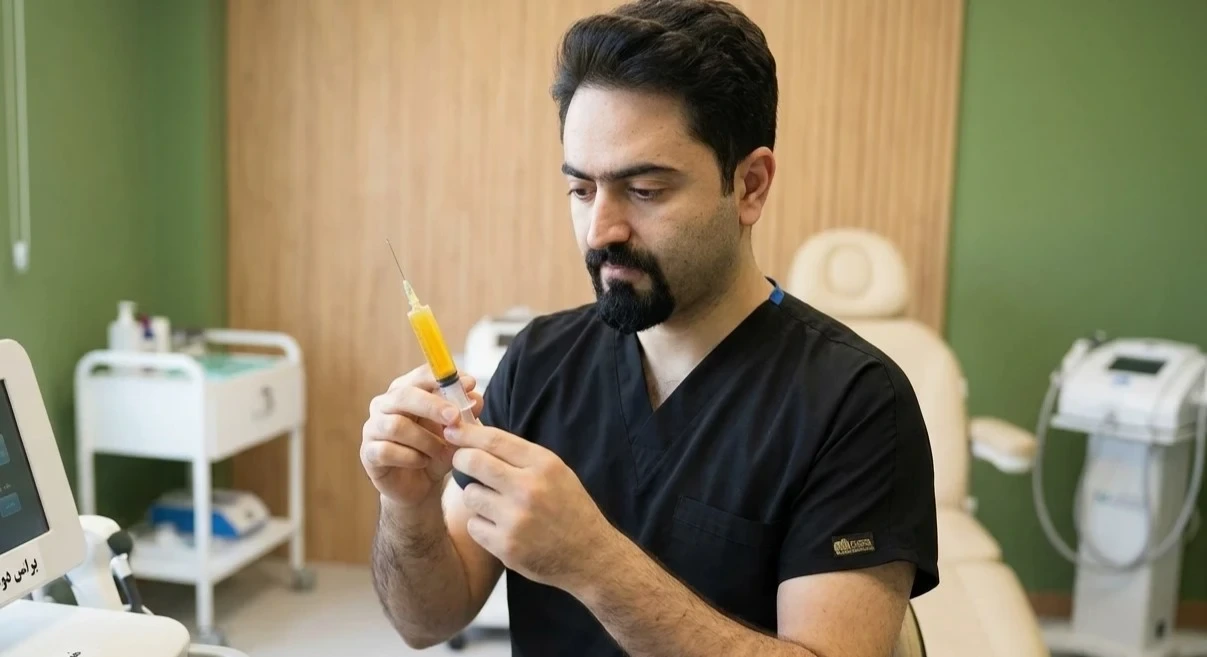
PRP (Platelet-Rich Plasma) is plasma concentrated with platelets, prepared from a sample of the patients own blood through centrifugation and separation. Platelets carry the bodys natural growth factors, which play a role in stimulating tissue repair and reducing inflammation. At Dialine, PRP is used as a supportive method alongside primary treatment, not as a replacement for it.
After confirming the method is suitable for your condition, a blood sample is taken, the platelet-rich plasma is separated, and it is injected at the target site, whether a wound, a scar, or an injured joint or tendon. The number of sessions and the interval between them depend on the target tissue and how it responds.
PRP is most often used as part of the treatment protocol for resistant wounds, scars, or certain tendon and joint injuries. Because the plasma comes from the patients own body, the risk of an allergic reaction to a foreign substance is low; suitability for each patient is still confirmed at the initial assessment.
Your treatment path at Dialine
- 1Blood sample collection from the patient
- 2Separation of platelet-rich plasma by centrifugation
- 3Local injection at the target site
- 4Combined with the primary wound or scar protocol
- 5Follow-up review of the treatment response
Frequently asked questions
What is PRP made from?
From a sample of your own blood. After centrifugation, the platelet-rich plasma is separated and injected at the target site.
Does PRP replace the primary treatment for a wound or scar?
No, PRP is typically used to support the primary treatment protocol, not to replace it.
How many sessions are needed?
The number of sessions depends on the target tissue and how it responds, and is determined after assessment.
Is there an allergy risk?
Because it comes from your own blood, the risk of an allergic reaction to foreign material is low, but suitability is still confirmed for each person.
What aftercare is needed?
Aftercare guidance depends on the target site (wound, scar, or joint) and is explained to you at the session.
Other services