Burn Wound Treatment
Dressing and follow-up of burn wounds through to full closure, and scar care once the wound has healed.
About this treatment
One point first, because it cannot be skipped: not every burn belongs in an outpatient clinic. Extensive burns, deep burns, burns to the face, hands, feet, joints or genitals, circumferential burns around a limb, electrical and chemical burns, and any burn involving smoke inhalation are emergencies — they need an emergency department or burns unit immediately, not an outpatient appointment. Burns in children should also be seen by a physician without delay.
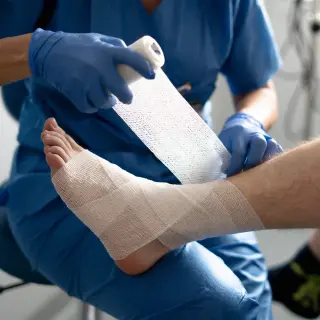
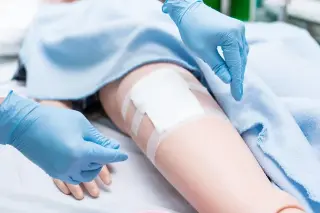
What Dialine provides is burn wound care: assessment of the depth and extent of the burn, cleansing of the wound, removal of non-viable tissue where appropriate, and a dressing that keeps the wound environment moist and reduces the risk of infection. A burn changes over its first days, and its true depth is sometimes not clear until several days in — which is why regular follow-up is an inseparable part of the treatment rather than an optional visit.
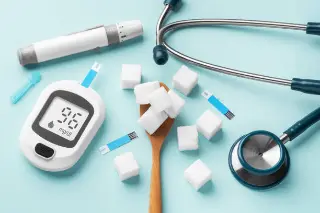
A second group of patients are those whose burn still has not closed after weeks. Such a wound is no longer treated as a fresh burn; it is treated as a chronic wound, and we look for the cause: circulation, infection, uncontrolled blood sugar or inadequate nutrition. In diabetic patients this matters twice over, because reduced sensation means a burn is noticed late and goes deeper.
When the wound closes, the work is not finished. A burn scar can become raised, darkened or tight, and over a joint it can restrict movement. Early care — silicone sheets and gel, and serious sun protection — changes the final result. Let us be honest here: a scar can be improved, softened and faded, but no method erases a burn scar completely.
Your treatment path at Dialine
- 1Assessment of burn degree and extent
- 2Wound cleansing and irrigation
- 3Debridement of non-viable tissue where appropriate
- 4Modern dressings matched to exudate and burn depth
- 5Monitoring for signs of infection and timely referral
- 6Scar care: silicone gel and sheets, and sun protection
- 7Home-care teaching and warning signs
Frequently asked questions
Which burns are emergencies and should not go to an outpatient clinic?
Extensive or deep burns, burns to the face, hands, feet, joints or genitals, circumferential burns around a limb, electrical or chemical burns, burns with smoke inhalation, and burns in children and older adults. These need an emergency department or burns unit immediately.
What should be done in the first minutes after a burn?
Hold the area under cool running water for about twenty minutes — not iced water. Remove rings, watches and tight clothing before the area swells, and cover the wound with a clean cloth. Never apply toothpaste, oil, potato, ash or anything similar, and do not burst blisters yourself.
Should a burn blister be drained?
That is a clinical decision and depends on the blister's size, site and condition; do not do it at home. Bursting a blister with non-sterile implements is a direct route to infection.
How are burns different in people with diabetes?
In two important ways. First, reduced sensation — particularly in the feet — means the burn is noticed later and the injury goes deeper; hot bath water and heaters cause burns exactly this way. Second, healing is slower in diabetes and the infection risk is higher. A burn in a diabetic patient is treated as high-risk from the outset.
Will the burn scar go away?
Not completely. A burn scar can be made softer, flatter and lighter, and tightening and restricted movement can be prevented, but promising that it will disappear would not be realistic. Starting care early and protecting the area from the sun consistently have the greatest effect on the final result.
Other services