Wound Care at Home
Specialist wound assessment and dressing in the patient's own home, for people for whom travelling to the clinic is difficult or risky.
About this treatment
Some wounds belong to patients who cannot easily be moved: someone confined to bed, an older patient for whom every transfer is painful and risky, or a person still recovering from surgery. The wound does not wait, though — gaps in dressing and assessment are exactly what turn a manageable wound into a stubborn one. Home care exists for this reason: the treatment travels instead of the patient.
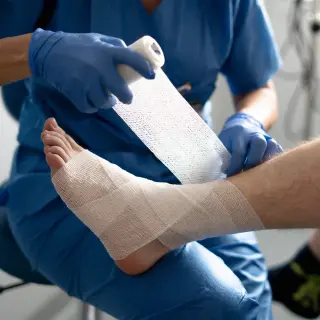
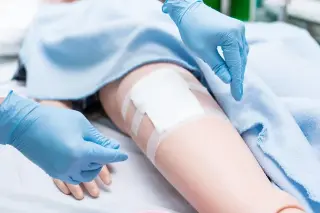
Every visit begins with the wound itself — size, depth, tissue condition, exudate and signs of infection — and alongside it the patient's wider situation: nutrition, blood sugar, positioning in bed and the points under pressure. The dressing is chosen on that basis, and non-viable tissue is debrided where appropriate. If the wound needs a physician's assessment, a physician attends at the bedside; treatment decisions are not made remotely, without seeing the wound.
The protocol is the clinic's protocol, not a simplified version of it. Progress is documented at each visit with photographs and measurements, so that improvement — or the absence of it — stays measurable and the plan can change in time. Each visit ends with teaching: daily care and the warning signs of infection, for the family or carer, because for most hours of the week the wound is in their hands.
Not everything can be done at home, and we say so from the outset: imaging, specialist vascular assessment, extensive debridement and anything requiring hospital conditions belong in the clinic or hospital. Where the assessment shows the wound needs one of those, the visit ends in a referral rather than another dressing. To arrange a home visit, contact the clinic so the patient's condition and the feasibility of a visit can be reviewed.
Your treatment path at Dialine
- 1On-site assessment of the wound and the patient's general condition
- 2Debridement of non-viable tissue where appropriate
- 3Modern dressings matched to exudate and wound depth
- 4Monitoring for signs of infection and timely referral
- 5Offloading and correction of positioning in bed
- 6Teaching dressing changes and daily care to the carer
Frequently asked questions
When is wound care at home the right choice?
When the wound needs regular care and dressing but moving the patient is difficult, painful or risky. If the wound needs imaging, specialist vascular assessment, extensive debridement or admission, a home visit does not replace the clinic — that visit ends in a referral.
Does a physician also come to the home?
Yes. Where the wound requires a physician's assessment, a physician attends at the bedside. Decisions about continuing or changing the treatment plan are not made without seeing the wound.
What can and cannot be done at home?
Wound assessment, debridement where appropriate, modern dressings, monitoring for infection and home-care teaching are all done at home. Imaging, specialist vascular assessment, extensive debridement and anything requiring hospital conditions are done at the clinic or hospital.
Can the family change the dressing between visits?
In many cases yes, and teaching it is part of the visit: how to change the dressing, what must never be put on a wound, and the signs that mean you should call without waiting for the next visit — an unpleasant odour, increased exudate, spreading redness, fever or rising pain.
How do I arrange a home visit?
Contact the clinic. The team will ask about the type of wound, the patient's condition and the location, then confirm whether a visit is possible and arrange the timing with you.
Other services