Varicose vein treatment (sclerotherapy)
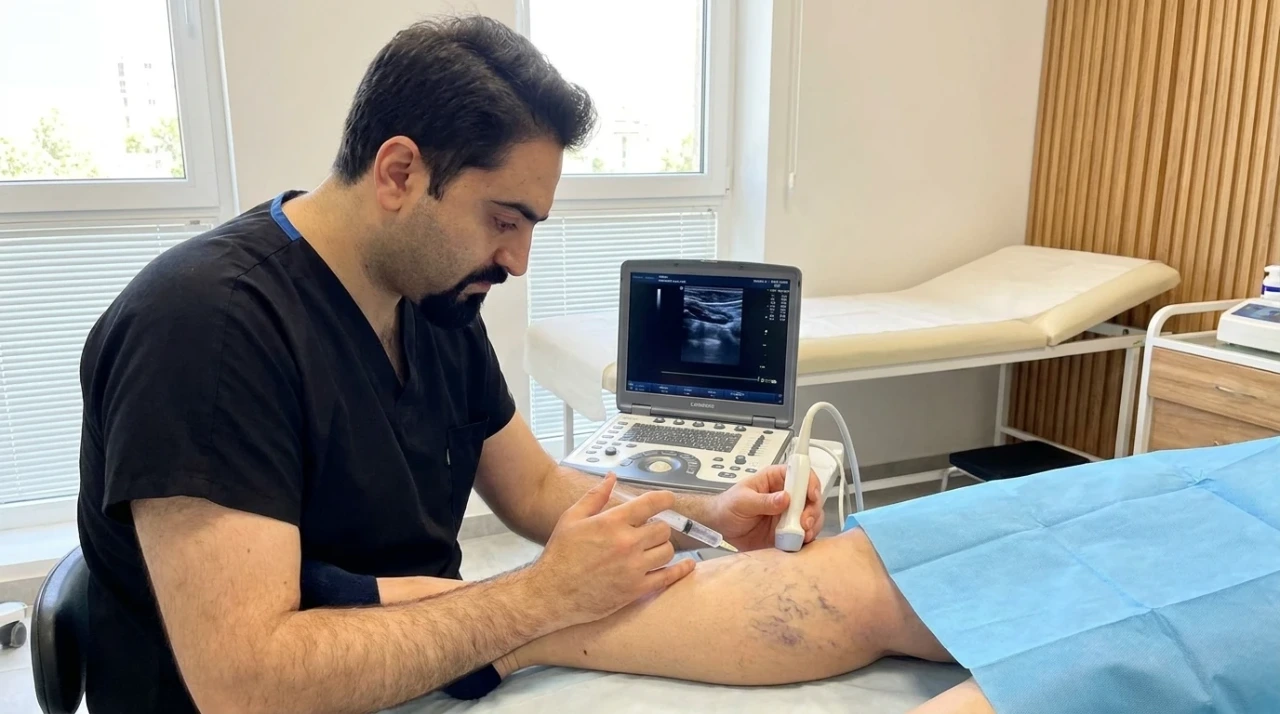
Ultrasound-guided injection of a sclerosing agent into affected superficial leg veins, after a full assessment of both the superficial and deep venous system.
About this treatment
Varicose veins result from venous valve insufficiency, which allows blood to pool in the superficial veins of the leg. Assessment at Dialine begins with a clinical exam and, where needed, a venous duplex ultrasound, so that both the superficial and the deep venous system are reviewed. This step is essential for choosing a treatment that is both appropriate and safe.
Where the superficial veins are suitable candidates, sclerotherapy is performed, an injection of a sclerosing agent, sometimes as foam, guided by ultrasound. The agent causes the affected vein to gradually close, redirecting blood flow to healthy veins. The number of sessions depends on the number and size of the veins involved.
Deep venous insufficiency generally calls for a different approach than direct injection, determined by the ultrasound findings and specialist assessment. After each session, compression stockings and avoiding prolonged standing are recommended, and healing is reviewed at follow-up visits.
Your treatment path at Dialine
- 1Clinical exam and venous duplex ultrasound
- 2Review of both the superficial and deep venous system
- 3Liquid or foam sclerotherapy under ultrasound guidance
- 4Compression stocking guidance and post-injection care
- 5Follow-up visit to review the result and any need for further sessions
Frequently asked questions
Is sclerotherapy painful?
Most people feel only a brief, mild sting at the injection. The procedure is outpatient and does not require general anesthesia.
Is this used for deep vein varicosities too?
Sclerotherapy is mainly suitable for superficial veins. Deep venous insufficiency calls for a different approach, determined by the ultrasound findings.
How many sessions will I need?
This varies with the number and size of the veins involved and is discussed after the initial assessment.
What aftercare is needed?
Compression stockings are usually recommended for a period, and you should avoid prolonged standing in the first few days.
Do varicose veins come back?
Treated veins usually stay closed, but new veins can develop over time; periodic follow-up helps manage this.
Other services