
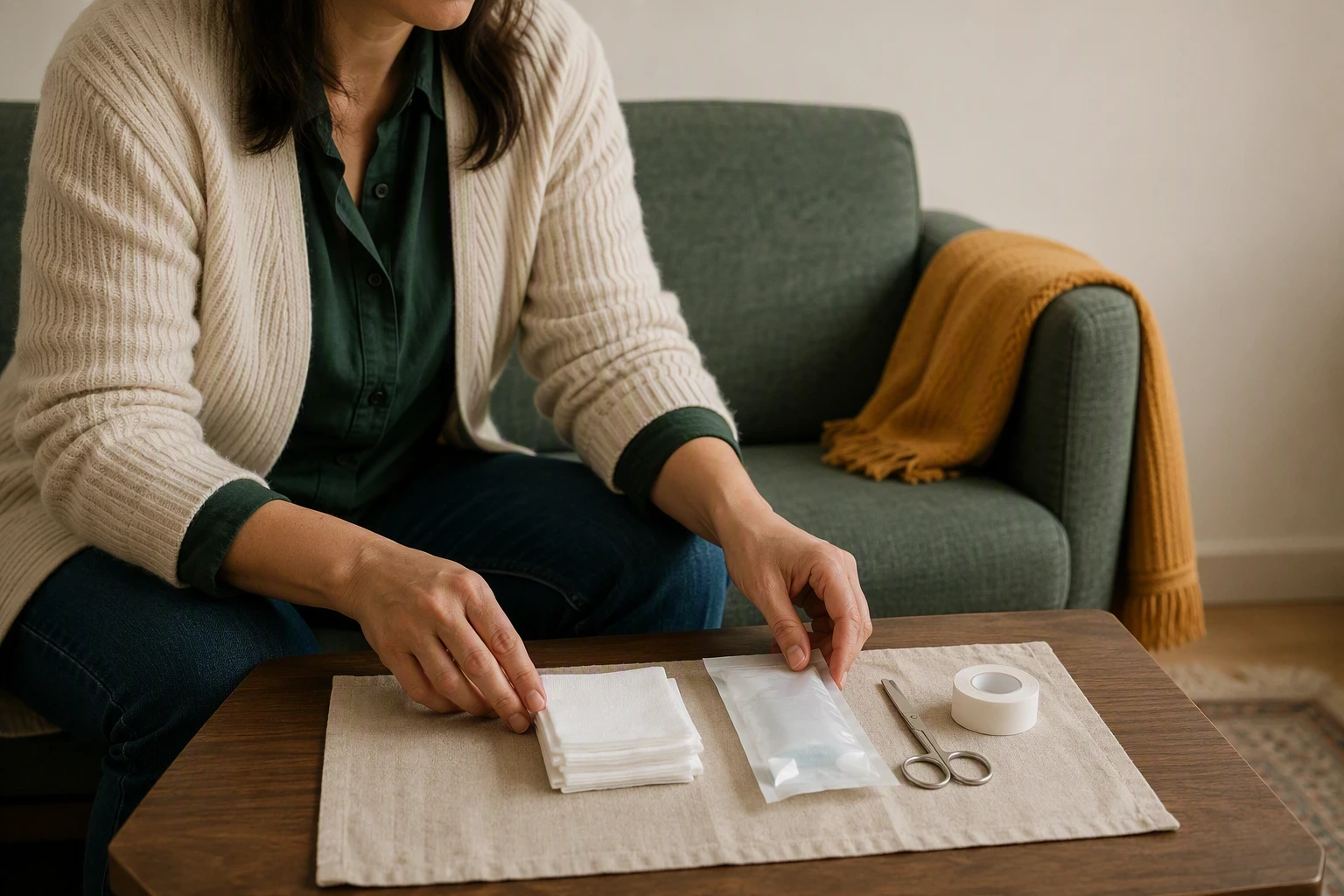
The odour usually enters the room before the wound does. Exudate strikes through the dressing and soaks clothing and bedding. Your hands shake at every dressing change, because you are afraid of causing pain or starting a bleed. If those sentences describe your days right now, start here: this experience is far more common than you think, and something specific can be done about every one of those four problems.
The short answer: in a malignant wound, four things put the most pressure on the patient and the family — exudate, odour, bleeding and pain — and all four can be managed. But one point belongs at the very start, because the rest of this article rests on it: while the underlying cause is still present, the goal of care is not necessarily to close the wound. The goal is to take daily life back from those four symptoms. We say this plainly so that no false expectation forms, and so nobody blames themselves for a wound that does not close.
This article does not replace your cancer care team. Wound care runs alongside the primary treatment, never instead of it. Any change to medication, dressing type or the care plan belongs with the treating physician.
What a malignant wound is, and why it differs from other wounds
A malignant wound is a wound caused by a tumour. It arrives by two common routes: either the tumour has reached the skin and broken through it — sometimes called a fungating wound — or the wound has formed at a surgical site, often in an irradiated area, and will not stay closed, as when a suture line opens after surgery (dehiscence).
That difference changes everything. An ordinary wound closes itself once the wound bed is right. In a malignant wound the tissue beneath is growing rather than repairing, newly formed vessels are fragile, and necrotic tissue is produced continuously. The rules of care differ accordingly, and a diabetic-foot or pressure-ulcer protocol cannot simply be applied to it.
The real goal of care: symptom control, not necessarily closure
In most chronic wounds the measure of success is plain: the wound got smaller, or it did not. In a malignant wound the measure changes. Success means the patient slept last night. It means they accepted a visitor. It means the dressing held until morning and nothing soaked through. It means the dressing change happened without tears.
The World Health Organization calls this palliative care: the work of reducing suffering and improving quality of life, whether or not the primary treatment continues. By that measure, everything below counts as treatment, even when the size of the wound does not change.
Controlling exudate
Heavy exudate is a problem of daily life more than a clinical one: it soaks clothes and bedding, intensifies odour, damages the healthy skin around the wound, and keeps the patient at home.
Choosing an absorbent dressing
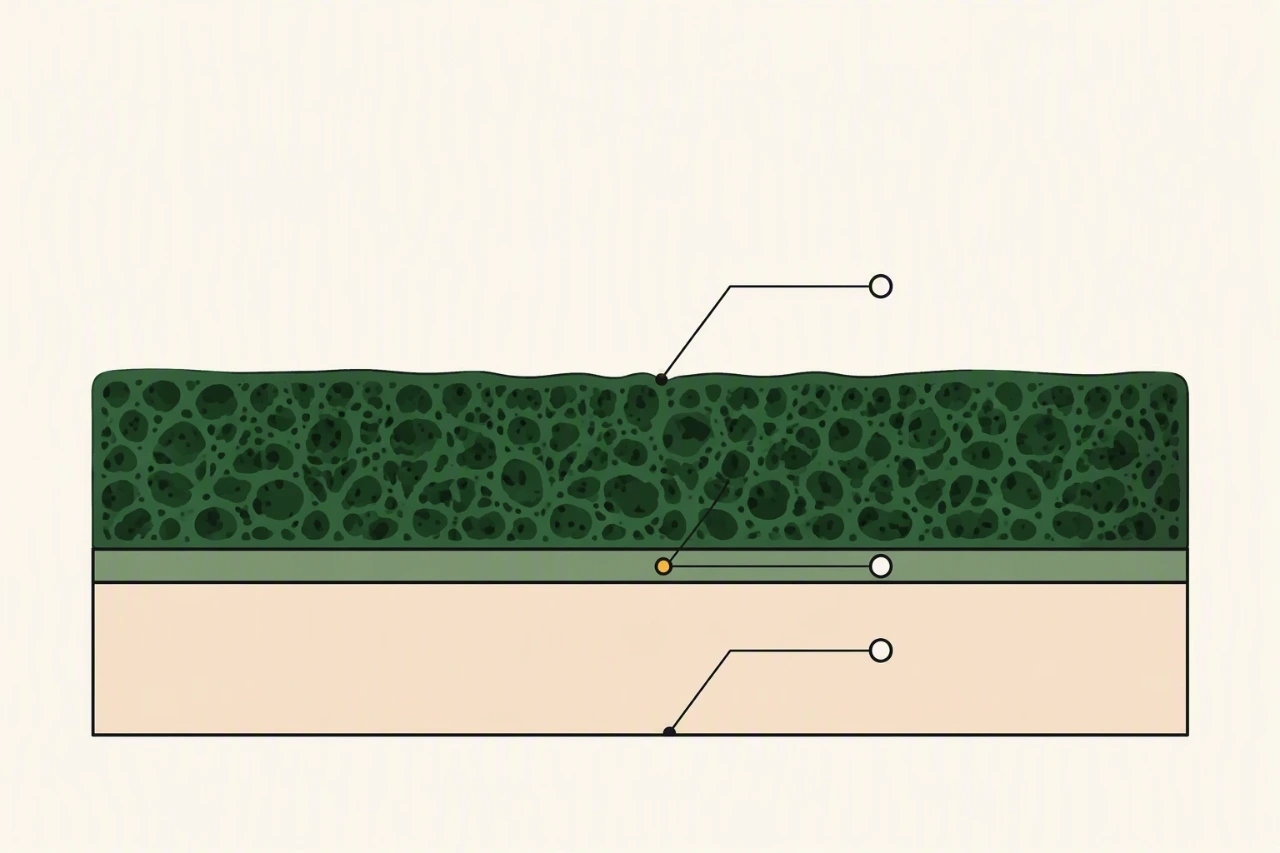
The principle is simple: absorbency should match the exudate volume of that particular wound. An under-absorbent dressing means strike-through and repeated changes; an unnecessarily thick dressing on a low-exudate wound helps nobody and only adds cost and pressure.
The layer in contact with the wound should be non-adherent, with the absorbent layer outside it. Which dressing exactly — foam, alginate, superabsorbent — is a decision for a physician or wound nurse, based on site, exudate volume and how fragile the wound is. It is not something to choose from a photograph online.
One practical rule at home: exudate decides the timing, not the clock. When it reaches the edge of the dressing or strikes through, it is time to change. If that happens several times a day, the schedule is not the problem — the dressing choice needs review.
Protecting the surrounding skin
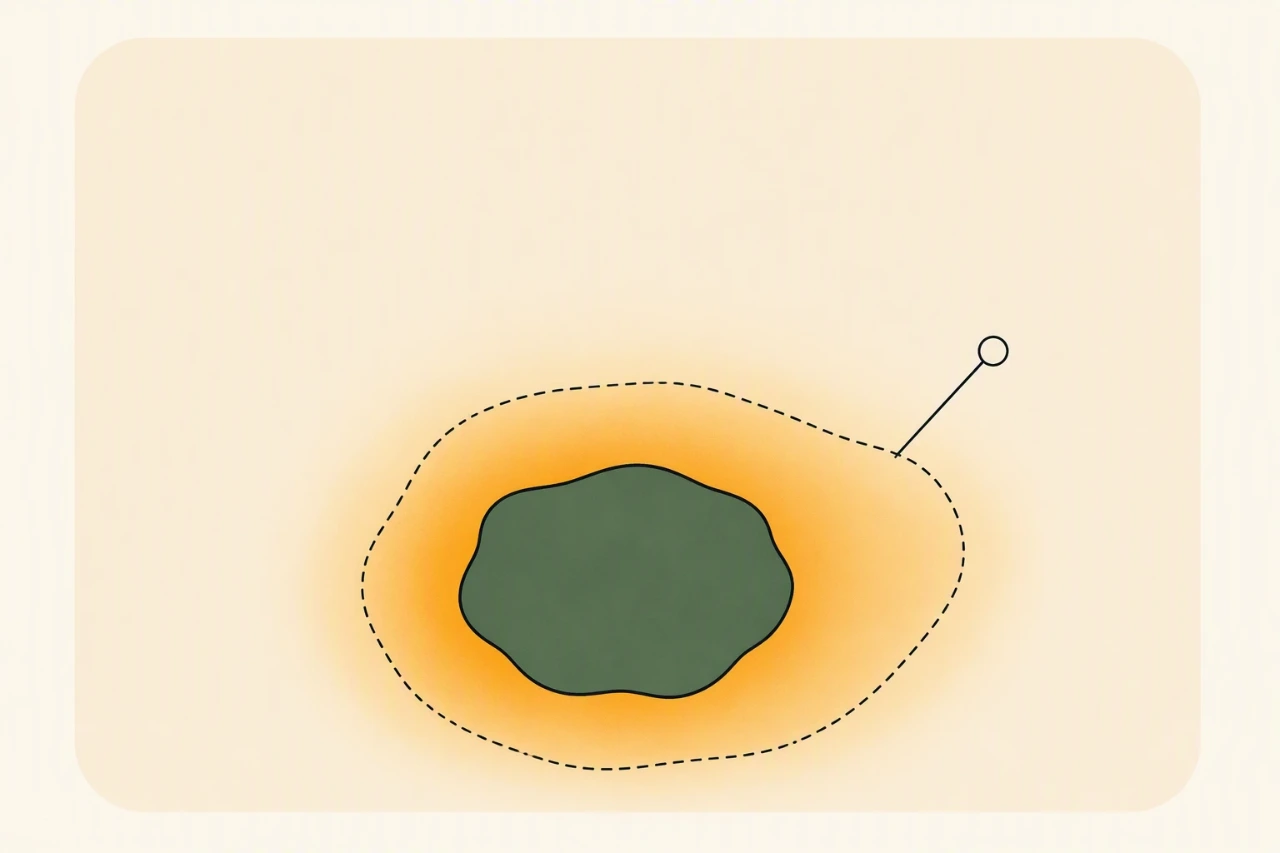
Healthy skin under constant exudate turns white, soft and broken down. That damage enlarges the wound in its own right and adds fresh pain that was entirely preventable.
Skin protectants — barrier creams or films — exist precisely for this, and which one to use belongs with the physician. One more point matters: keep dressing adhesive off the fragile surrounding skin as much as possible, particularly skin that has been irradiated.
Controlling odour
Of the four symptoms, odour does the most social damage. Patients stop receiving visitors, stop leaving the room, and sometimes withdraw even from the people closest to them. Controlling it is not cosmetic; it is part of treatment.
Why odour develops
Odour comes largely from anaerobic bacteria acting on necrotic tissue inside the wound. The source is the tissue and the bacterial burden — not family neglect, and not insufficient washing. This is worth knowing, because many families blame themselves and then clean so often and so hard that they damage the wound.
What helps, under medical supervision
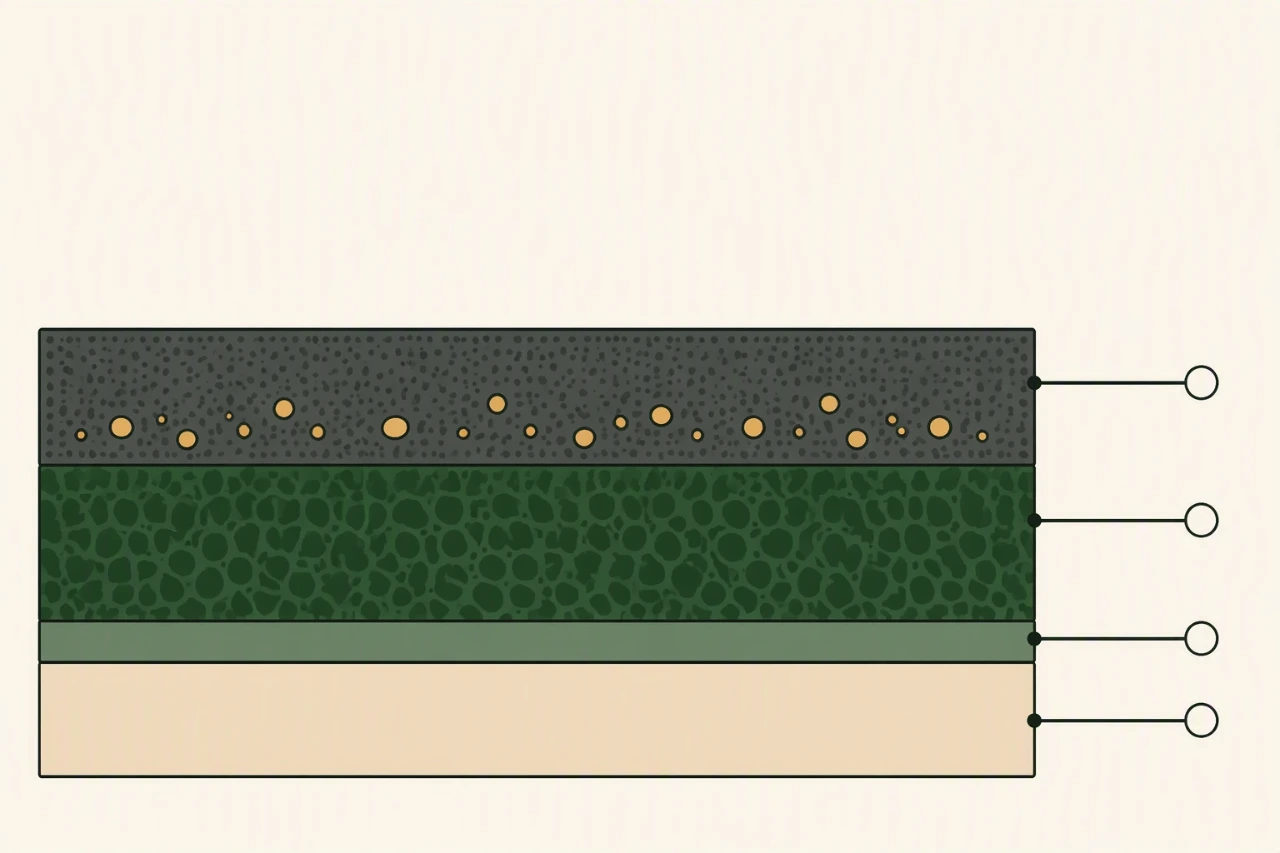
Palliative care sources describe three groups of measures for odour, all of them decided by a physician: reducing the wound's bacterial burden — which in some cases includes prescribed topical or oral metronidazole — using activated charcoal dressings, which trap odour, and removing necrotic tissue where the physician judges that to be safe.
The evidence base here is limited; the Cochrane review of topical agents and dressings for fungating wounds says as much. These remain the measures that help most in practice. None of them should be started independently: metronidazole is a prescription medicine, not a household ointment.
What does not help
Perfume, cologne or spray on the dressing. It does not mask the odour; it creates a new combination that patients often find nauseating, and it can irritate the skin.
Sealing the wound under plastic to "contain" the smell. This worsens the anaerobic environment and feeds exactly the bacteria responsible for the odour.
Frequent, vigorous cleaning with household antiseptics. It damages fragile tissue and causes bleeding.
Home and herbal remedies on an open wound. None are supported for this wound, and some harm the tissue directly.
Ventilating the room and keeping gentle air movement, by contrast, helps and is harmless.
Controlling bleeding
The vessels inside these wounds are thin and fragile, so light bleeding during a dressing change is not unexpected. Most of it is preventable, and the key lies in how the dressing comes off.
Prevention during a dressing change
Never peel a stuck dressing off dry. Moisten it with sterile saline or warm sterile water and wait for it to loosen on its own.
Use a non-adherent contact layer so the next dressing does not bond to the wound bed.
Do not scrub the wound or scrape the tissue; cleansing should be gentle.
Never rush a change, and let the patient say "stop" whenever they need to.
If bleeding starts
Light bleeding usually stops with gentle direct pressure held for around ten minutes, without lifting to look repeatedly. A dark-coloured towel helps: the sight of blood on white fabric frightens both patient and carer more than the bleeding warrants.
While applying pressure, do not rub the area or shift the dressing on the wound. Some dressings have haemostatic properties and may already have been prescribed for exactly this situation.
Emergency: bleeding that does not stop after ten minutes of direct pressure, bleeding that is heavy or pulsating, or bleeding accompanied by pallor, dizziness and severe weakness needs immediate emergency care — not a phone call, and not a wait for the next appointment.
Controlling pain
This wound produces two kinds of pain, and they do not share a solution. Background pain, present through the day and night, is managed by the cancer care team and the medication plan. Dressing-change pain, by contrast, depends heavily on technique and can be reduced at home.
Timing analgesia around the dressing change
The most effective step is a simple one: give the prescribed analgesic before the dressing change, at the interval the physician specified, rather than after the pain starts. Move the change to a time of day when the patient has more energy, and lay out every item beforehand so it does not drag on.
Moistening the dressing before removal, a non-adherent contact layer and an unhurried hand matter as much as medication in those few minutes.
Surrounding skin and the radiotherapy period
Irradiated skin is sensitive, dry and low on tolerance, and caring for it follows rules set by the radiotherapy team. The general principles: gentle washing with lukewarm water, patting dry with a towel rather than rubbing, loose cotton clothing, and no direct heat or cold on the area.
On creams and ointments the rule that matters is this: apply nothing to skin under treatment without the radiotherapy team's approval, and ask that team about timing too — some products should not be on the skin close to a treatment session.
Warning signs: when to make contact the same day
A sudden increase in exudate, or a clear change in the wound's odour compared with previous days
Fever, chills, or a new sense of being generally unwell
Redness, warmth and swelling spreading from the wound edge into healthy skin
Pain that the usual analgesic plan no longer controls, or that has suddenly worsened
Bleeding that does not stop with direct pressure (immediate emergency care)
Rapid blackening of tissue, or a surgical site opening suddenly
The carer is a patient too
The person who changes the dressing every day, lives with the odour and fears the bleeding is under strain themselves. Exhaustion, broken sleep and guilt are common in that role and are not a weakness.
Two practical things help: sharing dressing changes between two people rather than leaving them to one, and having the carer trained by the care team instead of learning by trial and error. Practical training for the carer is part of the treatment, not a favour added to it.
How Dialine approaches this care
Dialine works across four areas: diabetes, chronic wounds, scars and neuropathy. Malignant wound care sits within the wound work and follows the same framework described in this article:
Assessing the wound for exudate volume, odour and bleeding, and matching the dressing to that specific wound
Reducing bacterial burden and odour, under medical supervision
Non-adherent dressings, changed slowly and without pulling
Protecting the surrounding skin against constant exudate
Coordinating the timing of dressing changes with the pain-control plan
Practical training in wound care for the family and the patient's companion
The clinic is in Pasdaran, Tehran, and consultation is available in person. For patients who find regular travel difficult, wound care at home delivers the same work in the patient's own home. Full details of the service are on the malignant wound care page, and this case of a dehisced wound treated after mastectomy surgery is a real example from the same group.
If the patient spends most of the day in bed, pressure ulcers and how to prevent them is a second issue to take seriously at the same time.
Frequently asked questions
Why does the wound smell? Is it our fault?
No. The odour comes from anaerobic bacteria acting on necrotic tissue inside the wound, not from any failure of hygiene. Control starts from the same place: reducing bacterial burden and choosing the right dressing, as decided by a physician.
Will this wound eventually close?
While the underlying cause is present, complete closure is not the primary goal and should not be promised. In some situations — a wound that has opened after surgery, for instance — meaningful improvement is possible. The precise answer depends on the individual patient and comes from the treating physician.
How often should the dressing be changed?
There is no fixed schedule. Exudate is the measure: when it reaches the edge of the dressing. If you are forced to change several times a day, the dressing type needs review rather than the frequency being increased.
Can the wound be washed, or the patient shower?
Gentle cleansing is permitted in many cases, but the decision depends on the wound's site, whether it bleeds, and the treatment situation, so it must come from that patient's own physician. What holds in every case: gentle, no scrubbing, and no household antiseptics.
When is bleeding an emergency?
When it does not stop after roughly ten minutes of direct pressure, when it is heavy or pulsating, or when it comes with pallor, dizziness and severe weakness. All three call for immediate care.
Is negative pressure or ozone therapy suitable for a malignant wound?
Not every method used on chronic wounds suits a malignant one. The choice here depends on the underlying cause and the patient's condition, and the decision belongs to the treating physician — not to the patient or family.
Free consultation
If wound care at home has become difficult — exudate you cannot contain, odour that has narrowed daily life, or a dressing change that has turned painful — contact Dialine in Pasdaran, Tehran for assessment and a free consultation. Bring the current dressing type and a list of the patient's medications.
Sources
Adderley UJ, Holt IGS. Topical agents and dressings for fungating wounds. Cochrane Database of Systematic Reviews, 2014, Issue 5. CD003948.
European Oncology Nursing Society (EONS). Recommendations for the Care of Patients with Malignant Fungating Wounds.
World Health Organization. Palliative care. WHO Fact sheet.
This article is not a substitute for an in-person medical consultation.