When a clinician says "we're putting this wound on vacuum therapy," most people don't ask what that means in the moment — they look it up later at home. A device attached to the wound, humming away, understandably looks alarming before anyone explains it.
Negative pressure wound therapy (NPWT), more commonly known as vacuum therapy or wound VAC, is an active dressing. Instead of simply covering the wound, it uses controlled negative pressure to draw out fluid and stimulate new tissue growth. It's used for deep, complex wounds or wounds after extensive debridement — not for every wound.
Here's exactly how it works, which wounds it suits, and how it differs from a regular dressing.
What is NPWT?
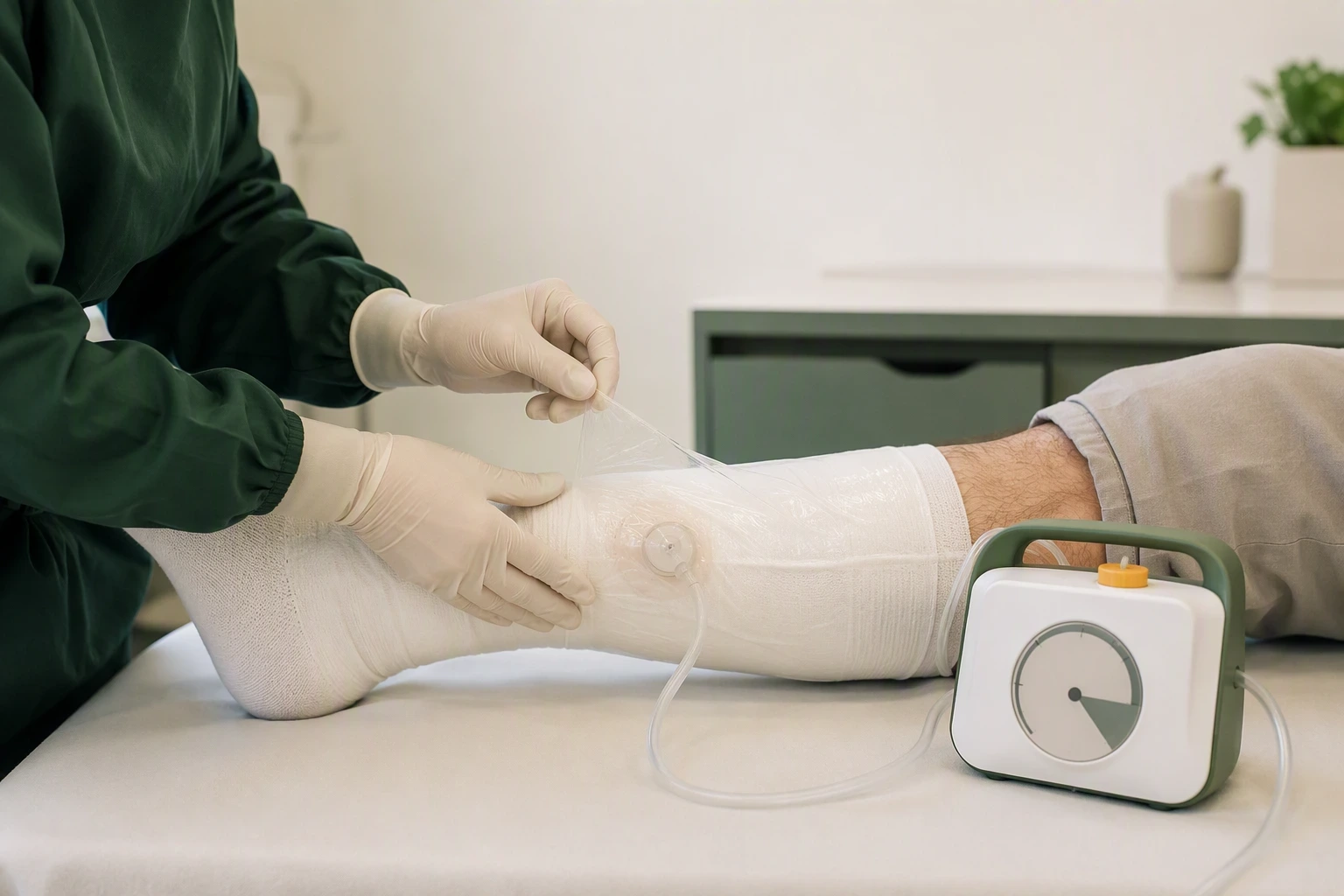
Localized negative pressure, typically between 75 and 125 mmHg, is applied to the wound through a special dressing and a tube connected to a device. That pressure does three things: it draws excess fluid out of the wound, reduces swelling around it, and gently stimulates the growth of new tissue (granulation) by drawing on it.
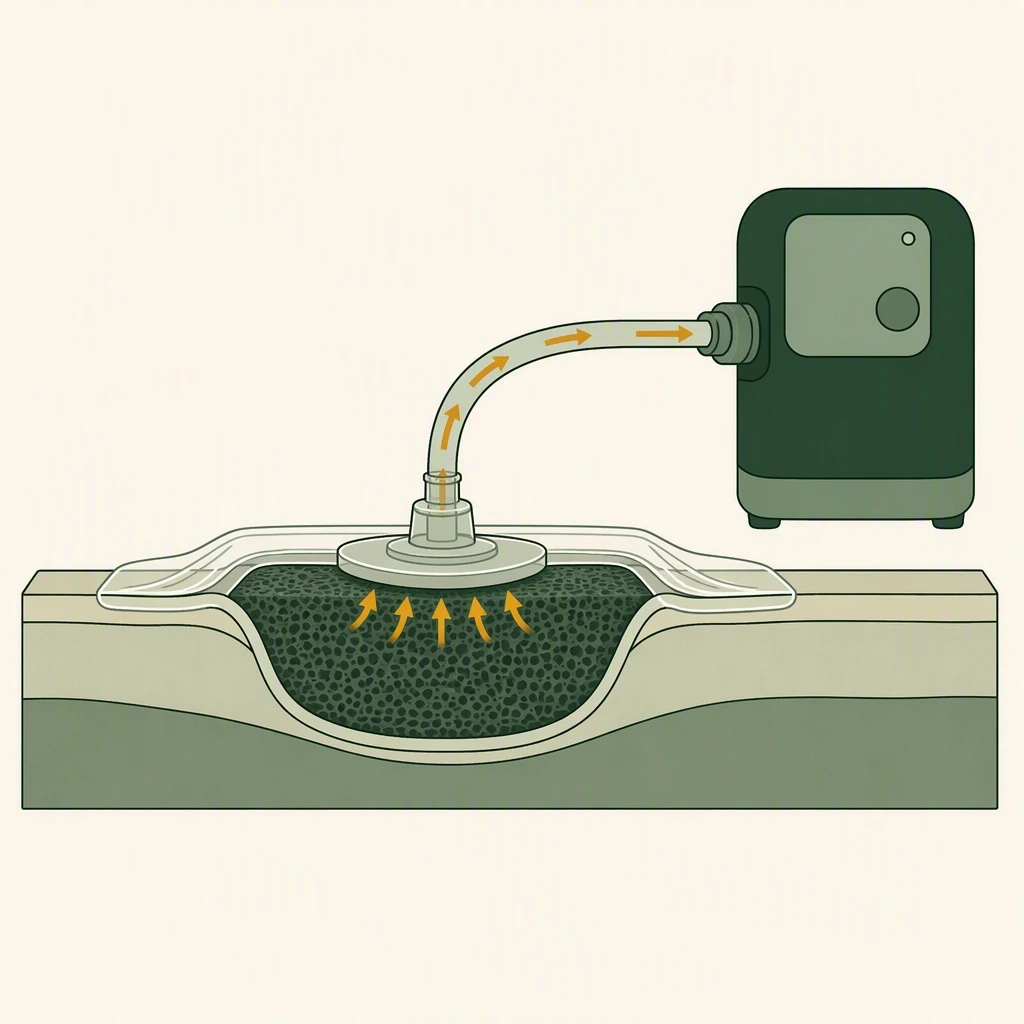
The dressing is usually changed every two to three days, not daily like many standard dressings. Depending on the wound, the device can run at the clinic or at the patient's home.
Which wounds does NPWT suit?
This isn't a first-choice option for every wound. Three groups benefit the most.
Diabetic foot wounds
In diabetic foot wounds — particularly a deep wound or one following a partial amputation — NPWT can shorten the time to wound closure. A 2018 Cochrane review found, with moderate-certainty evidence, that in diabetic foot wounds after partial amputation this method shortens time to closure.
Deep wounds or wounds after extensive debridement
When a large amount of dead tissue has been removed from a wound, the resulting cavity is usually large and irregular. NPWT helps that cavity close gradually from the inside, and reduces the need for daily dressing changes.
Post-surgical wounds
Some surgical wounds — particularly where the incision has opened or become infected — are also candidates for NPWT. Whether it actually suits your wound is only determined after examination.
How is NPWT carried out?
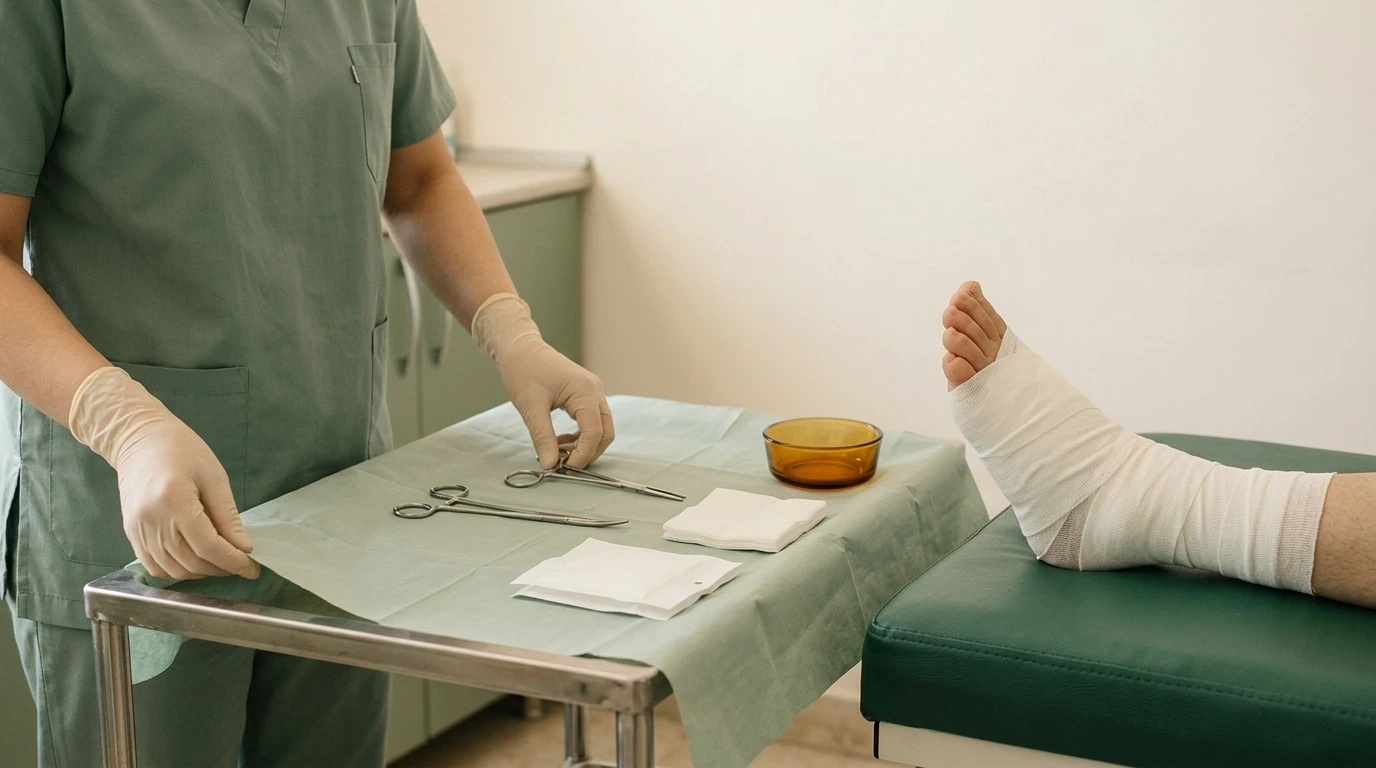
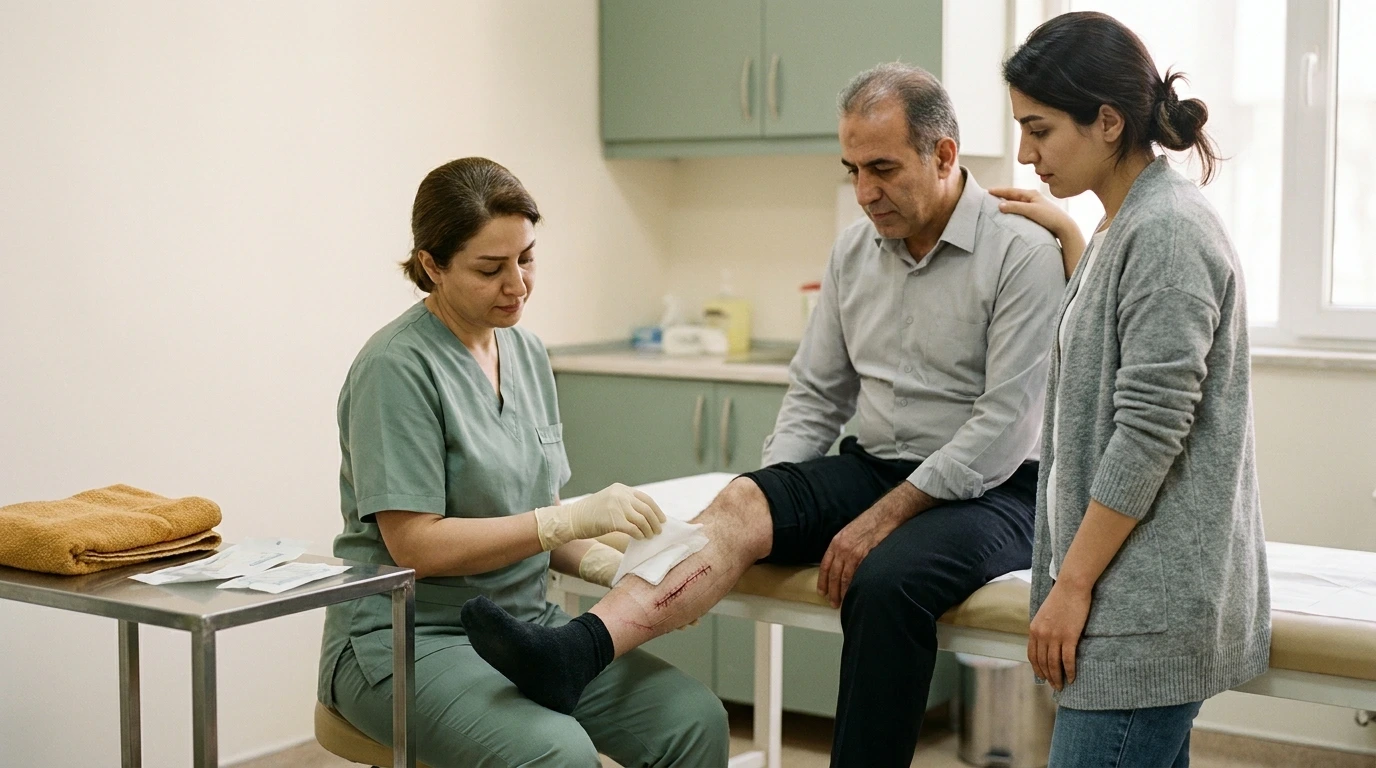
The process starts with a full assessment, not with placing a dressing. The treatment team examines the depth, extent and surrounding condition of the wound, then decides whether NPWT is appropriate or another method would work better.
If it's suitable, a special foam or gauze is placed inside the wound, a clear adhesive film seals over it, and a tube connects it to the negative-pressure device. The device holds the pressure steady within the prescribed range. Follow-up sessions are scheduled to change the dressing and check on progress.
How is NPWT different from a regular dressing?
A regular dressing simply covers the wound and protects it from contamination; it doesn't itself do anything to the healing process. NPWT is active: it continuously draws out fluid, keeps the wound environment controlled, and stimulates the growth of new tissue.
For that reason, it's usually not recommended for shallow or small wounds — a simple dressing does the job there without the added complexity.
How long does it take, and how many sessions are needed?
There's no fixed number for everyone. It depends on how deep the wound is, the state of the blood supply, and how quickly the body responds. The dressing is changed every two to three days, and progress is checked at each change.
These step-by-step check-ins are what determine the length of treatment, not a schedule fixed in advance.
Does NPWT hurt? Risks and safety notes
During dressing changes, especially when the foam is separated from newly formed tissue, you may feel pain or discomfort. The treatment team can consider pain-relief measures before a change.
The main risk arises when the device is used without proper supervision: a pressure leak, bleeding under the dressing, or an infection that goes unnoticed. That's why NPWT is always carried out under the treatment team's supervision — never with home devices advertised without a prescription or follow-up.
NPWT treatment at Dialine
At Dialine, NPWT is one part of a broader set of wound treatment methods, not a stand-alone fix. Depending on the wound, specialist debridement, ozone therapy, maggot debridement therapy and PRP are used alongside it, and which method is chosen is determined only after a full assessment of the wound.
You can see a real example of this method in NPWT in practice — a real wound, session by session.
Dialine works across four areas: diabetes, chronic wounds, scars and neuropathy. For specialist wound treatment you can arrange a free consultation; that first contact establishes whether NPWT is a good option for your wound.
Frequently asked questions
How often is the NPWT dressing changed?
Usually every two to three days. The exact interval is set by the condition of the wound and how much fluid it's producing.
Can NPWT be done at home?
In some cases, after treatment has started at the clinic and with full training, continuing it at home is possible. The treatment team decides based on the wound's condition.
How is it different from a regular dressing?
A regular dressing only covers the wound. NPWT is active — it draws out fluid and stimulates new tissue growth — which is why it's more often chosen for deeper or more complex wounds.
Does NPWT leave a scar?
Any deep wound, with or without NPWT, may leave a scar. The method itself doesn't cause additional scarring; its purpose is to bring the wound to a stage where closure becomes possible.
Does NPWT replace surgery?
Not always. For some wounds it's part of the treatment path, not a substitute for surgery or debridement. The treatment team decides, based on the wound's condition, which method or combination of methods is needed.
Are the home NPWT devices advertised online trustworthy?
NPWT requires proper assessment, correct pressure and regular follow-up from a treatment team. Using a device without that supervision can be dangerous, even if it looks similar to a clinical device.
How painful is an NPWT dressing change?
You'll usually feel some discomfort when the dressing is removed, not necessarily severe pain. Where needed, the treatment team considers pain-relief measures before a change.
This article is not a substitute for an in-person medical consultation.