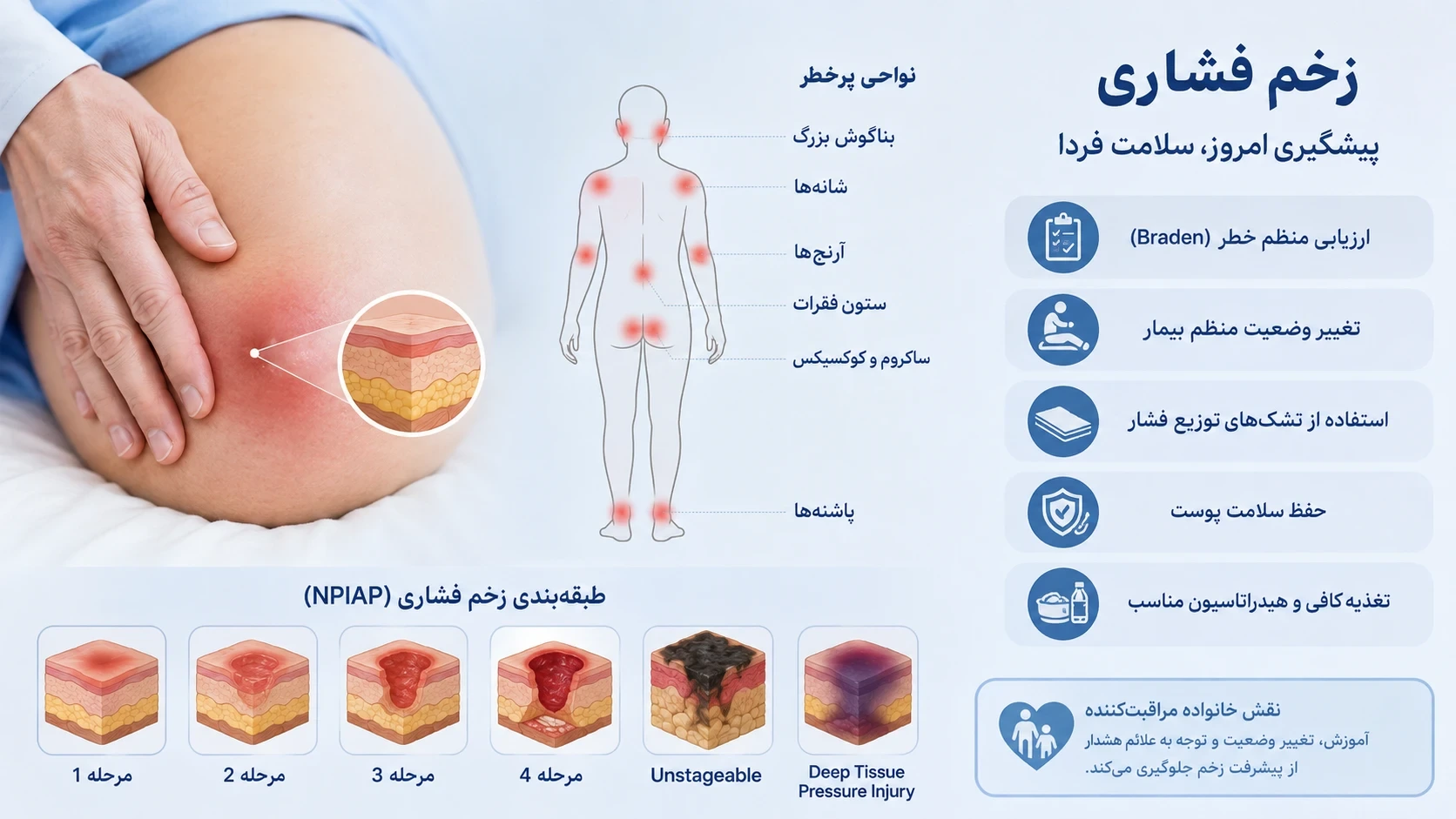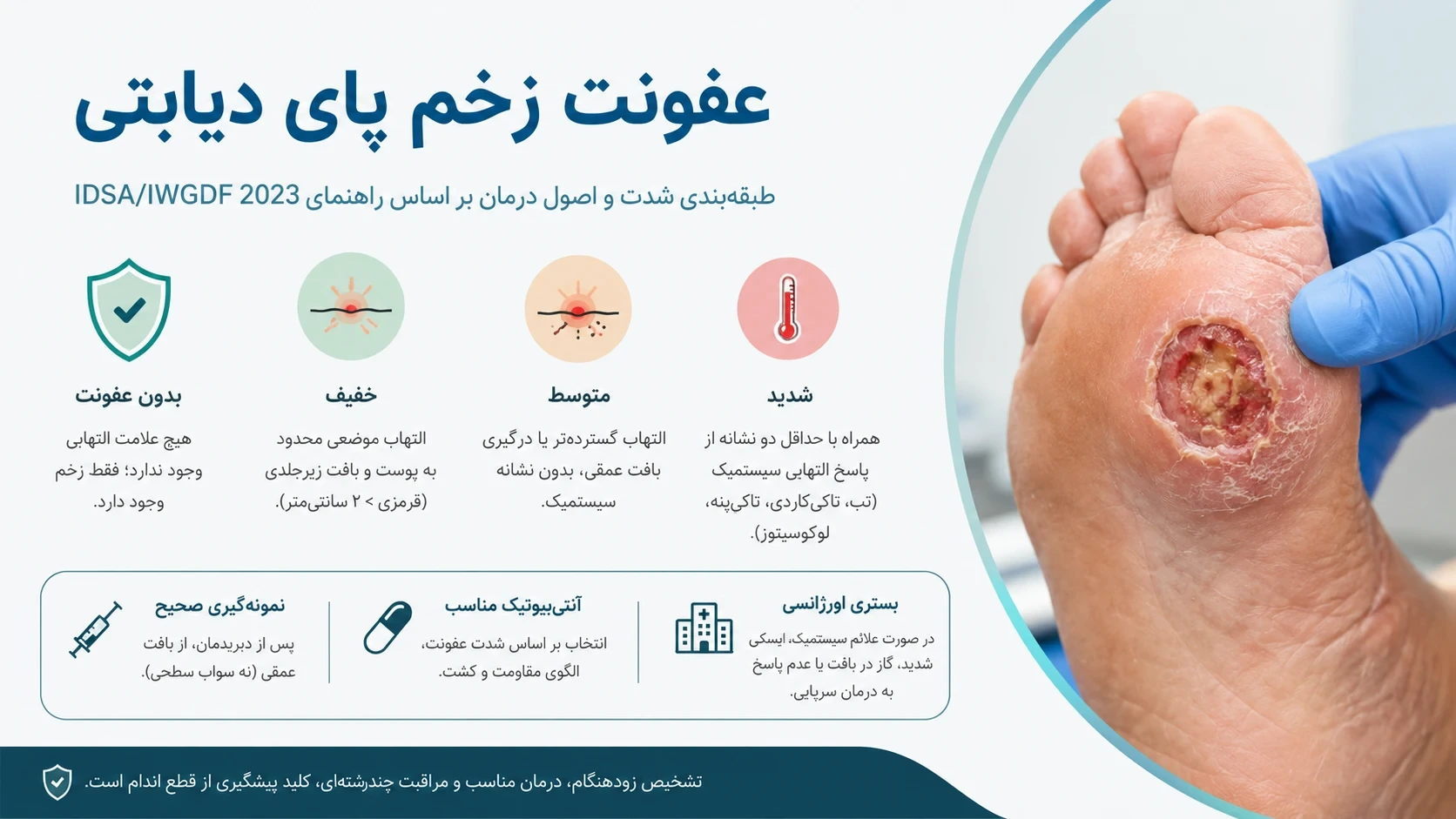
A few days have passed since the accident. The wound has been sutured or dressed, but something does not look right: the edges have not come together, the skin around it has changed colour, or there is discharge that should not be there. It is natural that the first thing you do is search for photographs, to see which one your wound resembles.
The short answer: most accident wounds heal with the right care, and what changes the course is recognising three things early — infection, dead tissue, and pressure on the wound. But one point needs saying at the outset, because the rest of this article rests on it: the depth of a wound and the presence of infection cannot be judged from a photograph — not someone else's, and not your own. A photograph can tell you that you should be worried; it cannot tell you that you should not be.
If the wound is fresh, this article is not a substitute for emergency care. Active bleeding, a deep open wound, a fracture, a foreign body in the wound, or a wound contaminated with soil and asphalt needs a hospital emergency department in the first hour — not a clinic, and not an internet search.
How an accident wound differs from other wounds
A wound made by a kitchen knife has clean, defined edges and is usually exactly what it appears to be. An accident wound almost never is, for three reasons.
Contamination: this wound is not clean to begin with
In an impact with asphalt, glass or vehicle parts, fine particles of soil, grease and grit are driven into the tissue. Some of these particles are not removed by simple irrigation and remain at depth.
The consequence is that an accident wound carries a bacterial load from the first moment that a clean surgical wound does not. This is why thorough irrigation and an assessment of depth in the first hours are not an extra precaution but part of the treatment itself.
Crush injury: damage that is more than a cut
In an accident, tissue is not only cut; it is compressed and stretched. Skin that looks intact may have a damaged blood supply and darken days later.
This is what takes families by surprise: "the wound was the same size, so why is it worse now?" The wound has not worsened; the true extent of the injury is only now becoming visible.
Tissue loss and edges that will not meet
Sometimes part of the skin and underlying tissue is lost in the accident. Suturing alone is then not enough, because there is nothing left to stitch together. The wound has to fill in from the base upward — a process that takes weeks and depends on the right dressing.
The first 72 hours: what you can do, and what you cannot
In the first days, your most important task is not deciding on treatment; it is recognising when the situation has moved beyond home care.
When to go straight to an emergency department
- Bleeding that does not stop with direct pressure
- A deep wound, or one in which fat, muscle or bone is visible
- A foreign body in the wound — glass, grit, metal fragments
- Deformity of the limb or inability to bear weight (possible fracture)
- Numbness, coldness or pallor in the toes below the wound
- Fever or chills
In these cases, no dressing applied at home substitutes for immediate assessment.
Tetanus, and why your vaccination history matters
Wounds contaminated with soil are considered high-risk for tetanus. Whether you need a booster or immunisation depends on how long it has been since your last dose and on the type of wound.
That decision belongs to the physician at the emergency visit, not to an article or a photograph. If you do not know the date of your last tetanus vaccination, say so — not knowing is itself useful information.
What photographs show — and what they do not
If you arrived here searching for pictures of accident wounds, you were probably looking for a comparison. That is a reasonable thing to want, and it is worth knowing what a photograph can actually do for you.
Photographs help with this: tracking progress. Photographing the wound in consistent light and from a fixed distance, every two or three days, is the only reliable way to know whether it is improving — memory is remarkably unreliable here. Bring those photographs to your next visit.
Photographs do not help with this: determining depth, detecting infection below the surface, or assessing tissue that still looks healthy. A wound that appears small and quiet in a photograph can be involved at depth, and one that looks alarming may be following a normal healing course.
To see the course a real accident wound takes in practice, we have documented a real case of heel wound and necrosis treated after an accident and surgery; other accident wound cases are also in the gallery.
Signs of infection in an accident wound
Infection is the most common reason a healing accident wound suddenly changes course. The signs to take seriously:
- Redness spreading further from the wound edge day by day
- Increasing warmth and swelling
- Purulent discharge or a foul smell
- Pain that increases rather than subsides
- Fever or chills
One important qualification: some redness and clear discharge in the first days is part of the normal inflammatory process. What constitutes a warning is the trend — getting worse over time, not the mere presence of a sign. Clinical diagnosis and the decision about antibiotics are made from examination; our article on the clinical signs of wound infection sets out these criteria in more detail.
Why some accident wounds will not close
If several weeks have passed with no progress, one of three obstacles is usually at work — and all three can be addressed.
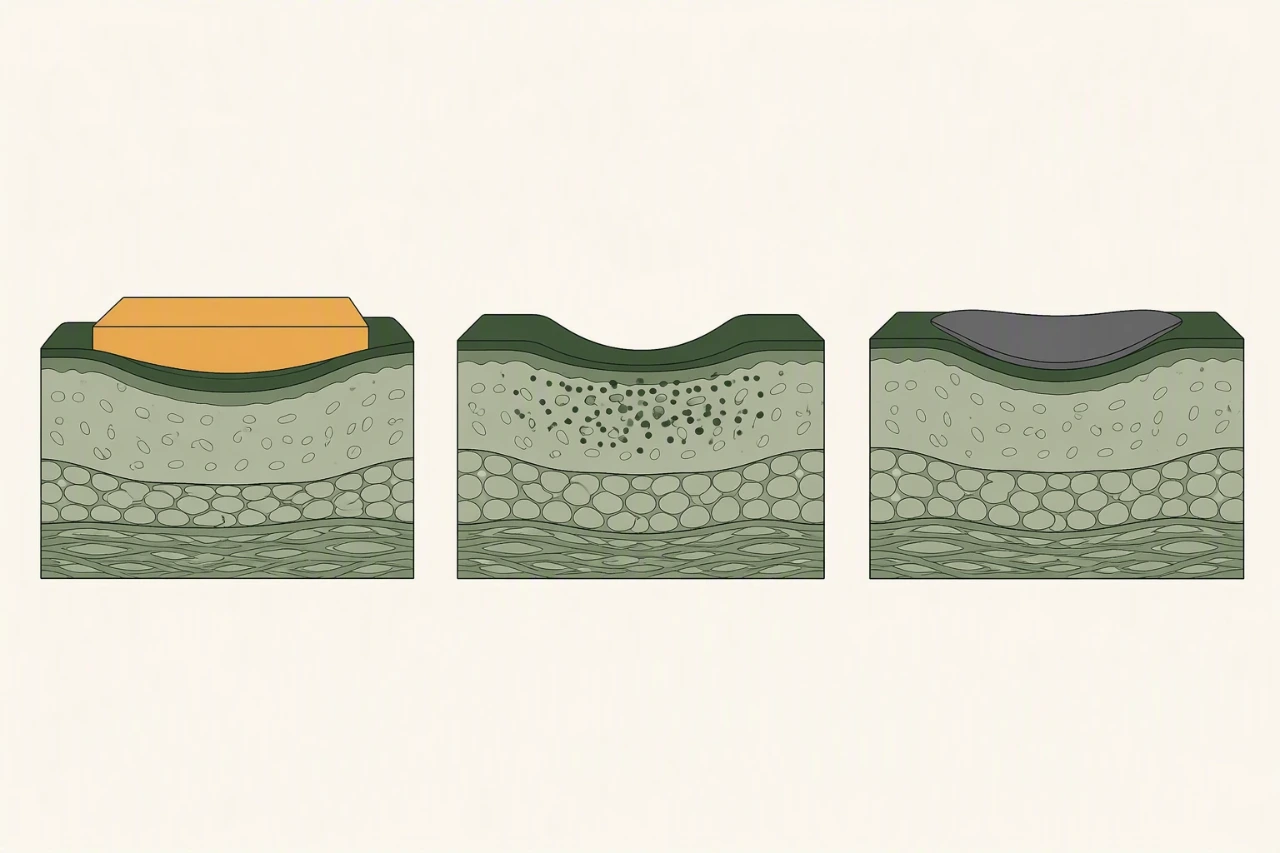
Necrotic tissue
As long as dead tissue remains on the wound bed, healing does not begin. Necrotic tissue is both a physical barrier to new tissue growth and a favourable environment for bacteria. Removing it properly — debridement — is specialist work and is not replaced by picking at the wound or by home care.
Persistent infection
Sometimes an infection is not severe enough to produce obvious symptoms, but is enough to stall healing. A wound that stagnates without an evident reason should be assessed for this.
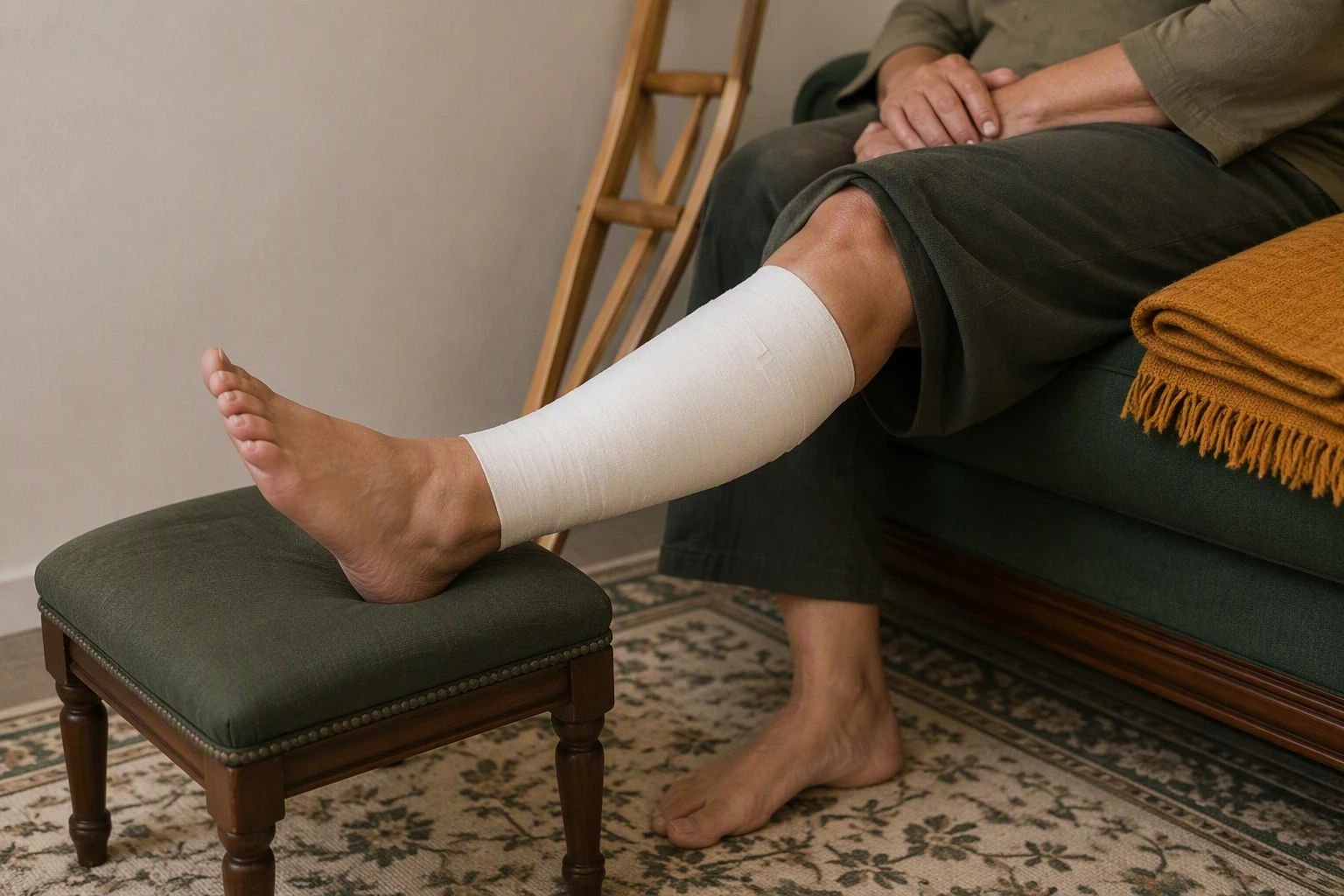
Pressure on the wound — particularly after a cast or surgery
This obstacle is the most often overlooked. A wound kept constantly under body weight or the edge of a cast never gets the chance to close; it is the same principle called "offloading" in diabetic foot ulcers. Taking pressure off the wound is, in many cases, as decisive as the dressing itself.
Choosing the right dressing is part of the same equation — the principles of modern dressings and the TIME framework explains why no single dressing suits every wound.
Scarring after an accident: what to realistically expect
Any wound that passes through the full thickness of the skin leaves a scar. The goal of treatment is not to eliminate the scar — that is not possible — but to minimise it and to prevent the problematic forms.
Two types of scar matter most after an accident: the hypertrophic scar, which becomes raised but stays within the boundary of the original wound, and the contracture scar, which restricts joint movement as the tissue tightens and is more serious in extensive wounds or those near a joint.
The most important thing you can do happens earlier than you might think: the faster a wound closes and the less inflammation it carries, the better the final scar will be. Scar management begins after the wound has closed, and the available approaches are described on our scar treatment page.
How these wounds are treated at Dialine
A specialist wound clinic's role begins after the emergency stage: a wound that has not closed, tissue that has darkened, an infection that will not clear, or a wound following surgery or a cast. The approaches used in these cases:
- Specialist debridement — proper removal of dead tissue, as the precondition for healing to begin.
- Modern dressings — selected according to the state of the wound bed, the volume of exudate and the stage of healing, rather than a single standard dressing.
- Negative-pressure wound therapy (NPWT) — for deep or complex wounds and those left after extensive debridement.
- Ozone therapy and larval therapy — in selected cases and based on assessment of the wound bed.
- Home wound care — for patients who cannot travel after surgery or while in a cast, and for whom a gap in dressing changes is costly.
Dialine works across four areas: diabetes, chronic wounds, scars and neuropathy. Accident wounds are assessed and treated along the same pathway as our specialist treatment of chronic and complex wounds. The clinic is in Pasdaran, Tehran, and consultation is available in Persian and English.
Frequently asked questions
When is a wound after an accident an emergency?
Uncontrolled bleeding, a deep wound or one containing a foreign body, a possible fracture, numbness or coldness in the toes, and fever or chills all require immediate attention. Skin turning black or redness spreading quickly in the following days carries the same weight.
Why has my wound still not closed after several weeks?
Usually one of three obstacles: remaining dead tissue, persistent infection, or continued pressure on the wound. All three can be assessed and addressed, but they require examination.
What does the skin around the wound turning black mean?
It usually indicates tissue whose blood supply has been damaged and which has died. This does not resolve on its own and needs assessment — the sooner the better.
How do I care for the wound after the sutures come out?
Newly closed skin is still fragile. Protection from impact and sun, and avoiding pressure on the site, matter. The precise care instructions depend on the wound and should come from the physician at that visit.
Can an accident scar be treated?
A scar cannot be erased, but its shape, colour and any movement restriction it causes can be improved. Scar management starts once the wound has fully closed.
How is an accident wound different in someone with diabetes?
The main difference is the margin for error. Reduced protective sensation means the injury is felt later, and poor blood-glucose control slows healing. In a person with diabetes, a wound that looks minor at first glance should be assessed sooner and more seriously.
Free consultation
If you have a wound from an accident that is not following the expected healing course — edges that have not come together, tissue that has darkened, or weeks with no change — contact Dialine Clinic in Tehran for an assessment. If you have taken photographs of the wound's progress, bring them with you.
References
- World Health Organization. Tetanus vaccines: WHO position paper. Weekly Epidemiological Record, 2017.
- World Health Organization. Prevention and management of wound infection. WHO Guidance.
- European Wound Management Association (EWMA). Position Document: Wound Bed Preparation in Practice.
This article is not a substitute for an in-person medical consultation.