After an operation, most people count the days until the stitches come out and it is all over. For some, it goes differently: fresh fluid appears on the dressing, the stitch line opens at one point, or a wound that should have closed has stayed open for weeks. This is wound opening after surgery, which doctors call surgical wound dehiscence.
An opened wound can be treated. The first step depends on how long ago it opened:
- If the stitches opened in the last few days, contact your own surgeon first. They performed the operation and know better than anyone what lies beneath that stitch line.
- If the wound has been open for weeks and is not getting smaller, it has become chronic and needs specialist wound care.
In a few situations you should not wait at all, and should go to an emergency department immediately. They are listed below.
What does wound opening after surgery mean?
At the end of an operation, the surgeon holds the edges of the incision together with stitches, surgical staples or special skin glue. From then on, it is the body's job to knit the two edges together. In dehiscence, that knitting does not complete, and the edges pull apart again.
Wound opening takes different forms:
- Superficial or deep: sometimes only the skin opens, and sometimes the layers beneath it open too.
- Partial or complete: only a few millimetres of the stitch line may open, or its whole length.
- With or without infection: infection is one of the most important causes, but a wound can open without infection as well.
It usually happens in the first days and weeks after surgery, the period when the new tissue has not yet become strong.
If your stitches open: what to do today
Seeing a wound that has opened is frightening. Before anything else, check whether your situation matches any of the following.
When to go to the emergency department immediately
In these situations, do not wait. Go to an emergency department straight away or call 115 (emergency medical services in Iran):
- An abdominal wound has opened and tissue or an organ is visible beneath it.
- The wound is bleeding heavily and pressure does not stop it.
- You have fever and chills, or you are getting worse.
- Redness and swelling around the wound are spreading quickly.
If an abdominal wound has opened and something is protruding, do not touch it and do not try to push anything back in. Cover it with clean, moist gauze or cloth, and lie down. Do not eat or drink anything until help arrives, because you may need another operation.
Until a doctor sees the wound
If none of these apply, do the following, in this order:
- Contact your surgeon the same day. Tell them where and how far the wound has opened, what colour the discharge is, and whether you have a fever. If you can send a photo, that helps them too.
- Cover the wound with a clean, dry dressing. Wash your hands first. Do not press on the wound or touch the inside of it.
- Do not put anything on the wound that a doctor has not prescribed: no ointment, no powder, no herbal or home remedy. These can hide or worsen an infection and mislead the doctor assessing the wound.
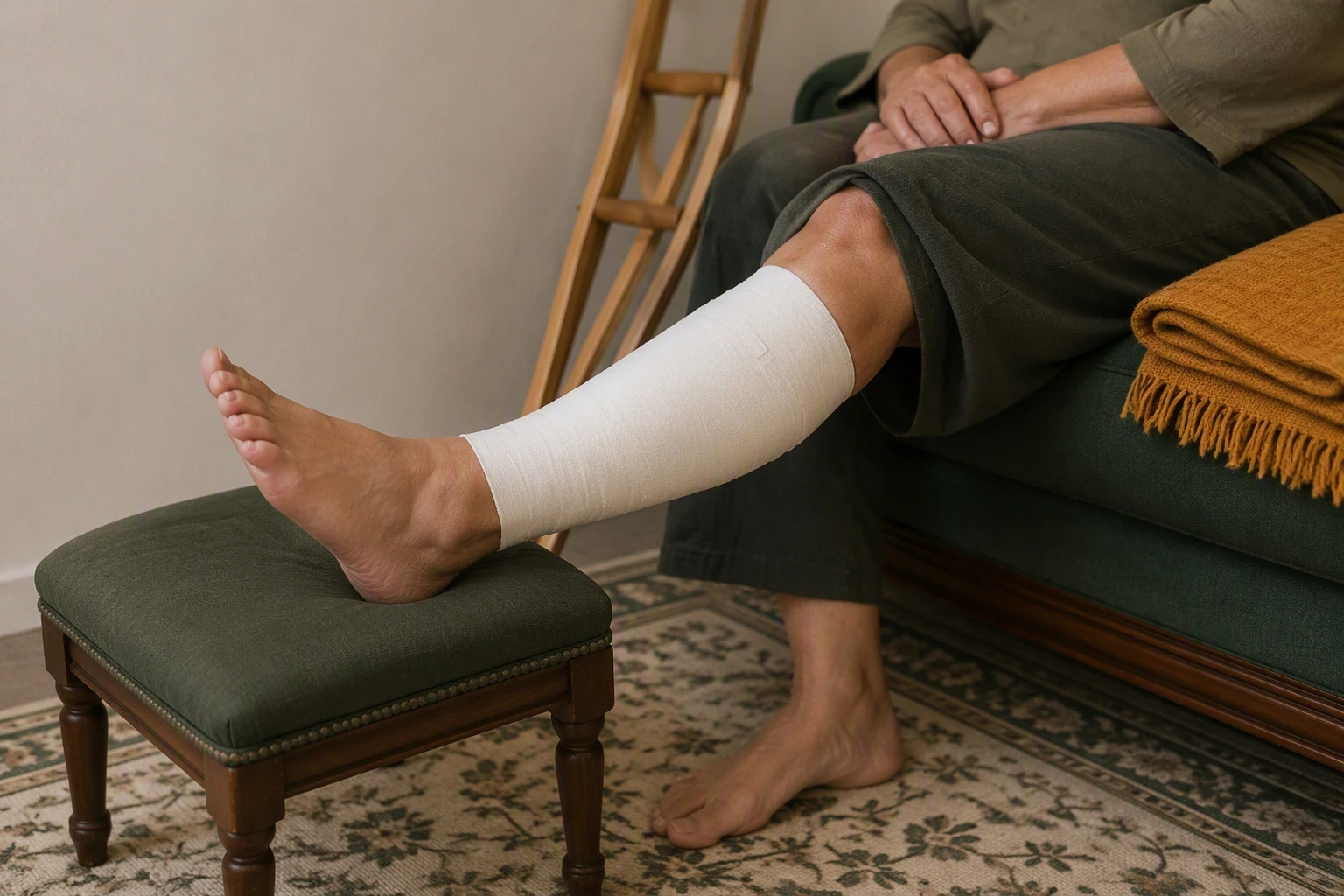
- Keep pressure off the stitch line. Do not lift heavy objects, and when you cough or sneeze, hold your hand or a pillow against the wound.
Why do wounds open after surgery?
A surgical wound heals when the body can build new, strong tissue between the two edges in the first few days. Anything that gets in the way of this, or puts pressure on the edges, raises the risk of the wound opening. Often several factors work together.
Surgical site infection
Infection is one of the most important causes of wound opening. Microbes weaken the new tissue, and the edges cannot hold firmly together. Know the signs: spreading redness, warmth and new pain, cloudy or foul-smelling discharge, and fever. We explain these signs in more detail in signs of wound infection in people with diabetes.
Diabetes and uncontrolled blood sugar
High blood sugar weakens the body's defences against microbes and also slows tissue repair. That is why people with diabetes are more prone to infection and wound opening after surgery. If they also have neuropathy, they may feel pain late, and the problem may be found later.
Controlling blood sugar in the days before and after surgery is something genuinely in the patient's own hands. We have written separately about how blood sugar control affects wound healing.
Pressure on the stitch line
Anything that suddenly puts pressure on the wound can open the stitches. The risk is higher after abdominal surgery:
- Coughing, sneezing or forceful vomiting
- Straining because of constipation
- Lifting heavy objects sooner than your surgeon allowed
- Excess weight, which constantly pulls on the wound edges
Smoking, nutrition and treatments that slow healing
- Smoking narrows small blood vessels, so less oxygen reaches the wound.
- Nutrition matters too. If a patient does not eat well, especially if they eat too little protein, the body lacks the materials it needs to build new tissue. We explain the role of nutrition in wound healing separately.
- Corticosteroid medicines, chemotherapy and radiotherapy slow healing. Do not stop these treatments on your own; talk about the wound with the doctor who prescribed them. If your wound opened after cancer surgery, also read caring for cancer wounds at home.
- Older age and other conditions, such as kidney or circulation problems, also play a part.
How to tell a wound is starting to open
A wound often gives warning before it opens. Take these signs seriously in the first days and weeks after surgery:
- Pink or watery discharge that suddenly increases and soaks the dressing
- New pain, or pain that gets worse instead of better
- A feeling of something giving way or tearing at the wound, especially after coughing or a sudden movement
- The edges separating, even at one small spot
- Redness, swelling or warmth around the wound
- A bad smell or pus
- Fever
If you notice any of these, tell your surgeon the same day. There is no need to wait until the wound has fully opened.
When the wound stays open and will not close
Sometimes the surgeon does not close the wound again and lets it fill in from the base. This is called healing by secondary intention. The wound gradually fills with healthy, pink repair tissue, and the edges draw closer together. This route is slower than a stitched wound knitting together, and it needs regular care.
The problem starts when this filling-in stops. If weeks have passed since the operation and the wound is still open and not getting smaller, or it contains dead tissue and discharge, you are no longer dealing with an acute wound. It has become chronic, and a chronic wound usually needs more than a simple dressing.
At this stage, you need to find out what is holding back healing. An infection may still be present, dead tissue may remain in the wound, blood sugar may be uncontrolled, or there may be constant pressure on the wound. Treatment starts from there.
Treatment options at Dialine
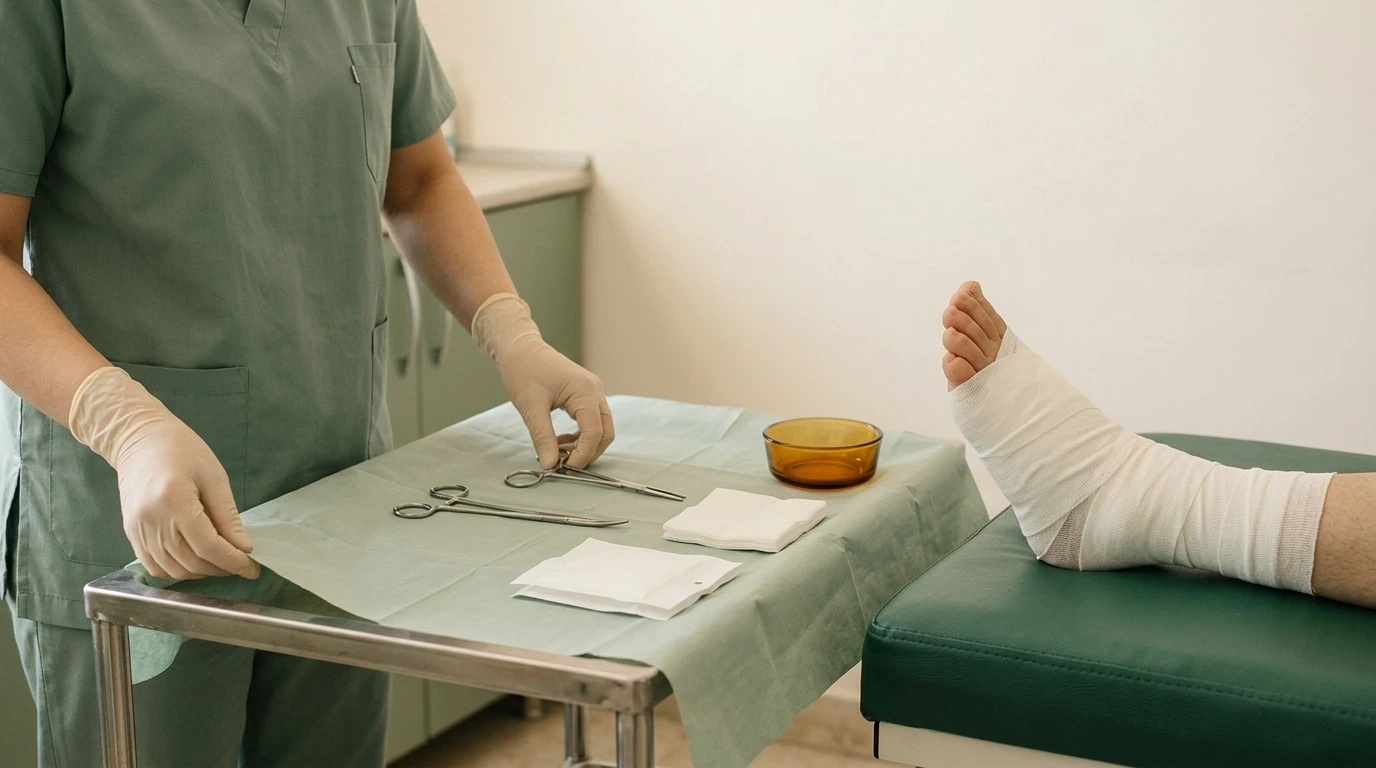
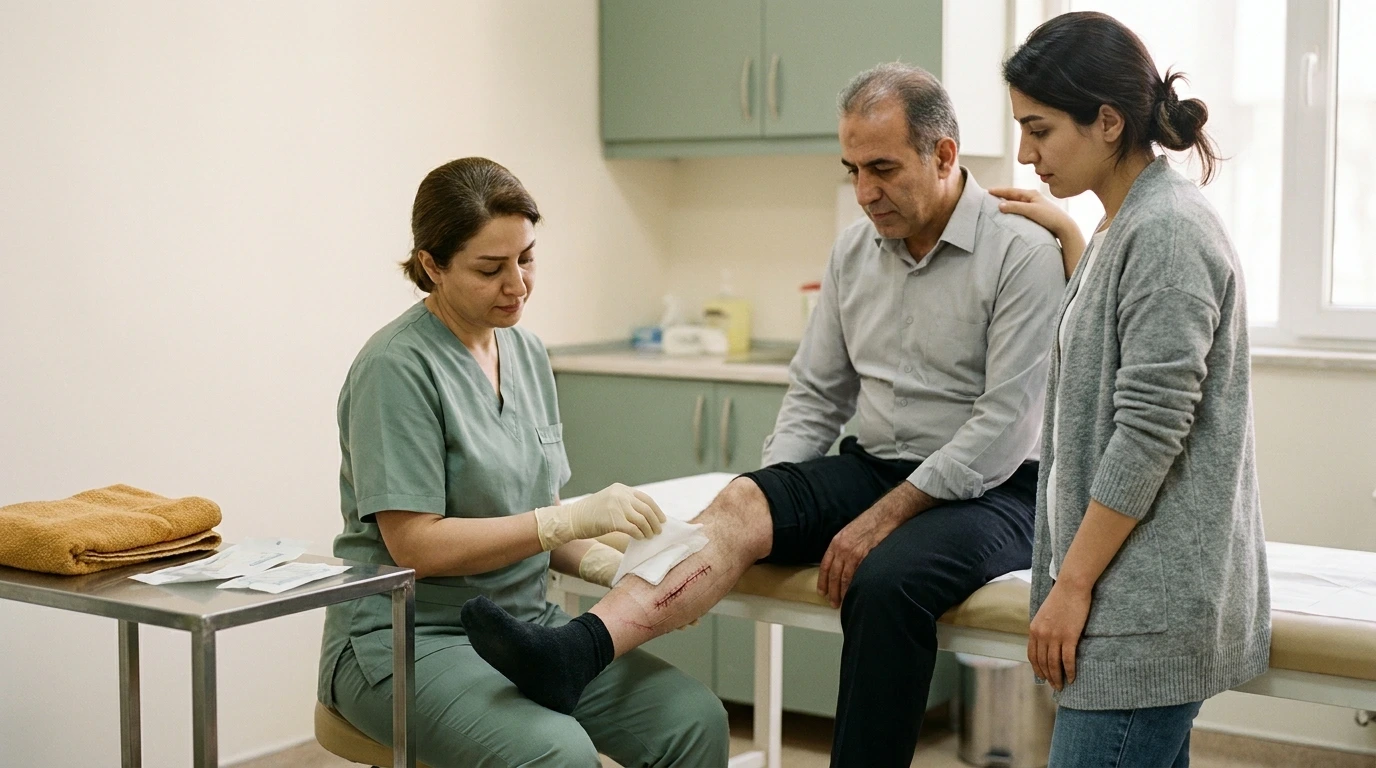
At Dialine, in Pasdaran, Tehran, we first assess the wound: its depth, the tissue inside it and any signs of infection. If diabetes or another condition is affecting healing, we take that into account as well. Then, depending on each wound:
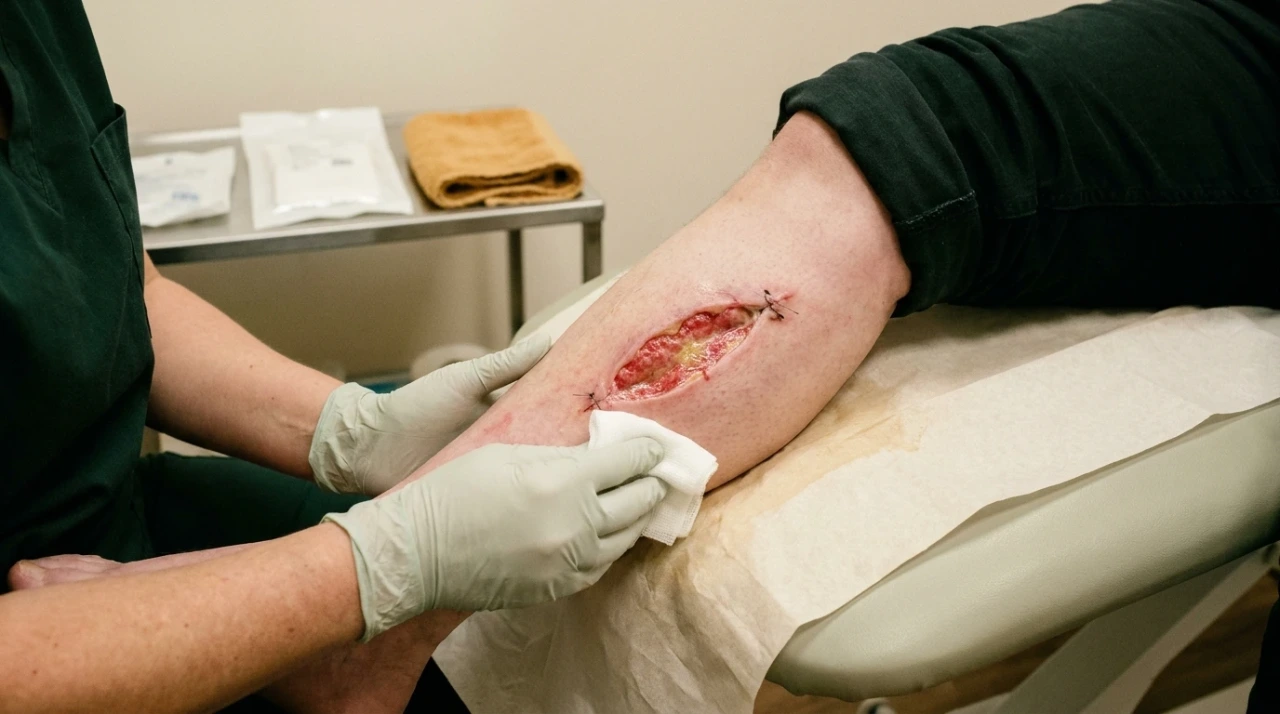
- Specialist debridement: we remove dead tissue and stuck-on discharge so that healthy tissue can grow.
- Modern dressings: we keep the wound's moisture at the right level with a suitable dressing, and change the type of dressing whenever the discharge or the stage of healing changes.
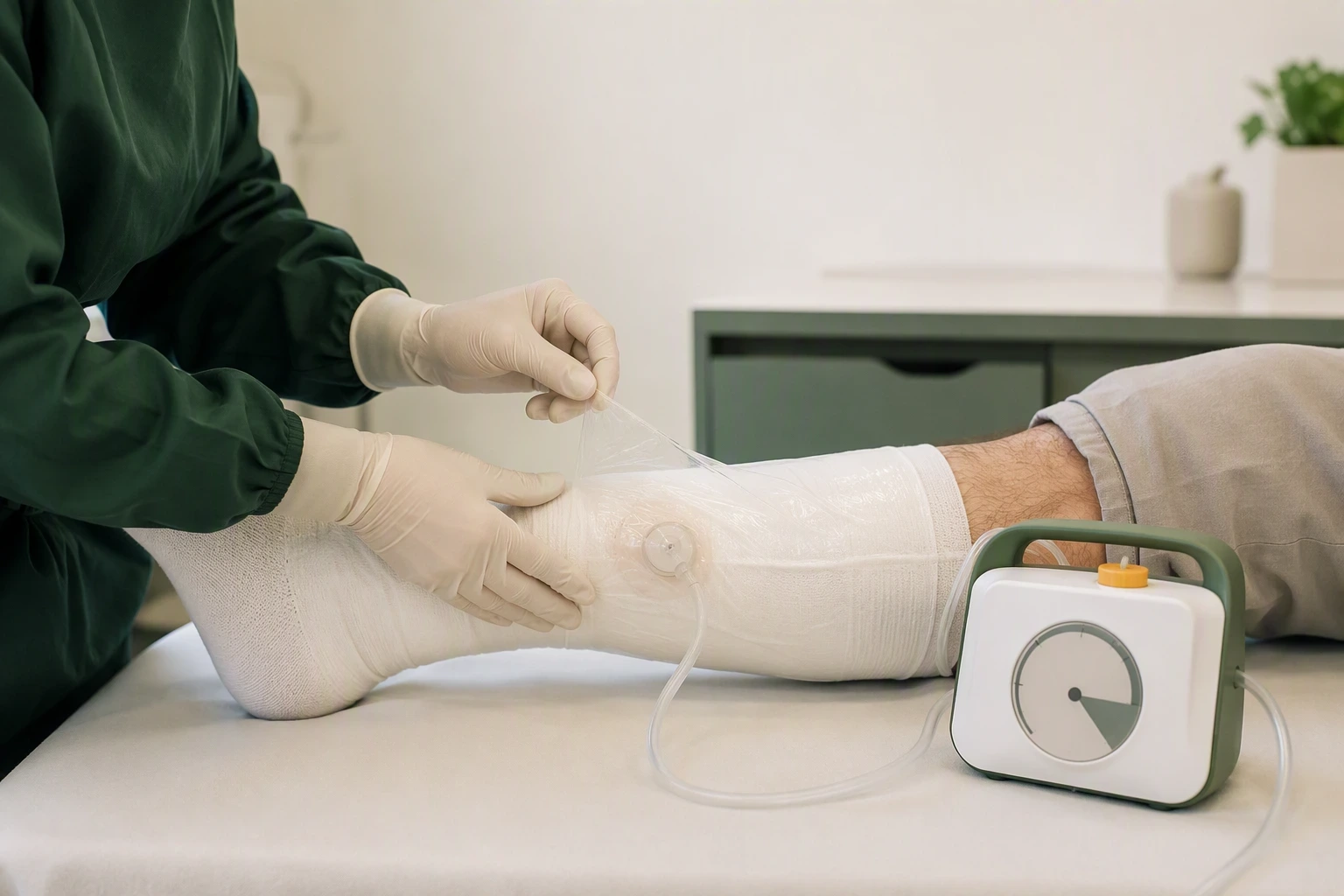
- Vacuum therapy (negative pressure wound therapy, NPWT): suitable for some open surgical wounds. The decision is made after an examination.
- Treating infection: if the wound is infected, we treat that too. This starts with cleaning the wound and, if needed, includes a course of antibiotics.
- Blood sugar control: in patients with diabetes, blood sugar is monitored alongside the wound treatment.
- Home wound care: if a patient cannot move around easily after surgery, we continue treatment at home.
Keep your surgeon informed about your wound treatment as well. There are more details on our specialist care for slow-healing wounds page.
From the first session to the thirteenth: an opened ankle wound
This case is one of Dialine's own patients. After orthopaedic ankle surgery, the surgical site had opened and the wound had become chronic. At the first visit, the wound edges were apart and there was dead tissue inside. We photographed the treatment session by session:
- Session 1: an open wound, with dead tissue in it.
- Session 2: the inside of the wound is cleaner and repair tissue is forming.
- Session 5: healthy repair tissue covers the whole length of the wound.
- Sessions 7 and 9: the wound has narrowed and the edges have drawn closer.
- Session 13: the wound has closed, leaving only a thin line.
See the photos from each session on this case's page. This is one patient's course, not a promise for everyone. The number of sessions depends on the depth of the wound, why it opened and each patient's general health.
We have other cases too, including wounds that opened after a mastectomy and after breast implant surgery. See them all in real cases of surgical wound treatment at Dialine.
After surgery: how to keep the wound from opening
Most of these steps are simple and done at home:
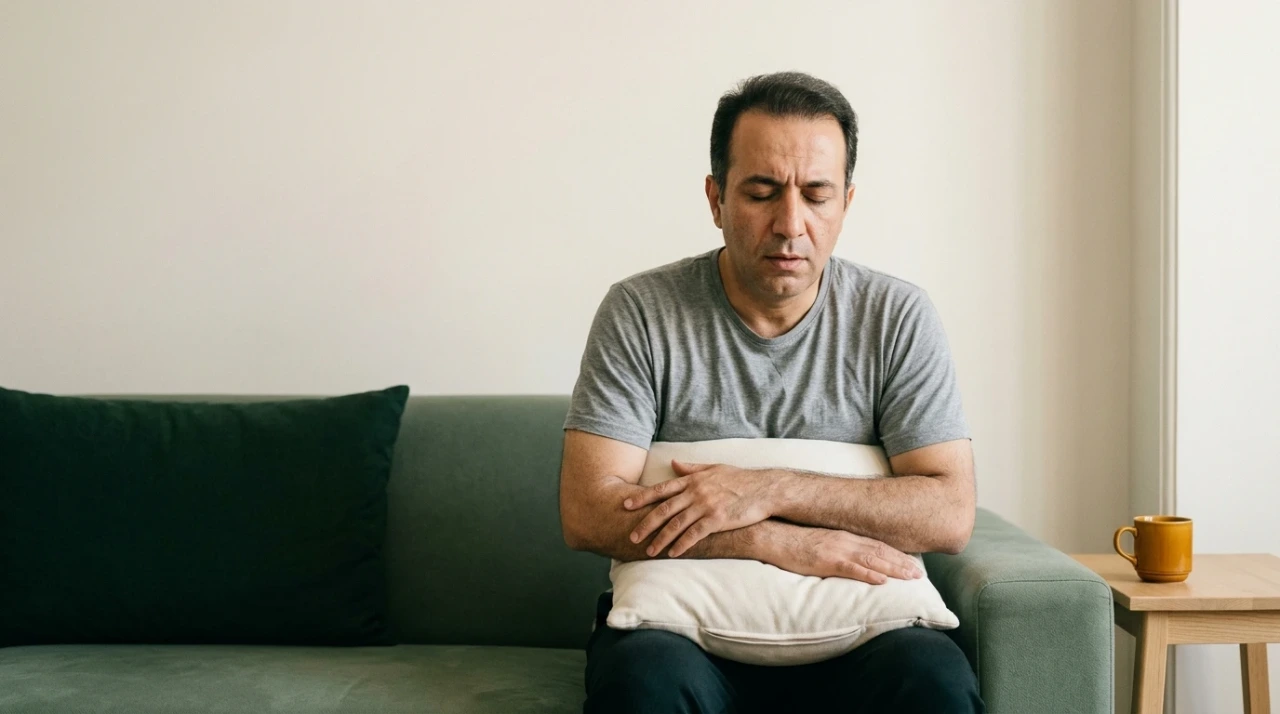
- When you cough, sneeze or get up, hold a pillow firmly against an abdominal wound.
- Do not lift heavy objects until your surgeon says you can.
- Prevent constipation. Drink enough water, and ask a doctor for advice if you need to.
- If you have diabetes, check your blood sugar regularly and keep it within the range your doctor gave you.
- Do not smoke, at least in the weeks before and after surgery.
- Eat enough protein. Your body needs it to build new tissue.
- Change the dressing the way your surgeon told you, and keep it clean and dry between changes.
- Do not skip follow-up appointments, even if you feel well.
Frequently asked questions
Can an opened wound be stitched again?
Sometimes, yes. If the wound is clean and not infected, the surgeon may close it again. If there is infection or dead tissue, the wound is usually left open so that it can be cleaned first and then fill in from the base. This is the surgeon's decision.
How long does an opened surgical wound take to heal?
There is no fixed number. A shallow wound without infection closes sooner. A deep wound, an infected wound or the wound of a person with diabetes takes longer. The ankle case above closed at the thirteenth session, but every wound follows its own course. Until we see the wound, the length of treatment cannot be estimated.
My C-section stitches have opened. Does this apply to me?
Yes. A caesarean wound is a surgical wound too, and the same signs and care apply. Make your first call to your obstetrician or the surgeon who performed the operation. If the wound has still not closed weeks later, specialist wound care helps.
I have diabetes and have had surgery. How can I tell my wound is not healing properly?
Watch for the same signs as above: new discharge, more pain, redness, a smell, or the edges separating. If you have neuropathy, you may feel less pain, so do not rely on pain alone; look at the wound itself every day. If the wound is somewhere you cannot see, ask someone to check it for you. An unexplained rise in blood sugar can also be a sign of infection.
Can an opened wound be dressed at home?
Yes, as long as a clinician has set the dressing plan: which dressing, how often and how. Dressing the wound on your own, especially with an ointment or powder that was not prescribed, can delay healing. If coming to the clinic is hard after surgery, home wound care is also possible.
Is vacuum therapy suitable for an opened surgical wound?
For some wounds, yes. Vacuum therapy uses negative pressure to draw fluid out of the wound. But it is not suitable for every wound, and the scientific evidence on its effect in open surgical wounds is still limited. The decision is made after an examination. We explain more in what vacuum therapy is and which wounds it suits.
Free consultation
If your surgical wound has stayed open, or several weeks have passed and it has still not closed, get in touch. On the first call, we ask you about the wound and tell you whether a visit to the clinic is needed. Dialine is in Pasdaran, Tehran. If your stitches opened today, contact your own surgeon first.
Scientific sources
- World Union of Wound Healing Societies (WUWHS). Consensus Document: Surgical wound dehiscence — improving prevention and outcomes. Wounds International, 2018.
- World Health Organization. Global Guidelines for the Prevention of Surgical Site Infection, 2nd ed. Geneva: WHO, 2018.
- National Institute for Health and Care Excellence (NICE). Surgical site infections: prevention and treatment (NG125), 2019.
- Dumville JC, et al. Negative pressure wound therapy for treating surgical wounds healing by secondary intention. Cochrane Database of Systematic Reviews, 2015, CD011278.
This article is not a substitute for an in-person medical consultation.