Most people who hear the word "debridement" from a doctor for the first time want one thing answered first: will it hurt? The answer depends on the method and on where the wound is, and on a foot that has lost sensation, little pain is not a sign that all is well.
Debridement means removing dead tissue from a wound: the yellow, sticky layer or the hard black crust. While that tissue stays, the wound cannot heal, because there is no living tissue visible underneath that could grow. There are five ways to do it, and the doctor chooses one or several after seeing the wound. The number of sessions is not fixed either, and sometimes the right decision is not to debride yet.
Why dead tissue stops healing
Dead tissue has no blood supply and cannot rebuild itself. Worse, it blocks nutrients from reaching the living edges of the wound and gives germs a warm, moist place to grow. A wound with dead tissue usually has more discharge and more odour as well. The signs of infection are described in infection in a diabetic foot wound.
There is another reason: until the dead tissue is removed, the doctor cannot see how deep the wound really is. Sometimes a wound that looks small from outside is larger under the crust.
What dead tissue looks like
It comes in two main forms:
- A yellow or cream-coloured layer (slough): soft and sticky, it sits on the surface of the wound and does not wash off easily.
- A black or brown crust: hard and dry, sometimes leathery.
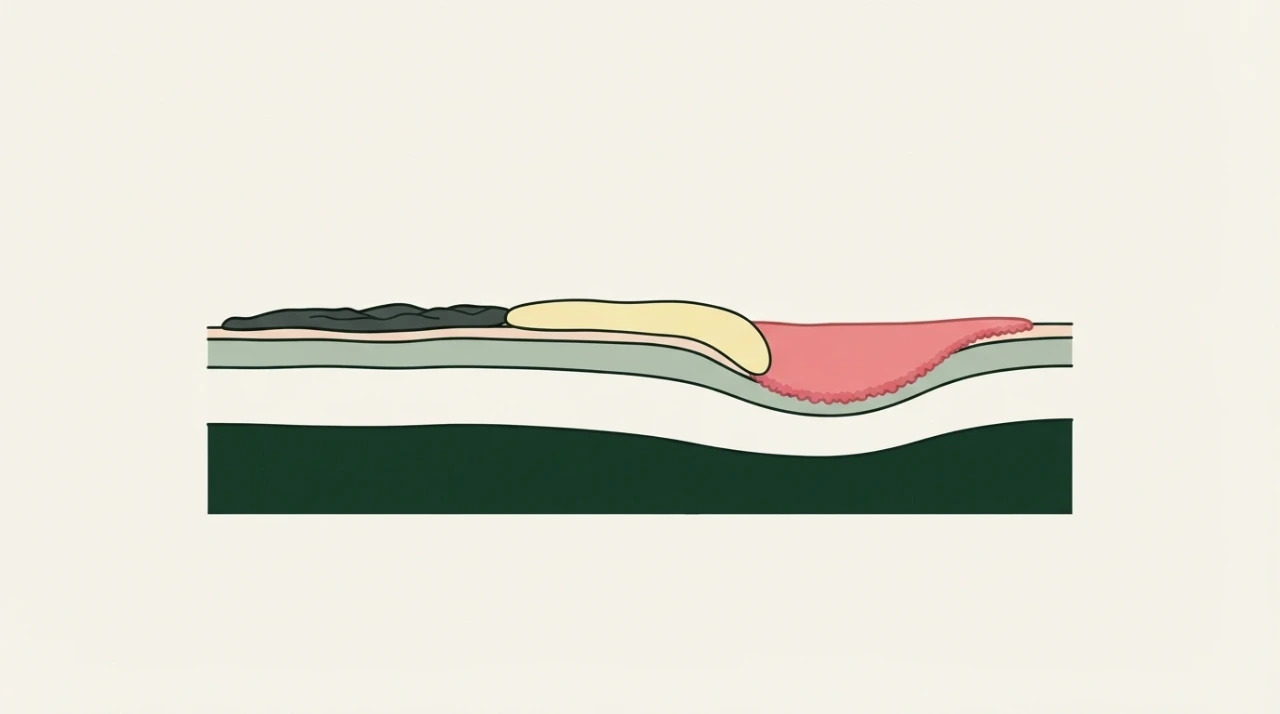
Callus and dry skin can look similar at times, but they are not dead wound tissue. Telling them apart takes looking at and feeling the wound. A photo cannot do it, because the type and depth of the tissue cannot be seen from outside.
Five ways to remove dead tissue
| Method | How it works | Usually used when | Pain |
|---|---|---|---|
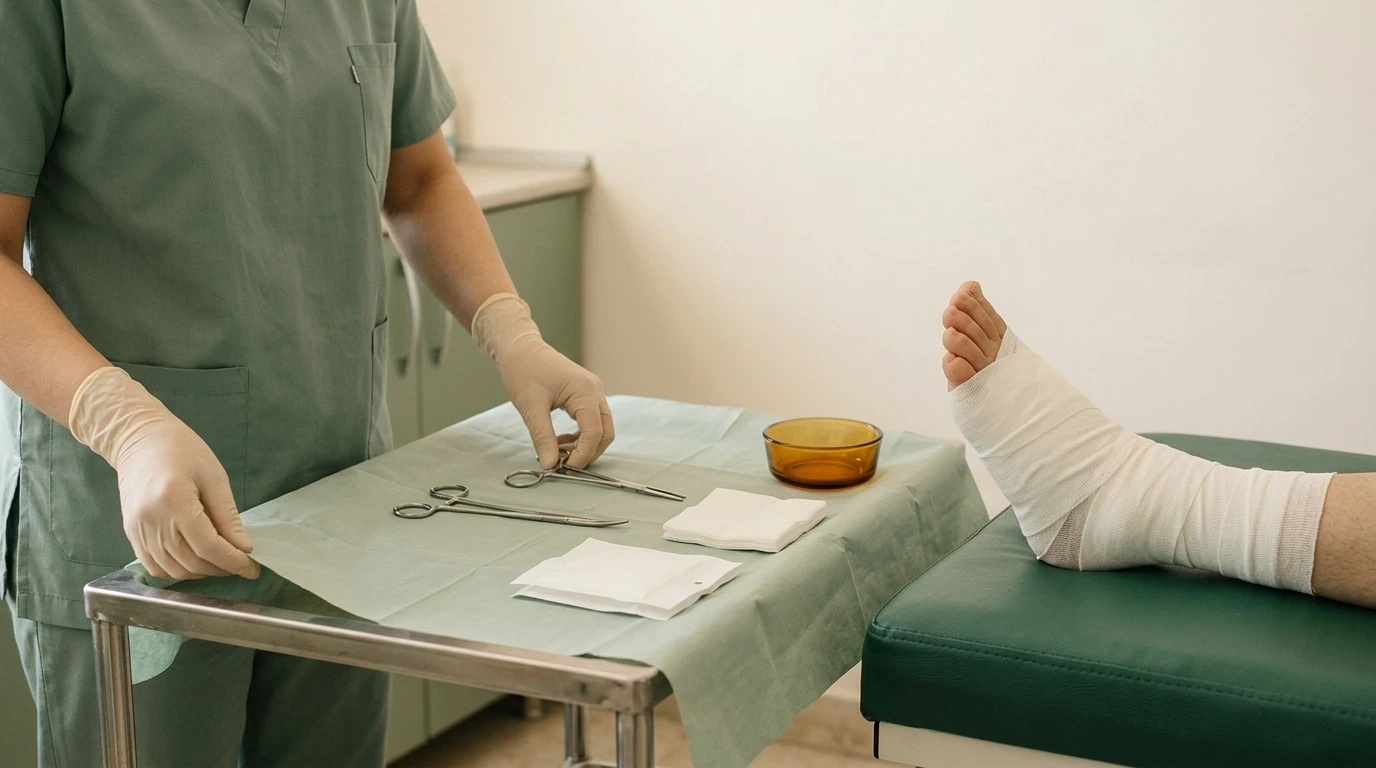
| Sharp (surgical) | Dead tissue is cut or scraped away with sharp instruments such as a scalpel, scissors and a curette. | There is a lot of dead tissue, it is deep, or infection is present. It is the fastest way. | It may be felt. When needed, anaesthesia controls it. |
| Autolytic | A dressing keeps the wound moist so the body softens and separates the dead tissue itself. | There is little dead tissue and no active infection. | Usually little pain, but slow. |
| Enzymatic | A topical product from the enzyme family is placed on the wound and gradually softens the dead tissue. | The sharp method is unsuitable or not enough. | Usually little pain. |
| Mechanical | The wound surface is cleaned by irrigation or physical wiping. | The dead tissue is loose and superficial. | Depends on how firmly it is wiped. |
| Biological (larval therapy) | Sterile fly larvae are placed on the wound and feed on the dead tissue. | The wound is deep or stubborn and other methods have not been enough. | It may cause pain or a prickling feeling. |
Dressings of dry gauze that stick to the wound are an old method and are no longer recommended. The gauze sticks, and removing it damages healthy tissue too.
Studies have not shown that any of these methods is clearly better than the others. The doctor chooses by the type of tissue, the depth of the wound, infection and the patient's condition, and changes the method midway if needed. On larvae there is one specific point: they clear dead tissue faster, but in a large trial on leg ulcers that did not translate into faster closure of the wound.
Does it hurt? An honest answer
Dead tissue itself feels no pain, but its living edge and the healthy skin and tissue around it do. So pain depends on how far the dead tissue extends and on the method used. Dressing-based and enzymatic methods are usually gentle, and the sharp method can be painful.
When needed, we give anaesthesia before starting. If the pain becomes too much during the work, tell us at that moment.
On a numb foot it is the other way round. Little or no pain is not good news here: the numbness is exactly what let the wound progress unnoticed. A patient with diabetic neuropathy needs the same follow-up even if they feel nothing during debridement. Tell the care team about pain that is new after the session or grows a few hours later.
Bleeding and care after debridement
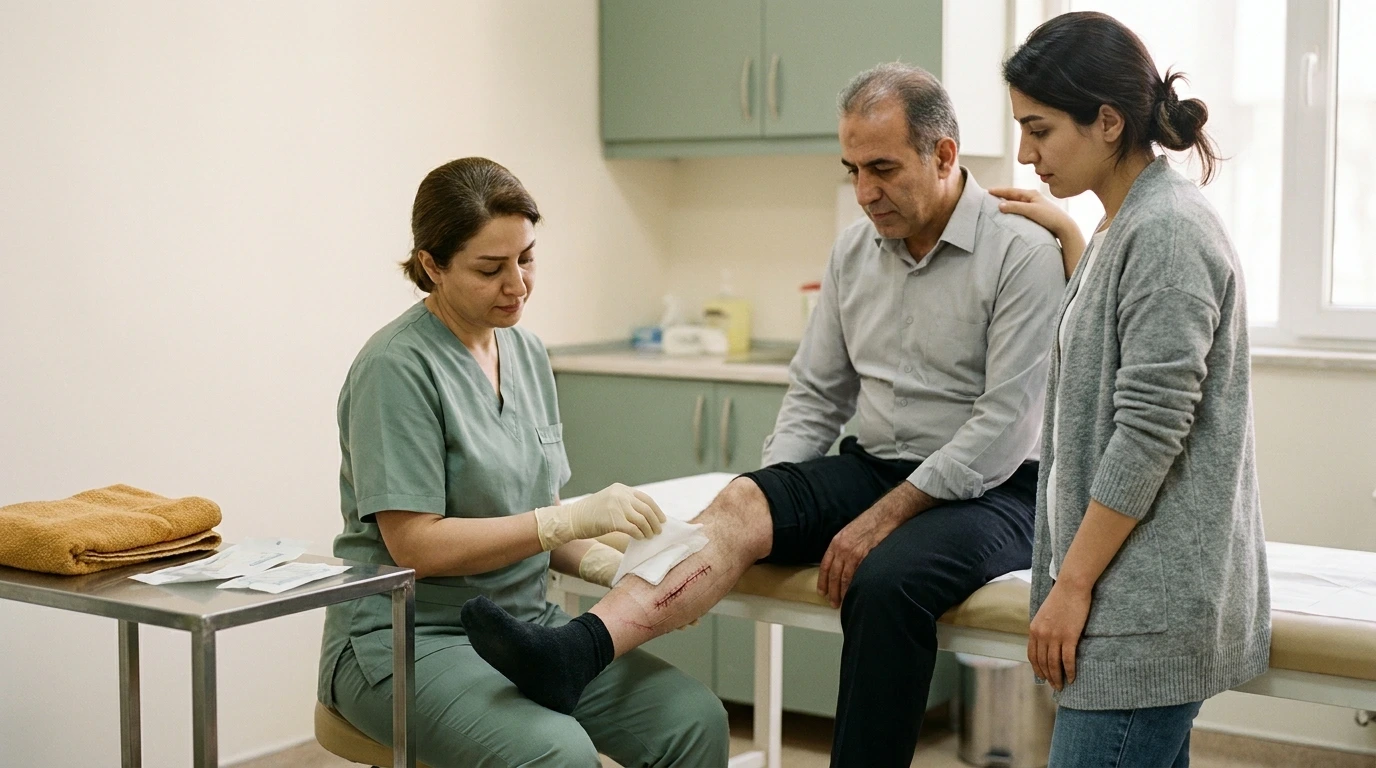
After debridement the wound surface is freshly exposed and has living tissue, so a little bleeding or blood-stained discharge is normal. The doctor controls the bleeding on the spot and puts a fresh dressing on the wound.
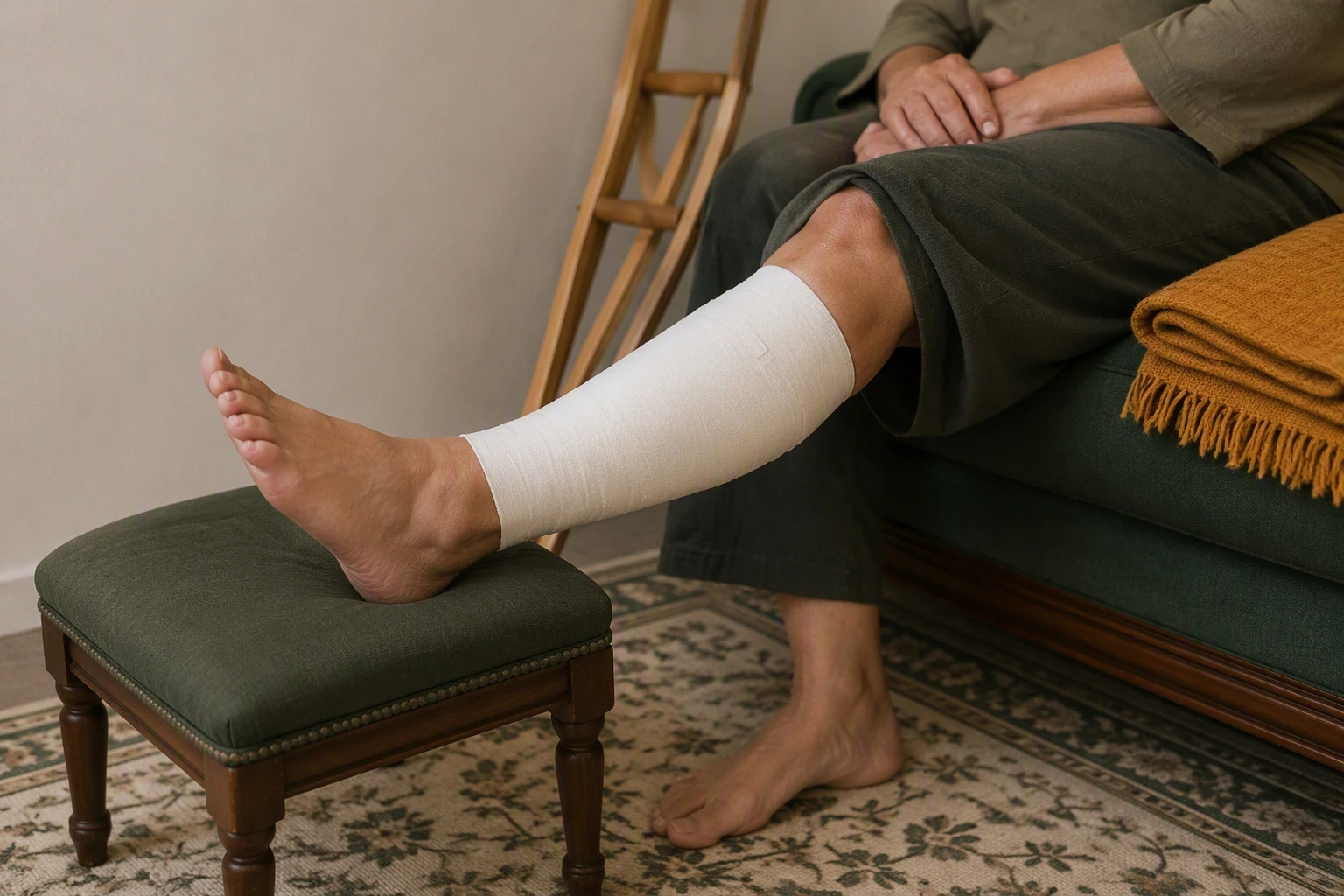
At home, keep the dressing as instructed and do not open it, do not get it wet unless you have been told you may, and do not put anything on the wound.
Report these the same day:
- Bleeding that does not stop with gentle pressure, or a dressing that is soaked through with blood.
- Redness spreading from the edge of the wound and wider each day.
- A bad smell or pus-like discharge.
- Fever or chills.
- Pain that is new or getting worse.
How many sessions are needed?
There is no fixed number. Sometimes one session removes the dead tissue, and sometimes several are needed, because dead tissue can form again, especially when the cause of the wound has not been dealt with: pressure on the wound, high blood sugar or poor circulation. Without seeing the wound, any number you hear is a guess. We have covered the overall length of treatment in how long does diabetic foot ulcer treatment take?
When not to debride
Debridement is not always the right move. Three situations are worth knowing:
- A stable, dry black crust on a foot with poor circulation. If there is no redness, swelling, discharge or bad smell, that crust may be the only covering the wound has. Removing it without assessing circulation can open a wound that does not have enough blood to close. In this case the doctor first looks at the circulation, or refers you for it, and then decides.
- A wound with no dead tissue. A clean, red, moist wound does not need debriding. Doing so damages living tissue and gains nothing.
- Debridement at home with non-professional tools. The reason is in the next section.
If you take a blood-thinning medicine, tell the doctor before debridement. It changes bleeding.
Why not at home
Picking off a black crust, callus or yellow layer with a blade, scissors or nail clippers is dangerous. On a numb foot a cut is not felt, bleeding and infection find a way in, and someone who is not a specialist cannot tell which tissue is dead and which is alive. It is one of the things not to do at home.
If travel is hard for you, we also do debridement as part of home wound care.
Debridement at Dialine
At the first visit we look at the wound and assess the type of dead tissue, its depth and any signs of infection, and choose the method to match. Four methods are available at Dialine, at our clinic in Pasdaran, Tehran:
- Sharp debridement for a lot of dead tissue or deep tissue.
- Autolytic dressings that keep the wound moist.
- Enzymatic debridement with a topical product.
- Larval therapy for wounds where other methods have not been enough.
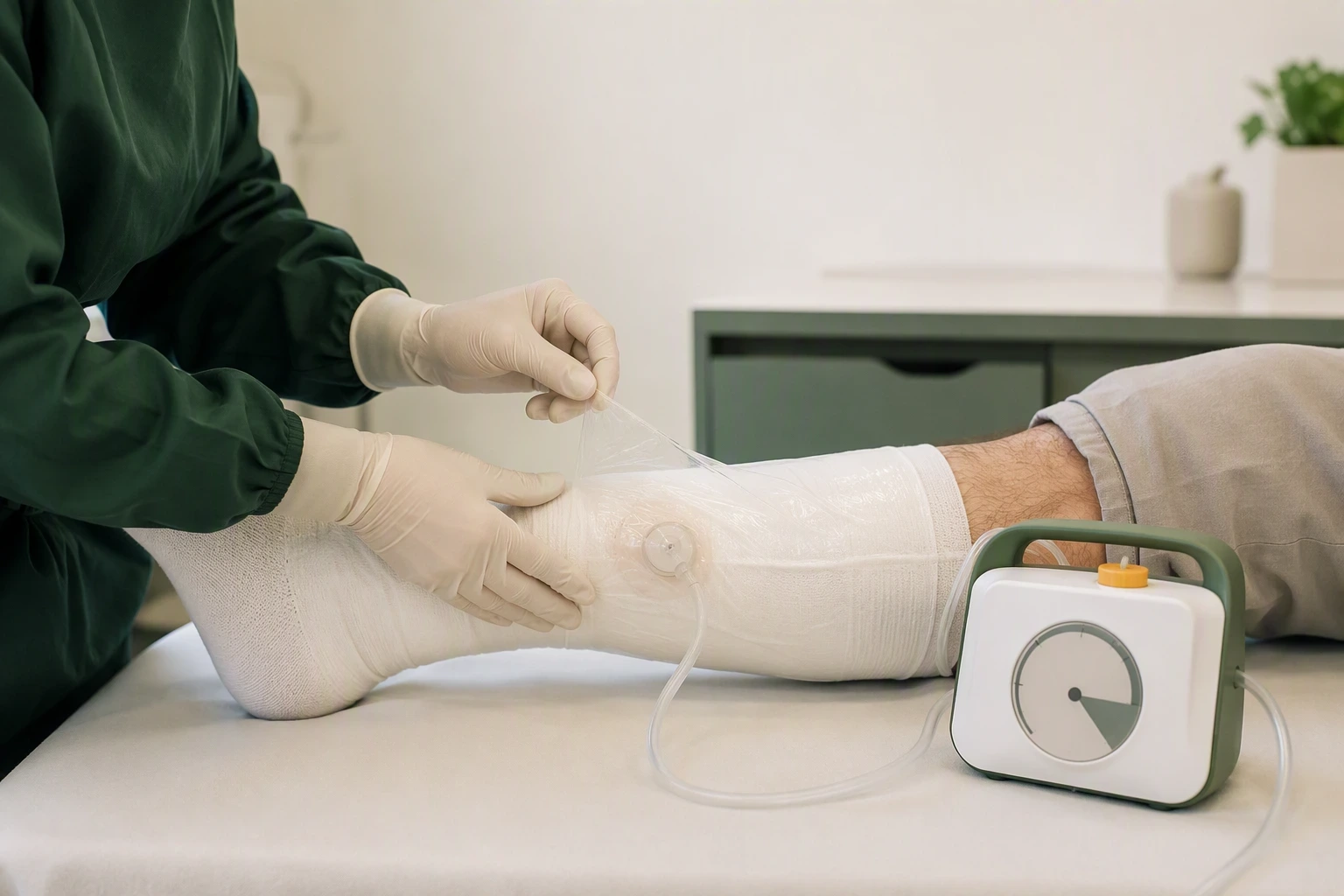
After debridement, dressings and session-by-session follow-up continue the same treatment. When a wound is deep or complex, vacuum therapy can follow, and the choice of dressing is covered in principles of modern chronic wound dressings. The full description of the service is on the page for chronic and diabetic wound care.
Frequently asked questions
Does debridement hurt?
It depends on the method and the location of the wound. The sharp method can be painful, and dressing-based and enzymatic methods are usually gentle. On a numb foot, little pain is not a sign that all is well.
Is anaesthesia given first?
When needed, yes. The kind of anaesthesia depends on the method and the wound, and the doctor explains it before starting.
How many debridement sessions are needed?
There is no fixed number. Sometimes one session is enough, and sometimes dead tissue forms again and further sessions are needed. Without seeing the wound, any number is a guess.
Is bleeding after debridement normal?
A little bleeding or blood-stained discharge is normal. Bleeding that does not stop with gentle pressure should be reported the same day.
Does every wound need debridement?
No. A wound with no dead tissue does not need it. Sometimes too, as with a stable dry black crust on a foot with poor circulation, the doctor has to check the circulation before doing anything.
Can I remove dead skin at home?
No. Cutting or picking with a blade or scissors on a diabetic foot, especially a numb one, risks cuts and infection. Removing dead tissue is the care team's job.
Is larval therapy better than sharp debridement?
There is no "better". The choice depends on the wound. Larvae clear dead tissue faster, but that does not mean the wound closes faster.
Free consultation
If a doctor has suggested debridement for your wound or a family member's and you are not sure which method or why, call us. The specialists at Dialine, in Pasdaran, Tehran, will guide you. Dialine works in four areas: diabetes, chronic wounds, scars and neuropathy.
Scientific sources
- International Working Group on the Diabetic Foot (IWGDF). Guidelines on interventions to enhance healing of foot ulcers in persons with diabetes, 2023.
- Edwards J, Stapley S. Debridement of diabetic foot ulcers. Cochrane Database of Systematic Reviews, 2010.
- Dumville JC, Worthy G, Bland JM, et al. Larval therapy for leg ulcers (VenUS II): randomised controlled trial. BMJ, 2009.
This article is not a substitute for an in-person medical consultation.