The question usually comes from someone who has been changing dressings for weeks and still sees no real change. It is a fair question. But the honest answer is not a number.
There is no fixed healing time for a diabetic foot ulcer. Until we see the wound in person, no firm number can be given; any number is a guess. What can be known much sooner — and matters far more to you — is whether the treatment is on the right track. You do not have to wait for the wound to close to find that out. About four weeks is usually enough.
This article covers what actually sets the length of treatment, how to tell whether treatment is working, and which delays cost the most time.
Why no clinician gives you a number before seeing the wound
Two wounds that look alike in a photograph can follow completely different courses. One involves only the surface layers of skin; the other has reached the tissue beneath. Real depth, the presence of infection and the state of the blood supply are none of them visible in a photo.
So any clinic that quotes you a number before examining the wound is guessing. And a number that later fails to materialise destroys two things: your trust, and your patience for a treatment that may well have been working.
Six things that set the length of treatment
The first assessment is what determines the timeline. These six factors carry the most weight.
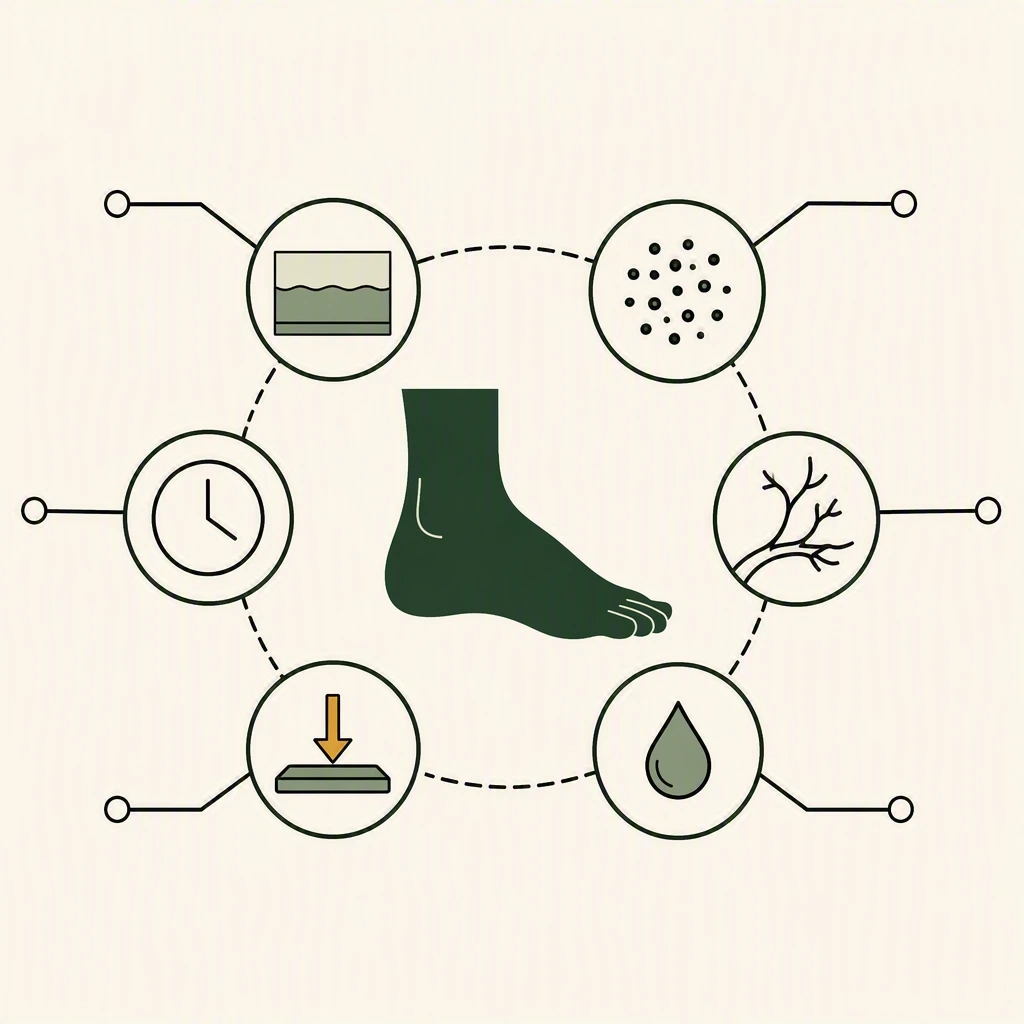
1. Depth and size of the wound
A wound confined to the surface layers of skin has a shorter road to healing. Once it reaches fat, tendon or bone, treatment becomes more complex and takes longer. Size matters too: a larger surface means more tissue the body has to rebuild.
2. Infection, and whether it has reached the bone
Infection is the most common reason treatment drags on. Until it is controlled, healing effectively stops, and nothing done to the wound itself will produce a result.
Two figures are widely quoted here and widely misunderstood. A course of antibiotics for a soft-tissue infection is usually one to two weeks; for confirmed bone infection (osteomyelitis), four to six weeks. Those figures define the duration of infection treatment, not the time to wound closure. Finishing the course does not mean the wound is finished.
We cover diagnosis and control in detail in diabetic foot infection.
3. Blood supply to the limb
Healing needs blood. Oxygen, nutrients and immune cells all reach the wound by the same route. In diabetes the arteries of the foot can narrow and blood flow can drop. A wound that is not getting enough blood will progress slowly no matter what dressing is placed on it.
Where the signs point to poor blood supply, specialist vascular assessment is needed, and the patient is referred for exactly that.
4. Blood sugar control
High blood sugar impairs immune cell function and slows the building of new tissue. Controlling it genuinely changes the pace of healing — and unlike most factors on this list, much of it is in the patient's own hands. We set out the relationship in blood sugar control and wound healing.
5. Taking pressure off the wound (offloading)
This factor is underestimated more than any other. A wound crushed under body weight every day never gets the chance to heal. Walking on the affected foot — even a few steps indoors, even in soft slippers — can undo weeks of treatment.
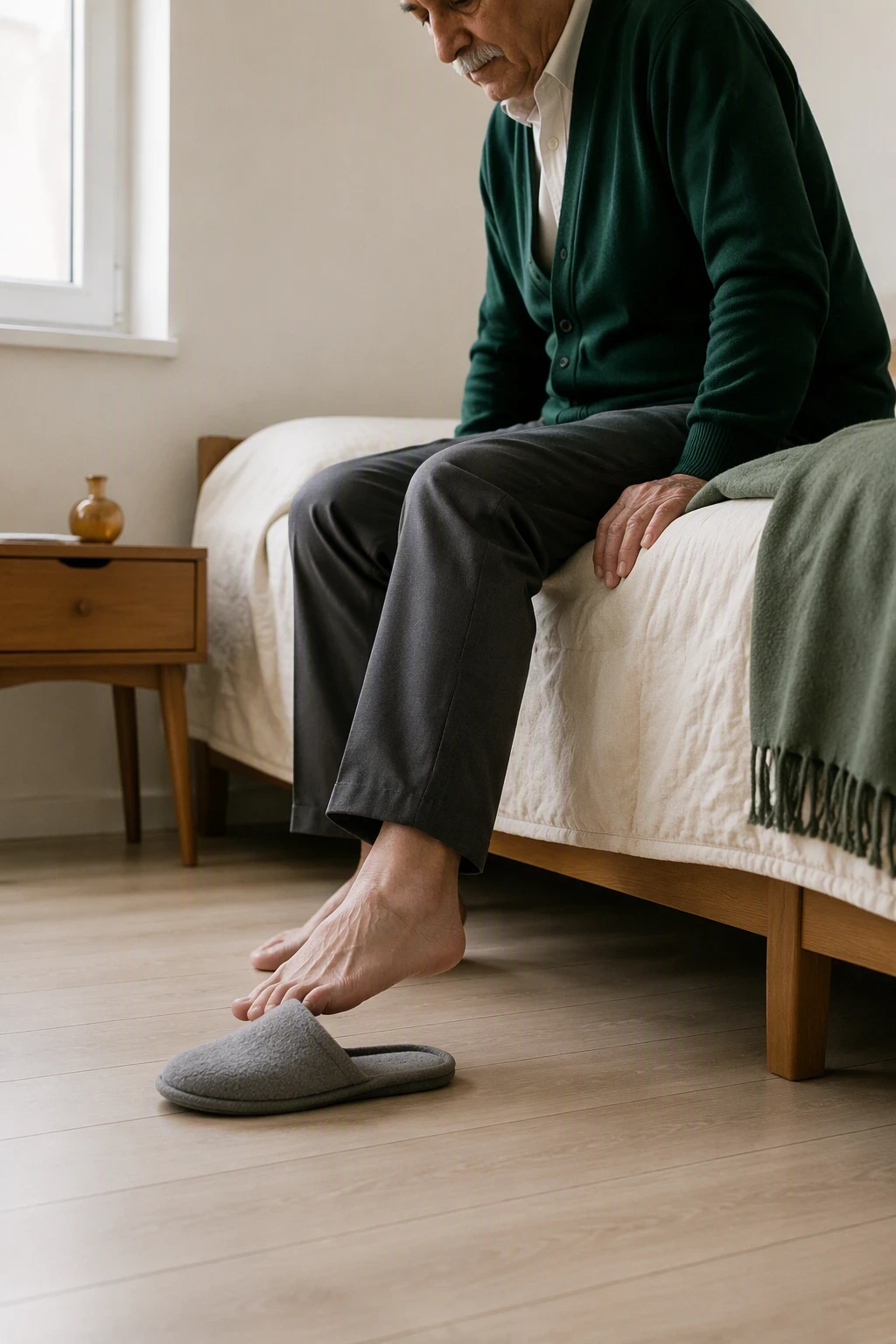
Neuropathy makes it worse: the foot does not hurt, so the patient gets no warning and walks normally. The practical approaches are in therapeutic footwear and offloading.
6. How long the wound has been open
A wound that has just appeared and one that has been open for six months are two different situations. A chronic wound settles into a stalled state and does not leave it on its own; restarting healing takes intervention.
One thing we do know with confidence: every week lost makes treatment harder.
How to tell whether treatment is working
If there is no number for the finish, what should you follow? The trend, not the destination.
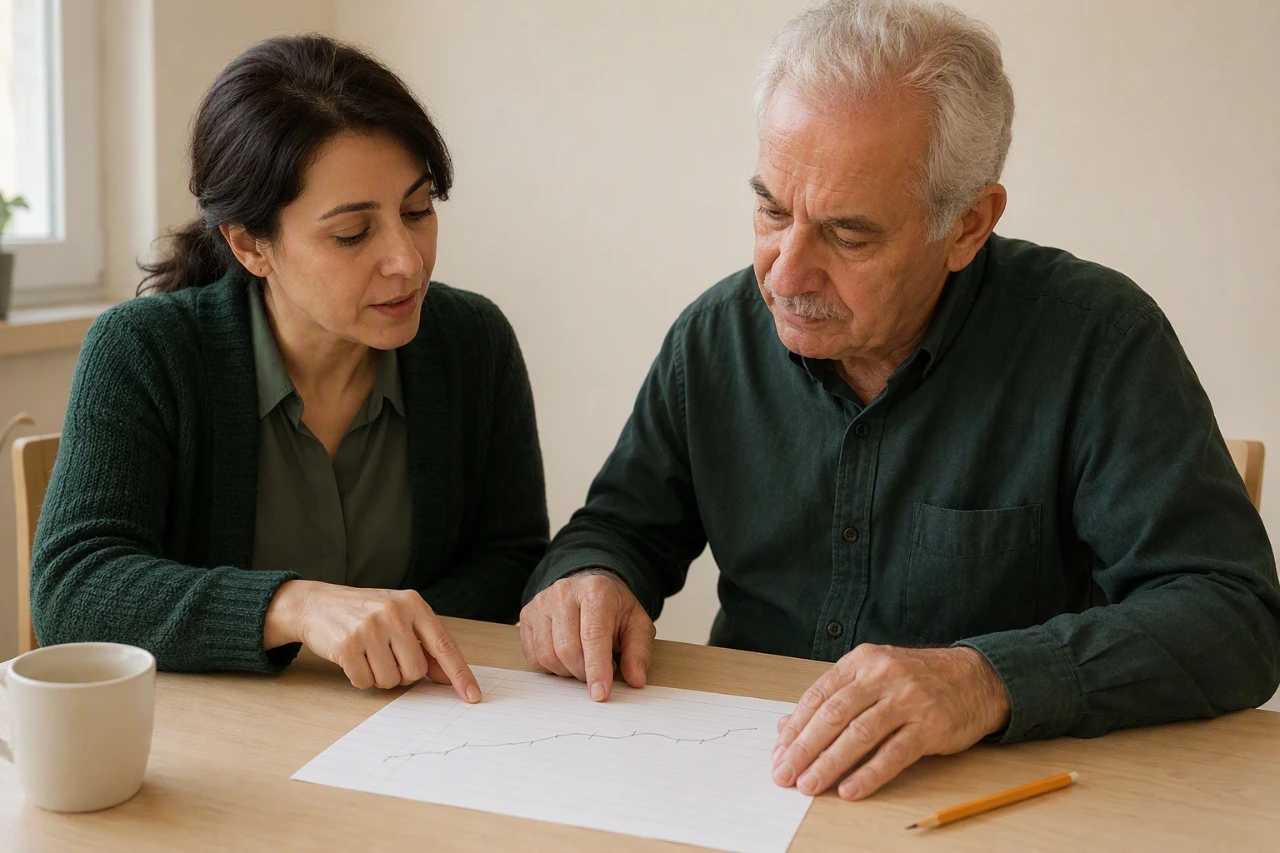
The wound should be getting smaller over time. In practice, roughly four weeks is a reasonable window in which to see whether treatment is having an effect. A wound that has visibly shrunk in that time is usually on the right track. A wound that has stayed more or less the same does not necessarily mean treatment has failed; it means it is time to reassess.
Reassessing means returning to those six factors and finding the one that was missed: an infection not controlled, pressure not taken off, blood sugar left high, or a blood supply that is not sufficient.
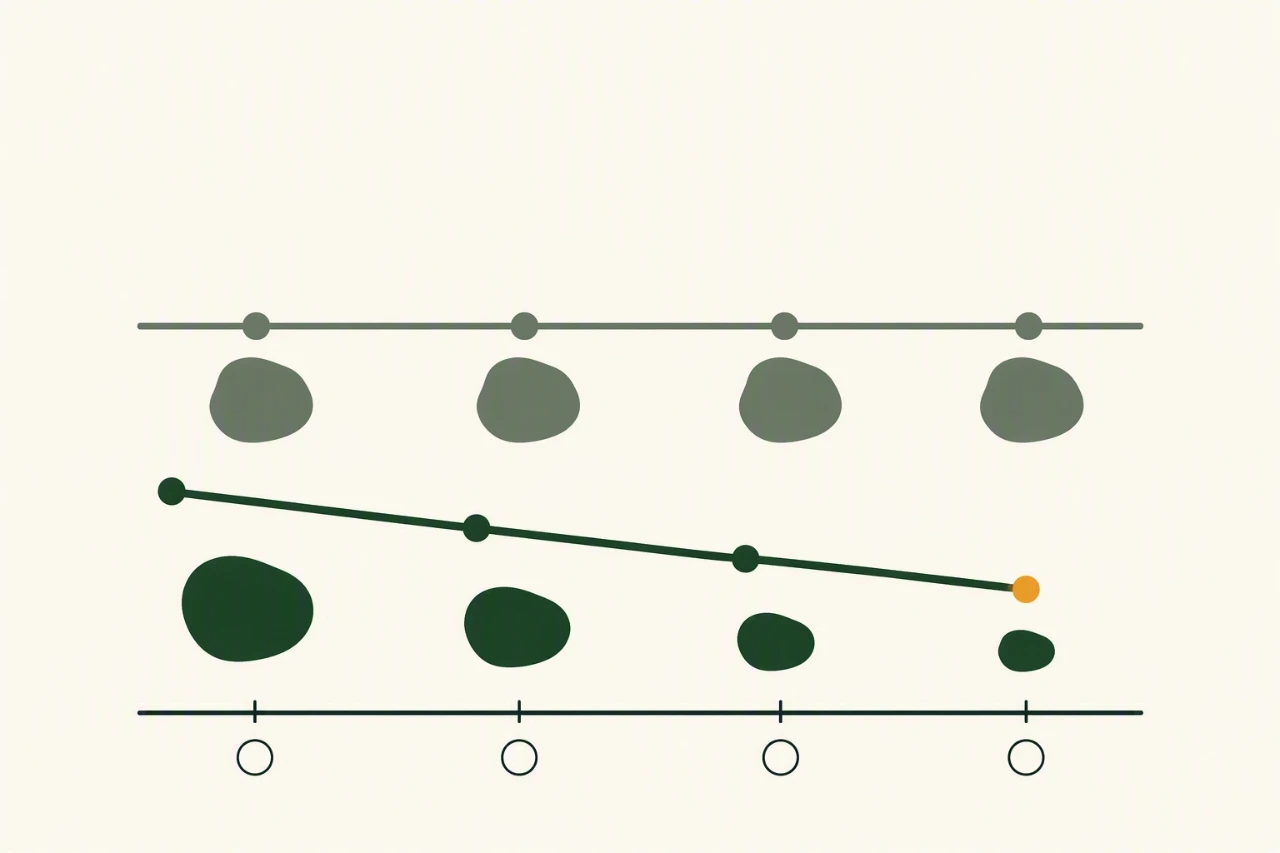
Signs you can follow yourself between visits:
- The edges of the wound are drawing together and the overall size is shrinking.
- There is less discharge than the week before.
- The wound has no foul smell.
- The colour inside the wound tends towards pink or bright red, not yellow and not black.
- The skin around the wound is not red, hot or swollen.
And these do not wait for the next appointment: fever or chills, purulent discharge, a foul smell, skin or a toe turning black, and redness and swelling that spread quickly. If you see any of them, see a doctor the same day.
What makes treatment take longer
Much of the time that gets lost is preventable:
- Coming in late. The most common factor, and the most expensive. A wound that is small in the first week is no longer the same wound by the third month.
- Self-applied dressings at home. Covering a wound with whatever is to hand conceals the situation without correcting it.
- Continuing to walk on the affected foot. The quietest factor of all, because neuropathy means the patient feels no pain.
- Letting blood sugar go during treatment.
- Stopping treatment because it "looks better". A wound that has closed on the surface still has fragile tissue underneath and reopens easily.
- Switching clinics repeatedly. Each move restarts the wound's record from zero and breaks the continuity of follow-up.
Treatment at Dialine
Dialine is in Pasdaran, Tehran, and consultation is available in Persian and English. Treatment begins with a full assessment, and the method is chosen for that particular wound rather than from a fixed protocol. Depending on the case, specialist debridement, negative pressure wound therapy (NPWT), ozone therapy, maggot debridement therapy and PRP are available. For patients who find travel difficult, wound care at home is also provided, and nutritional assessment and counselling is part of the same pathway.
None of these methods is a miracle and none guarantees a healing time. What they do is remove the obstacles to healing, one at a time, so the body can do its own work.
To see what that looks like in practice, the course of a three-month diabetic foot ulcer is documented session by session, and NPWT in practice shows what the method does to a real wound.
Dialine works across four areas: diabetes, chronic wounds, scars and neuropathy. For specialist diabetic foot ulcer treatment you can arrange a free consultation; that first contact establishes the state of the wound and what the next step is.
Frequently asked questions
How many days does a diabetic foot ulcer take to heal?
There is no fixed number, and any answer that gives one before seeing the wound is a guess. Two wounds of the same size can follow completely different courses depending on depth, infection, blood supply and how much pressure they take.
If the wound has not shrunk after a month, has treatment failed?
Not necessarily. It means it is time to reassess. At that point the task is to find the factor that has not been controlled — usually infection, pressure on the wound, blood sugar or blood supply — and change the treatment plan accordingly.
How many weeks do antibiotics take?
Usually one to two weeks for a soft-tissue infection, and four to six weeks for confirmed bone infection. The decision rests with the physician and depends on the type of infection. Note that this is the duration of infection treatment and is not the same as the time to wound closure.
Does blood sugar control really affect the speed of healing?
Yes. High blood sugar both weakens the body's defence against infection and slows the building of new tissue. It is one of the few significant factors largely within the patient's own control.
How much treatment does a wound that has reached the bone need?
More than a surface wound, and a different treatment plan as well. The precise duration can only be given after assessment and the necessary investigations.
Does NPWT shorten treatment?
NPWT suits particular wounds and helps healing in those cases, but it is not a guarantee of shorter treatment. Whether it suits your wound is determined after examination.
Why does the wound look bigger after debridement?
Because the dead tissue over it has been removed and the true size of the wound, previously hidden underneath, becomes visible. This apparent enlargement is usually part of treatment going correctly, not the wound getting worse.
This article is not a substitute for an in-person medical consultation.