
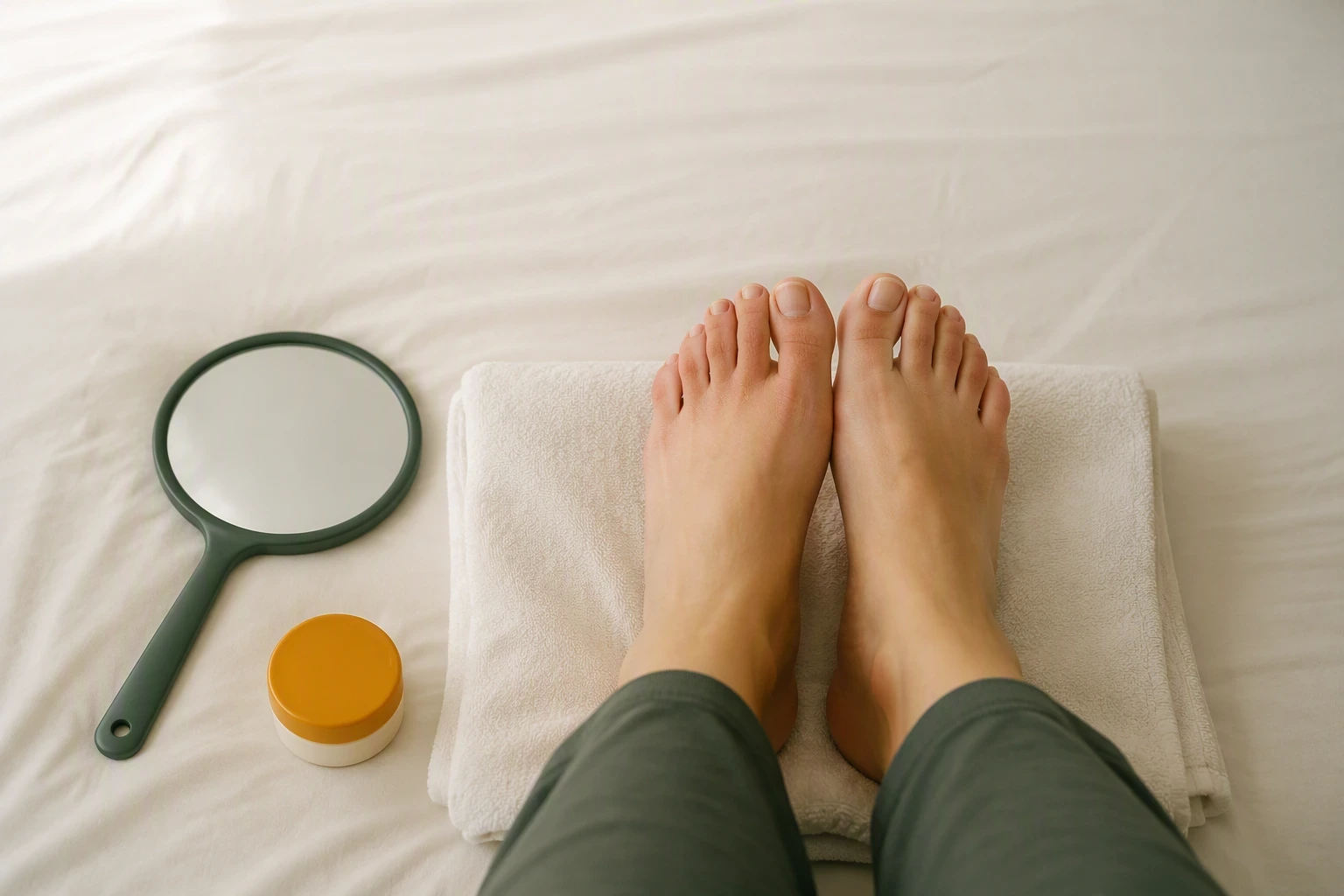
If you live with diabetes, you have probably been told many times to «look after your feet» — but rarely exactly what that means, how often, and which things you should never do. This article fills in that gap.
The short answer: diabetic foot care is a short daily routine — looking at the whole surface of the foot, washing and drying it properly (especially between the toes), moisturising dry skin, cutting the nails correctly, and checking inside your shoes before you put them on. It takes a few minutes. More important than the steps themselves is knowing what you have seen and needs to be shown to a doctor the same day.
The reason those few minutes matter is simple: in diabetes, a foot ulcer usually does not begin with pain. If you wait for pain, you may notice too late.
Why a diabetic foot needs to be looked at every day
The foot in diabetes faces two problems at once: the warning arrives later, and healing happens more slowly. It is the combination of the two that turns a small graze into a chronic wound.
When pain no longer warns you
Diabetic peripheral neuropathy reduces the foot's protective sensation. A small stone inside a shoe, a folded sock or a tight shoe can irritate the skin for hours without your feeling anything.
In that situation, «it doesn't hurt» no longer means «nothing is wrong». The eye has to take over from sensation — and that is only possible through deliberate, daily looking.
When healing is slow
Diabetes can reduce blood flow through the small arteries of the foot. Less blood means less oxygen, fewer nutrients and fewer immune cells reaching the injury; so a wound that would have closed in days in someone else can stay open for weeks here, and become infected.
Blood-sugar control acts directly on that same healing — a subject we cover separately in glycemic control and wound healing.
The daily checklist — five steps
The best approach is to tie these five steps to a fixed habit: every night before bed, or after your shower. A habit with no set time does not happen.
1. Looking
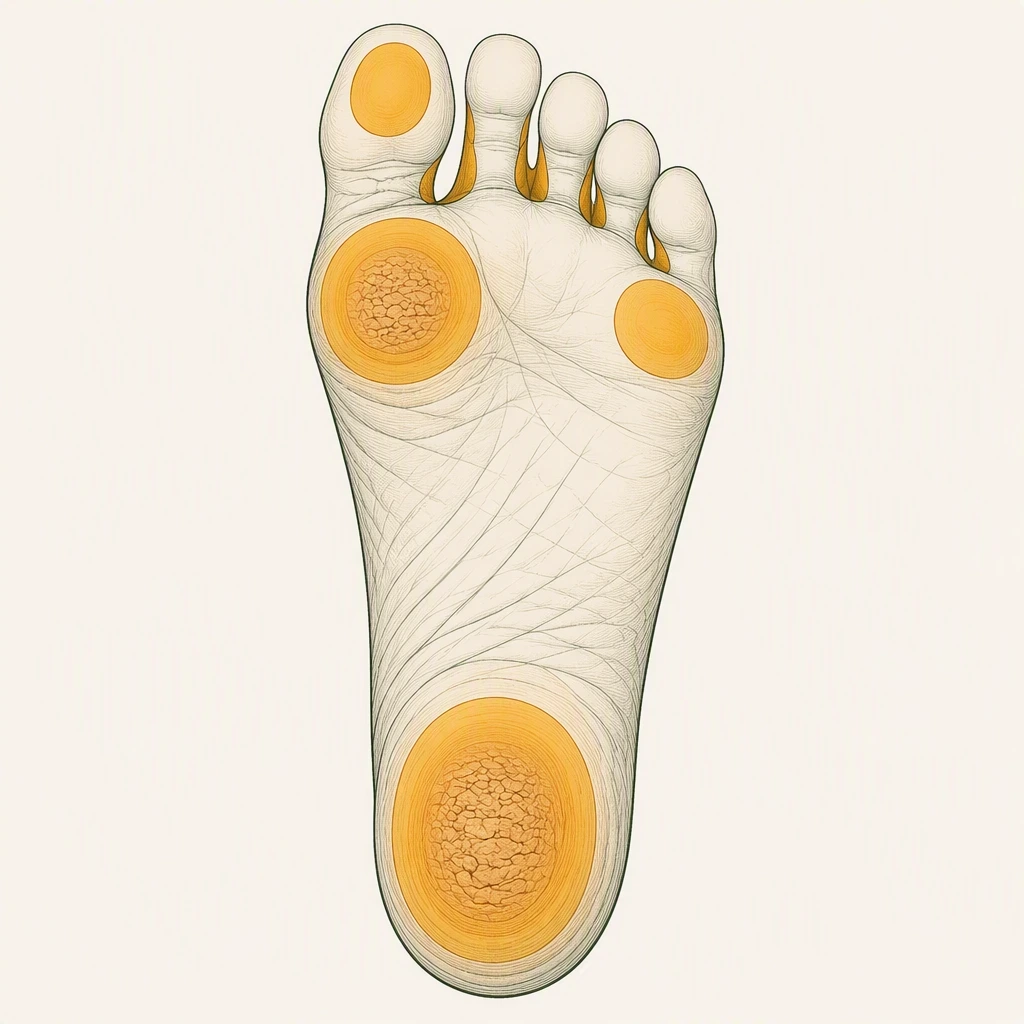
See the whole surface of the foot: the top, the sole, the heel, around the nails and — most importantly — between the toes. The place you cannot see is exactly where a problem starts quietly.
If bending is difficult or you cannot see the sole, use a long-handled mirror on the floor, or ask a family member to look. There is no embarrassment in this; the cost lies in not doing it.
What to look for: cuts, blisters, redness, swelling, hard or yellowish skin (callus), heel cracks, a change in nail colour, and anywhere that looks different from yesterday.
2. Washing and drying
Wash your feet daily with lukewarm water and mild soap. Hot water is off limits: with a numb foot, a painless burn is entirely possible. Test the water with your elbow or the back of your hand, never with your foot.
Do not soak your feet in a bowl or leave them in water for long; soaking softens the skin and makes it vulnerable.
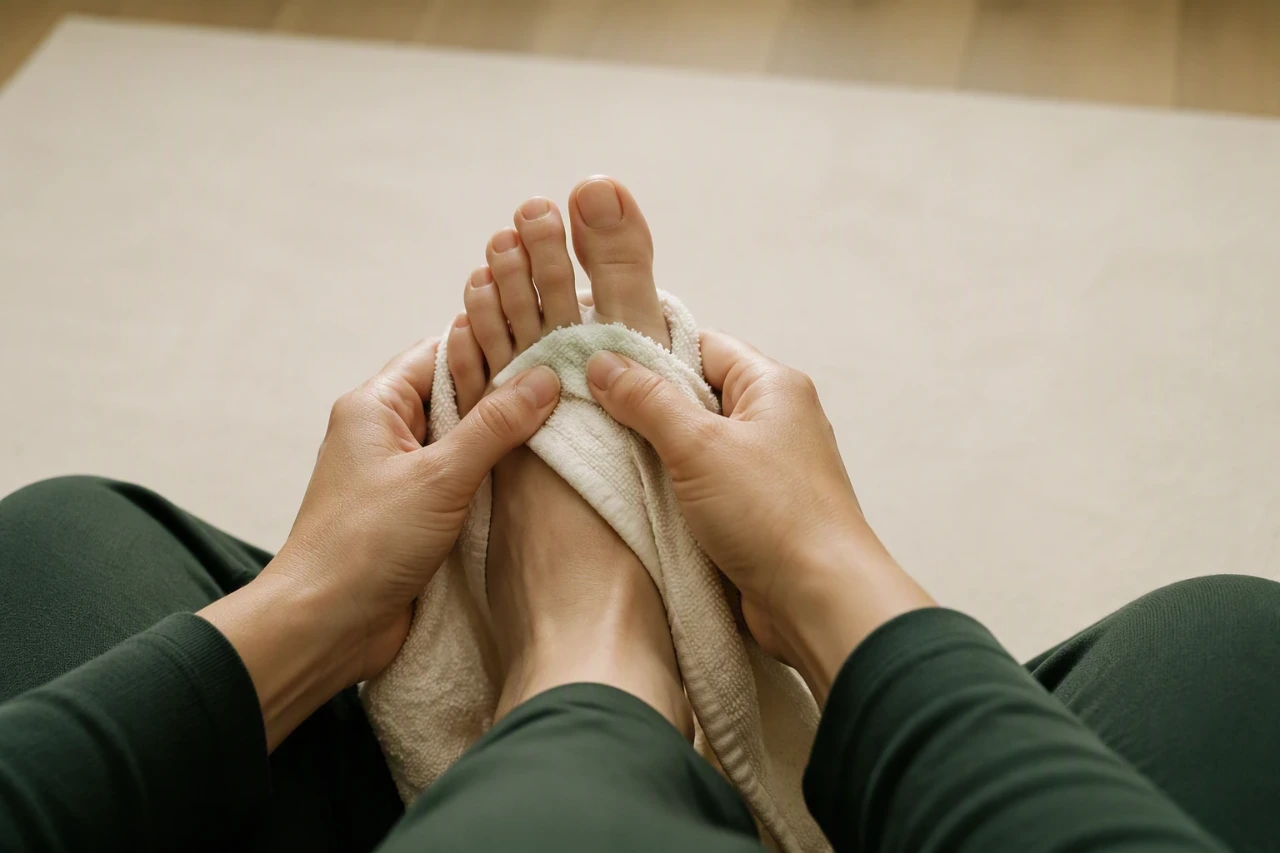
Drying matters more than the washing itself. Use a soft towel, without rubbing or dragging, and dry between the toes separately and completely. Moisture left between the toes sets the scene for fungal infection and skin fissures.
3. Moisturising — where yes, where never
Dry skin cracks, and a crack is an entry route for bacteria. So apply a moisturising cream or ointment to the top of the foot, the sole, and especially a dry heel.
But never apply cream between the toes. That area is already moist, and adding more moisture is precisely what you should not do.
4. Nails
Cut the nails straight across, following the line of the toe — not rounded and not down at the corners. Cutting them round or too short guides the nail into the flesh, and an ingrown toenail in a diabetic foot is not a minor problem.
Smooth the edges with a soft file. If a nail is thickened, discoloured or painful, or if your eyesight is poor, leave this to the care team.
5. Shoes and socks, before you put them on
Every time, before putting a shoe on, run your hand inside it: a small stone, a small object, a raised seam or a torn lining. With a numb foot you will not notice these until a wound has already formed.
Wear socks without raised seams and without tight elastic, and change them daily. Do not walk around the house barefoot or in socks alone.
The right shoe is a subject in itself — we cover shoe choice and pressure distribution in diabetic footwear and offloading.
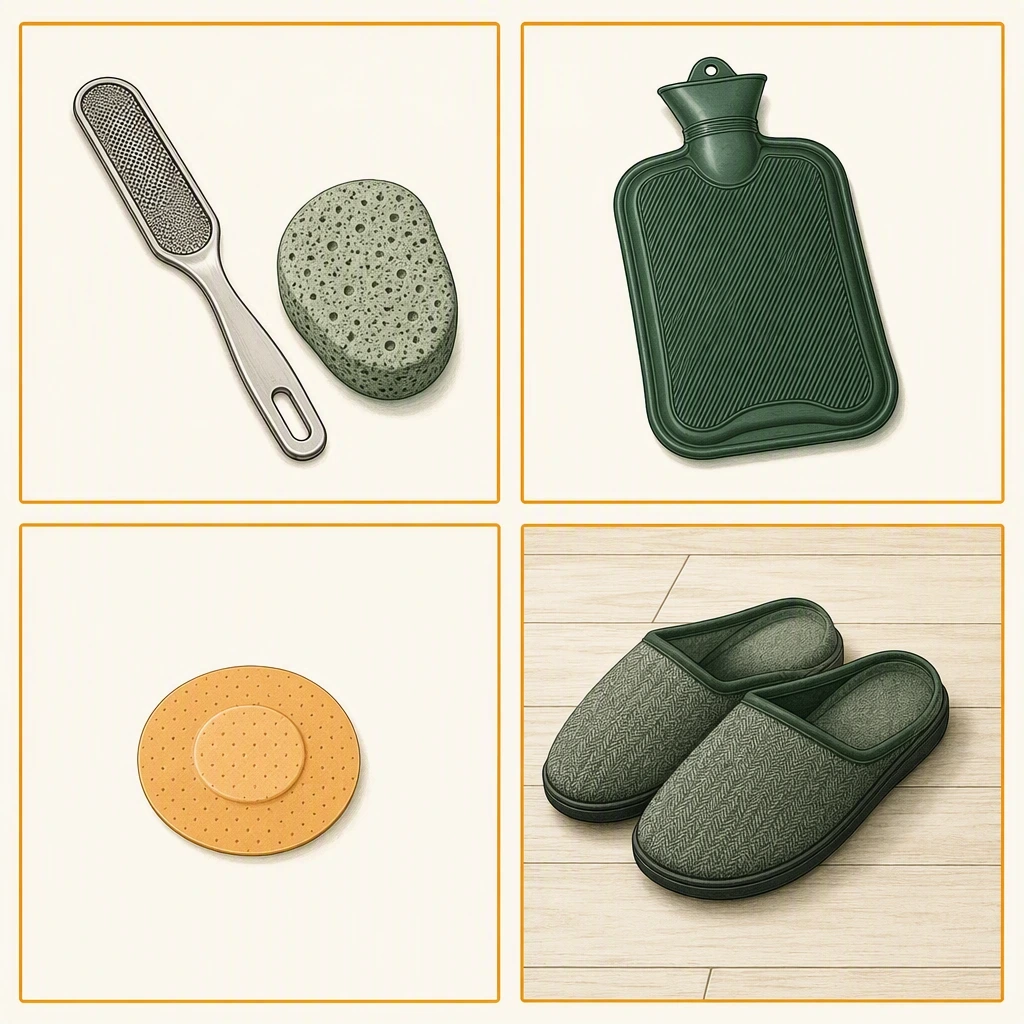
Things you should never do at home
| Practice | Why it is dangerous |
|---|---|
| Shaving a callus or corn with a blade, pumice stone or clippers | A wound made by your own hand, on skin that heals slowly |
| Corn plasters or corn-removing solutions | Chemicals on numb skin; a painless chemical burn |
| Hot water bottles, heating pads, a heater near the feet | Burns, without your noticing |
| Bursting a blister | Opening an entry route for bacteria |
| Walking barefoot, even indoors | Cuts and impacts you cannot feel |
| Dressing an open wound and waiting | Delay is exactly what makes a wound chronic |
The general rule is simple: anything that cuts, shaves or burns the skin is a specialist's job in a diabetic foot, not a home task.
Warning signs — when to be seen the same day
The point of daily care is to see a problem early. If you notice any of these, do not wait for your next appointment:
- A wound, cut or open blister, however small
- Redness, warmth or local swelling — especially if it is spreading
- Discharge, pus or an unpleasant smell
- Skin turning dark or black
- New pain, or the opposite: new and sudden numbness
- Fever, or blood sugar rising without a clear reason
The last few can indicate infection; infection in a diabetic foot moves quickly, and we have written about it separately in diabetic wound infection.
If you are caring for someone
Many older patients with diabetes cannot bend down, see the soles of their feet or cut their own nails. If you do this for a parent or a spouse, your role is decisive.
Three points: tie the looking to a fixed time; take the spaces between the toes seriously; and if you see something that was not there yesterday, photograph it and note the date. Those simple photographs show the care team how fast the problem has moved.
Treatment at Dialine
In Dialine's wound care service, the diabetic foot is assessed both before and after a wound appears: foot examination and assessment of protective sensation, review of high-pressure points, callus and nail care performed by the care team rather than at home, and — where a wound exists — assessment and a treatment plan with appropriate dressing and pressure redistribution.
Because diabetes is the root of the matter, blood-sugar control and its complications are followed in diabetes management; and where numbness and burning in the feet are involved, neuropathy treatment is part of the same pathway.
Frequently asked questions
Is hot water dangerous for washing a diabetic foot?
Yes. With reduced sensation, a burn can happen painlessly. Use lukewarm water and check the temperature with your elbow or the back of your hand, not with your foot.
Should I put cream between my toes as well?
No. Cream is for dry skin on the top of the foot, the sole and the heel. Between the toes must stay dry, because extra moisture there sets the scene for fungal infection and skin fissures.
Should I cut my toenails rounded or straight?
Straight across, following the line of the toe — not rounded and not down at the corners. Smooth the edges with a soft file.
Can I shave the callus on my foot myself?
No. Shaving a callus with a blade, pumice stone or corn plaster is one of the most common ways of creating a wound in a diabetic foot. A callus is a sign of excessive pressure at that point and should be managed by the care team.
I cannot see the sole of my foot — what should I do?
Use a long-handled mirror on the floor, or ask a family member for help. If neither is possible, raise it at your appointment so a schedule of in-person foot examinations can be arranged for you.
Can I walk barefoot at home?
No. Even indoors, wear slippers or comfortable closed shoes. Many of the injuries you cannot feel happen inside the house.
When should I be seen the same day?
Any open wound or blister, spreading redness and swelling, discharge or an unpleasant smell, darkening skin, or fever. In a diabetic foot, coming early is almost always simpler than coming late.
The next step
If you looked at your foot today and saw something you are not sure about, contact Dialine for a free consultation, or send us a photograph of the area by Instagram direct message. Early assessment is the simplest part of this pathway.
References
- Bus SA, Sacco ICN, Monteiro-Soares M, et al. Guidelines on the prevention of foot ulcers in persons with diabetes (IWGDF 2023 update). Diabetes/Metabolism Research and Reviews. 2024;40(3):e3651.
- Schaper NC, van Netten JJ, Apelqvist J, et al. Practical guidelines on the prevention and management of diabetes-related foot disease (IWGDF 2023 update). Diabetes/Metabolism Research and Reviews. 2024;40(3):e3657.
- American Diabetes Association Professional Practice Committee. Retinopathy, Neuropathy, and Foot Care: Standards of Care in Diabetes. Diabetes Care. 2024;47(Suppl 1):S231-S243.
This article is not a substitute for an in-person medical consultation.