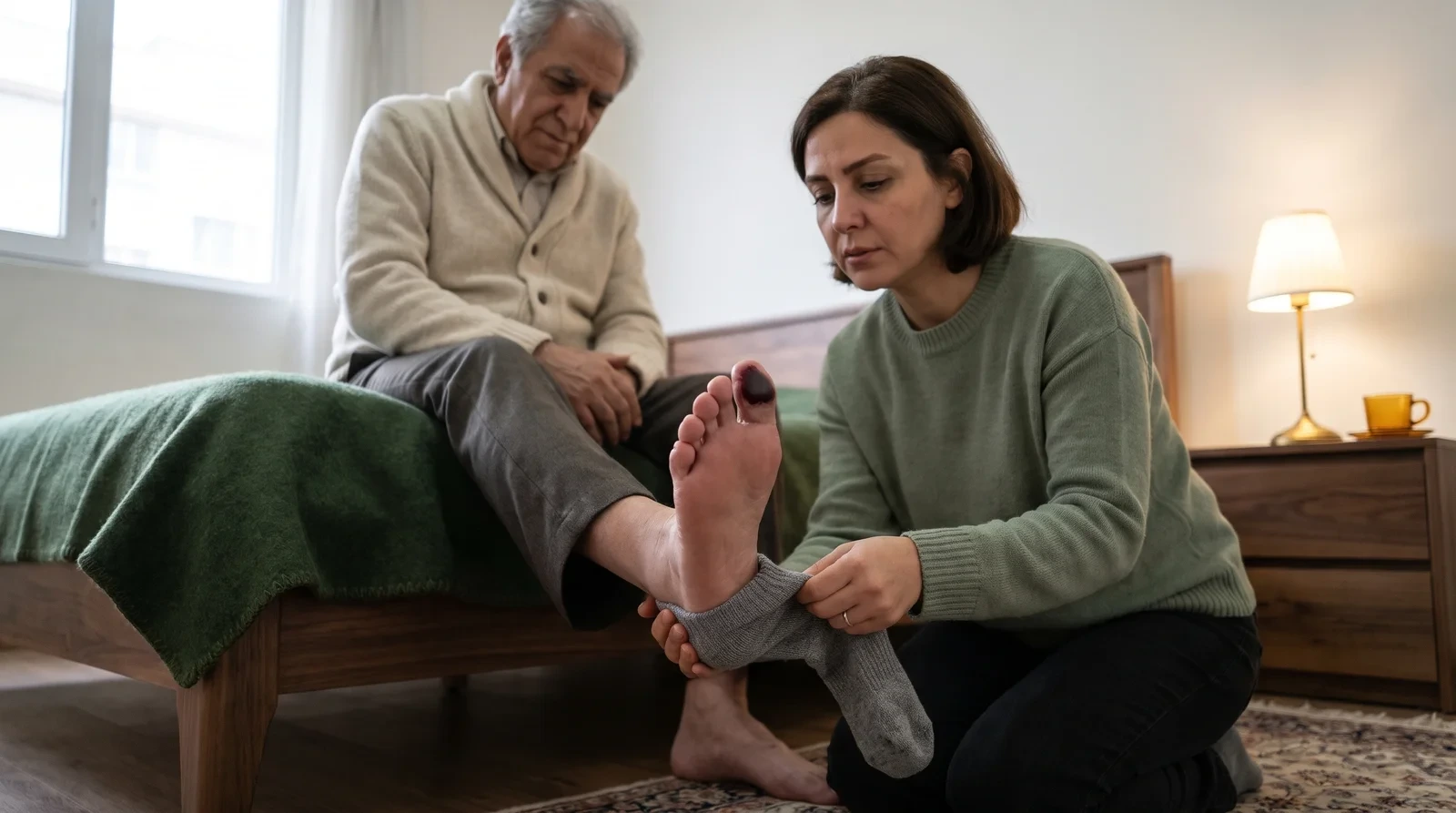
You are pulling on a sock, your own or your father's or mother's, and you notice a toe has gone black. Maybe it is the nail, maybe the tip of the toe. Gangrene is the first word that comes to many people's minds, and waiting to see whether it clears up on its own is the first thing many of them do.
Not every black toe is gangrene. A bruise under the nail after a knock, a nail darkened by tight shoes and a fungal nail can all make a toe look black. Three signs set them apart from gangrene: blackness that is getting bigger; a toe that is cold, pale or bluish; and a bad smell, pus or swelling. If you see any of these three, or if you have diabetes and the darkening is new, a doctor should see the foot the same day. Below we explain what each one looks like, and what not to do until you reach a doctor.
Four kinds of black that look alike
From a distance these four look similar, but they have different causes and different urgency. Where the darkening sits and how it started tell you most of what separates them.
A bruise under the nail after a knock
Something fell on the foot, or the toe hit a table leg, and a few hours later the area under the nail turned dark red, purple or black. This is blood collected under the nail. If the pressure is high, it throbs; in the first days a doctor can drain the blood to relieve the pain.
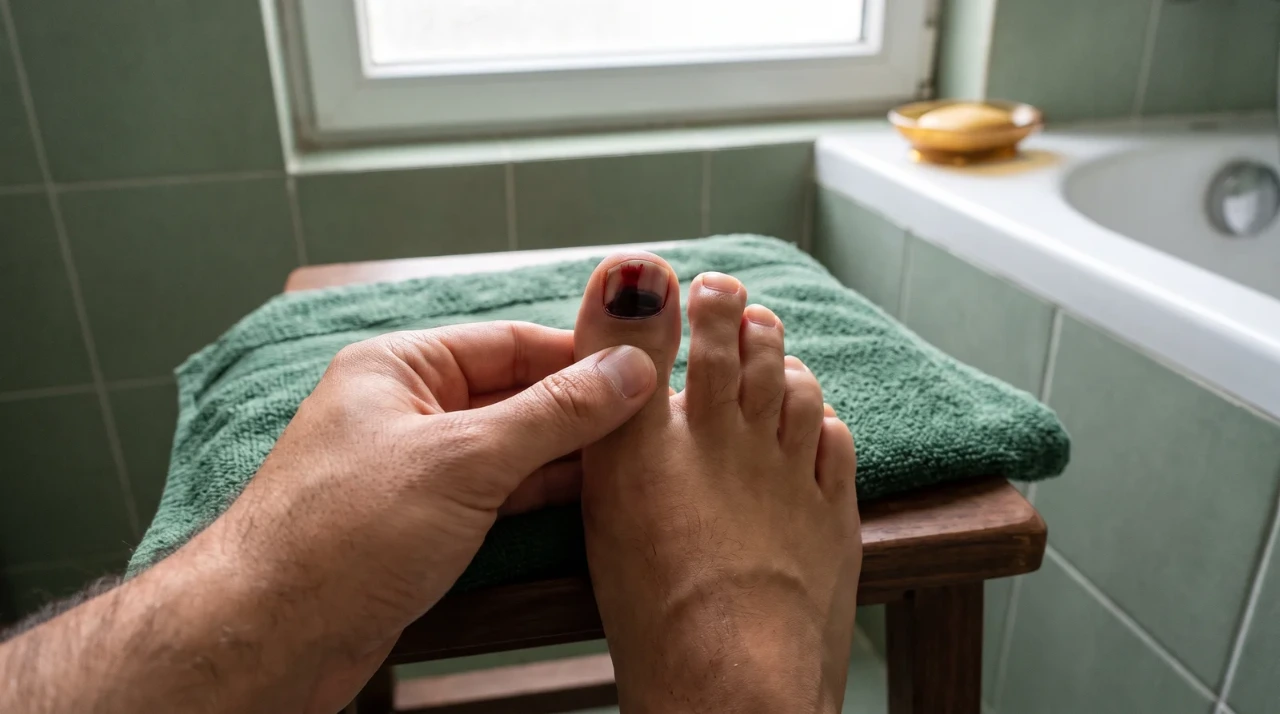
A bruise under the nail does not fade on its own. It moves forward as the nail grows and is eventually trimmed away. Toenails grow slowly, so this takes several months. If the knock was hard, or the toe is swollen or crooked, the bone may be injured too and needs to be examined. With diabetes, have a doctor look at any injury to a toe, even if it does not hurt.
A black nail from tight shoes or long walks
A shoe that is tight at the front, or the downhill stretches of a long hike, knock the tip of the toe against the shoe again and again. The result is the same bleeding under the nail, only without a knock you can remember. If you have diabetes and reduced feeling in your feet, a nail blackened by a shoe means the shoe has been rubbing for a long time without you feeling it. The same pressure can open a wound somewhere else, so change the shoes and show your foot to a doctor.
Discolouration from a fungal nail
A nail with a fungal infection usually turns yellow or brown, becomes thick and crumbly, and sometimes looks dark. The change is slow, over months, and the skin around the nail stays healthy. A fungal nail is not urgent, but with diabetes it should be treated, because a thick nail presses on the skin beneath it and cracks in the skin let germs in.
Take one exception seriously. If a dark spot or streak has appeared under the nail without any knock, and it is slowly widening or does not move forward as the nail grows, a doctor should see it. It is sometimes a sign of a skin condition that is different from a bruise or a fungus.
Black skin and tissue: gangrene
In the three cases above the nail has darkened while the skin of the toe is alive. In gangrene, the skin itself and the tissue beneath it have died. The tip of a toe, the side of a nail or the heel turns black, and the blackness usually starts at the edge of a wound or at the tip of the toe and moves inward. The black area no longer hurts, and the skin around it is often bluish, red or pale.
What is gangrene? Dry and wet
Body tissue needs blood to stay alive. If not enough blood reaches it, or an infection destroys it, the tissue dies and turns black. Dead tissue is called necrosis, and when it happens in a toe or foot it is called gangrene. Reduced blood supply to tissue is called ischaemia.
Gangrene takes two main forms, and they are not equally urgent:
- Dry gangrene: the toe is black, dry, hard and shrivelled, and does not smell. It usually comes from reduced blood flow and progresses slowly. The foot is often cold, and sometimes there is a clear line between the black tissue and the living tissue.
- Wet gangrene: the toe is swollen, moist or blistered, oozes or has pus, and smells bad. This form comes with infection and can spread within hours or days. Wet gangrene is an emergency.
Dry gangrene can become wet if it gets infected. That is why neither should be watched at home.
Why diabetes changes things
Diabetes makes a blackening toe more dangerous in two ways. Over the years, high blood sugar damages both the nerves and the blood vessels of the foot. A foot that has lost feeling gives no warning of a knock, a tight shoe or a wound, and a foot with poor blood flow heals slowly and gets infected more easily.
With diabetes, the fact that a toe does not hurt proves nothing. A black toe with no pain may be exactly the toe that can no longer feel. We have written about loss of feeling in the foot in burning and numbness in the soles of the feet, and about the wounds that open on a cold foot in what a diabetic foot ulcer looks like.
The same day, or can it wait?
See a doctor or a wound-care centre the same day if:
- you have diabetes and have noticed new blackening or darkening on a toe or the foot.
- the blackness has grown since yesterday.
- the toe or foot is cold, pale or bluish.
- the foot hurts at night and the pain eases when you hang it over the edge of the bed.
- the area around the blackness is red or swollen, or there is discharge, pus or a bad smell.
Go to an emergency department if you have a fever, chills or feel generally unwell, if redness and swelling are climbing quickly up the foot, or if the foot has suddenly become cold, pale and painful.
Waiting and watching is reasonable only if you do not have diabetes, you remember a specific knock, the darkening is only under the nail, and the skin of the toe is warm and pink. Even then, if the pain gets worse or the blackness reaches the skin, do not wait.
What not to do before you see a doctor
- No heat. Hot water, hot-water bottles and heaters harm a foot with poor blood flow or reduced feeling, and can burn it.
- No cutting or scraping. Do not pull off a black nail, do not remove black skin with scissors or a blade, and do not pop blisters.
- Nothing rubbed on it. Henna, honey, turmeric, home-made ointments or anything else hide the blackness from the doctor and can make an infection worse.
- No massage, and do not walk on that foot more than you have to.
- No smoking. Nicotine narrows the blood vessels further.
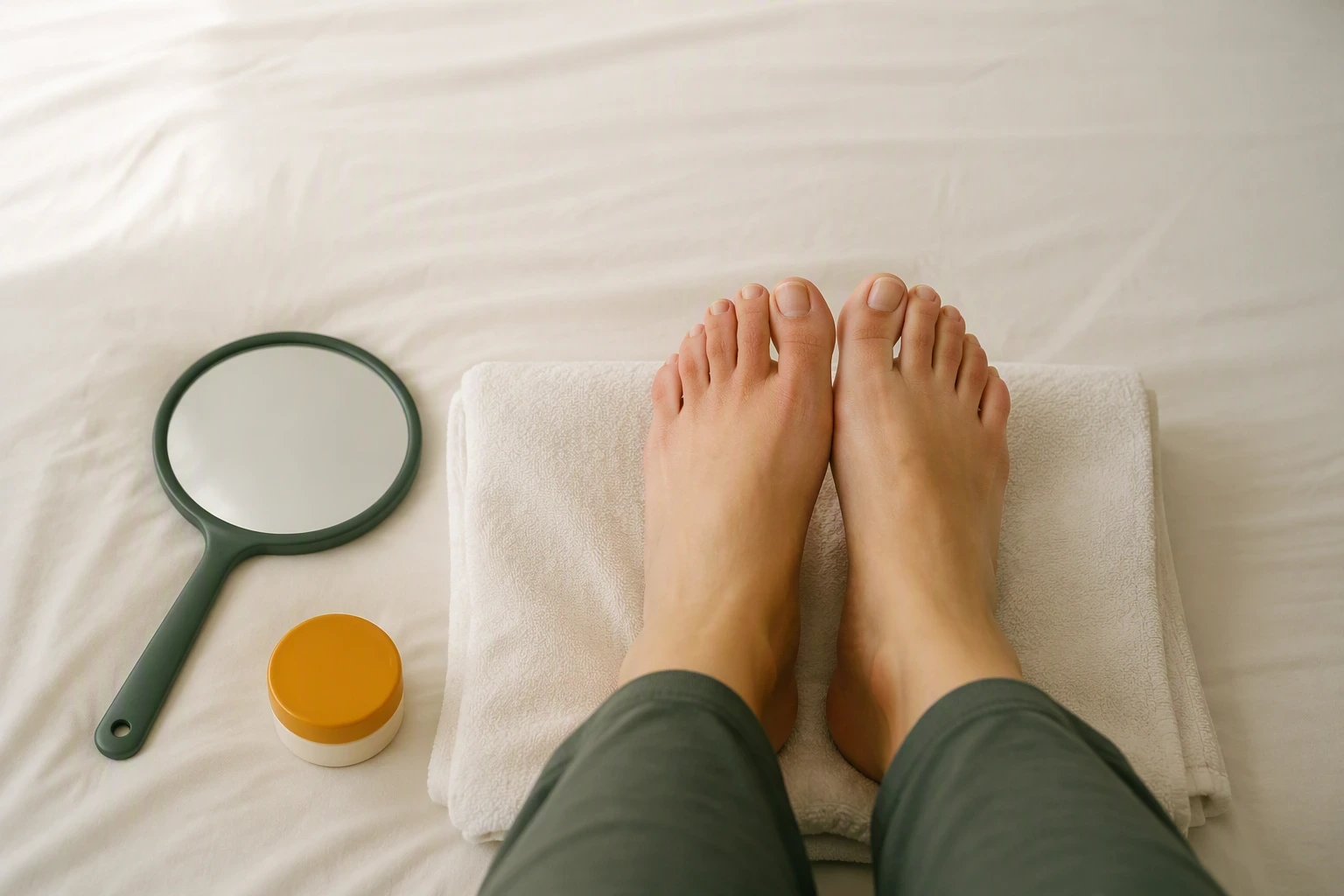
What you can do: keep the foot clean and dry, cover any open wound with a clean, dry covering, wear comfortable open-toed shoes, and take a photo of the blackness today so the doctor can see how much it has changed.
Treatment at Dialine
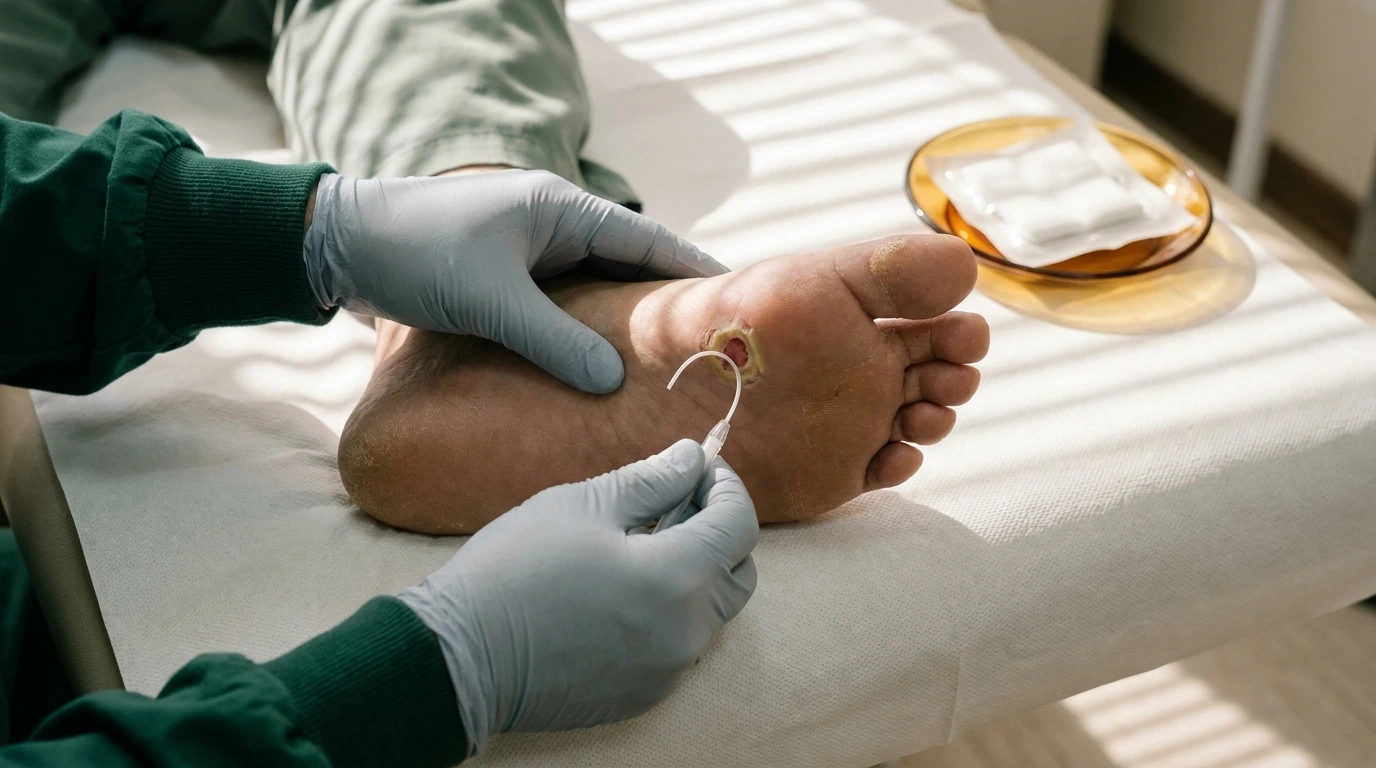
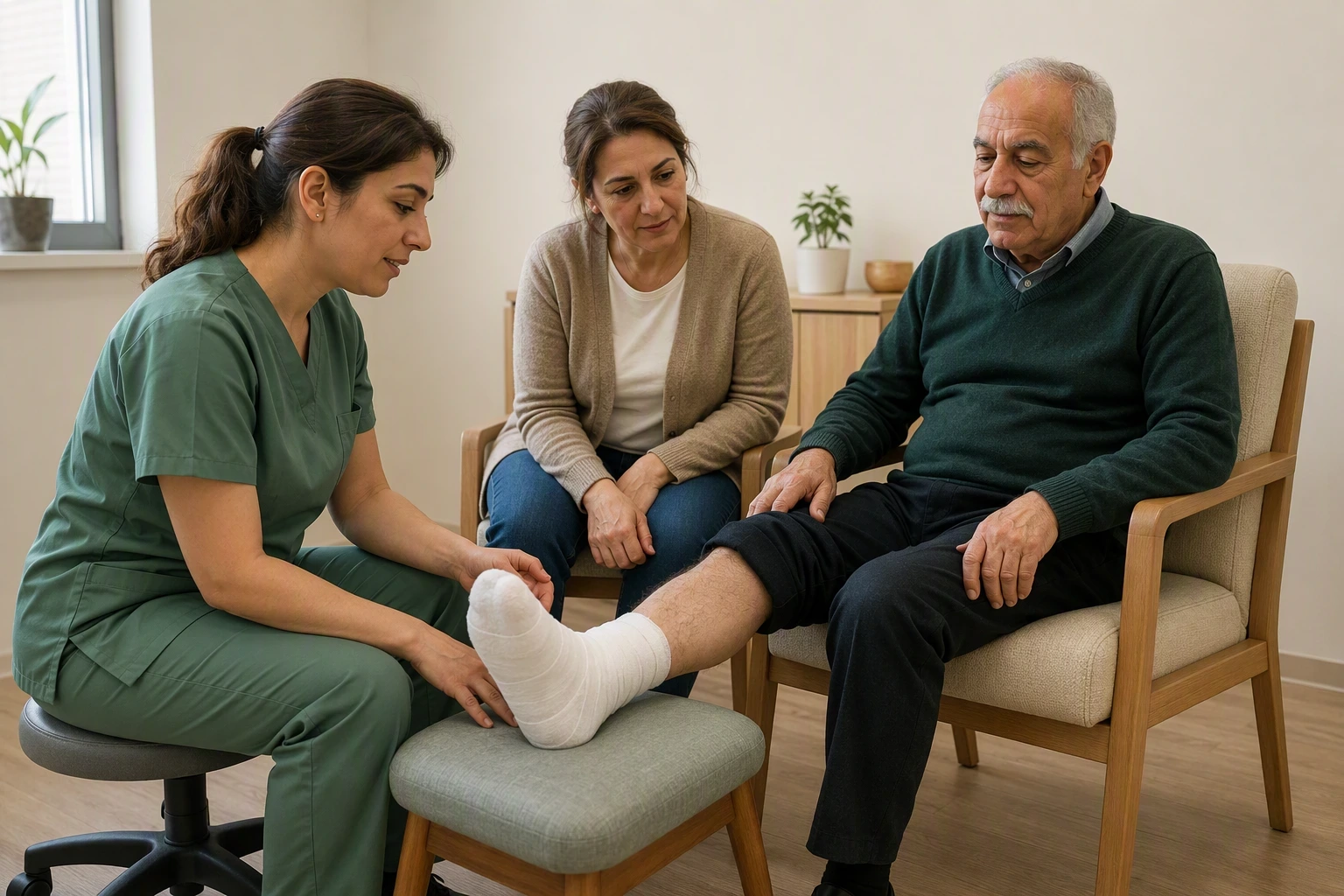
Tissue that has turned black and died does not come back to life. Treatment is about saving the living tissue around it, and stopping the blackness from moving further. At Dialine the first step is to understand the cause, so besides the toe itself we also assess the foot's feeling, its blood flow and any signs of infection. Then, depending on what we find:
- Infection control, which comes first in wet gangrene.
- Debridement, removing dead tissue at the right time. Sometimes we leave dry, black tissue in place for a while until the line between it and the living tissue becomes clear; that decision can only be made on examination.
- Advanced dressings and taking pressure off the toe and the wound.
- Blood sugar control, without which no wound heals well.
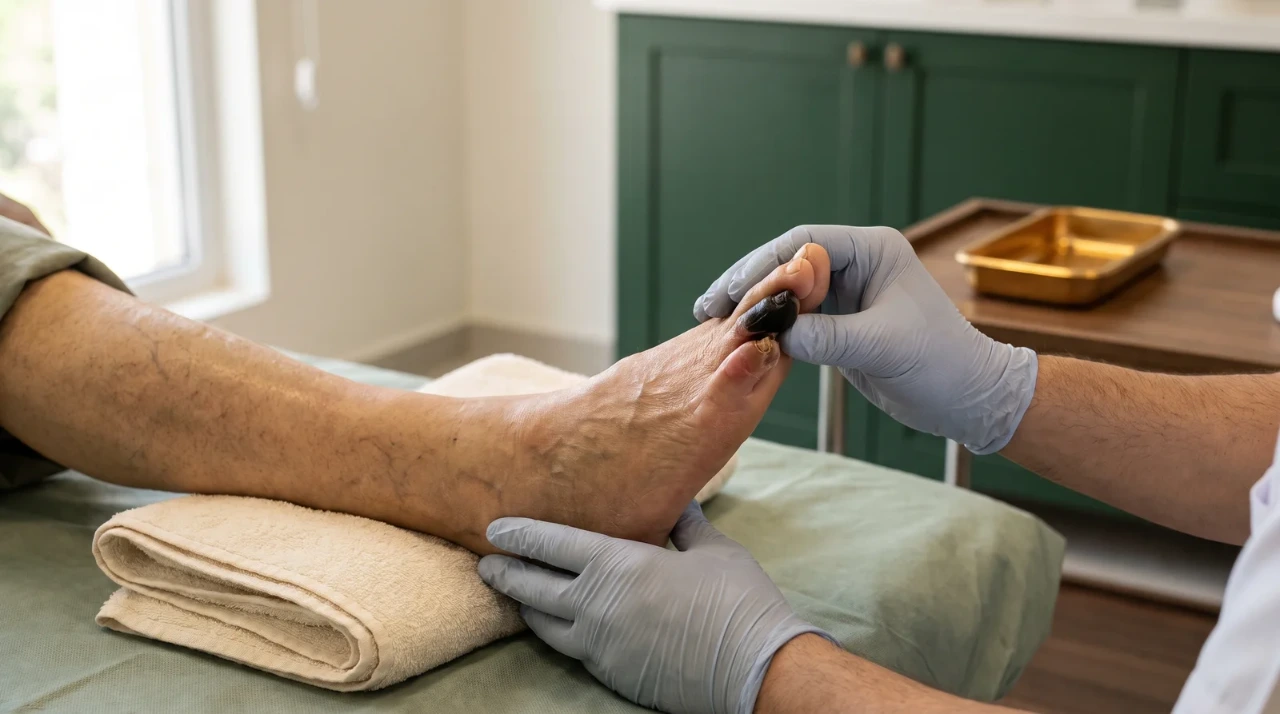
If the main problem is poor blood flow, the patient also needs to see a vascular specialist, and we coordinate wound care with them. How and when dead tissue is removed is covered in what is wound debridement?, and the full service is on the chronic and diabetic wound care page. You can also see real cases in the diabetic foot ulcer gallery.
Frequently asked questions
Is gangrene contagious?
No. Gangrene does not pass from one person to another. But wet gangrene is infected, and that infection can spread within the patient's own body. Wash your hands before and after changing the covering.
Can gangrene be treated?
Tissue that has died does not recover, but its spread can be stopped. Treatment means controlling infection, restoring blood flow where possible, removing dead tissue and caring for the wound. The sooner it starts, the more living tissue is saved.
Does a black toe always mean amputation?
No. Many black toes are bruises or fungal nails, and gangrene caught early can sometimes be controlled by removing a small amount of dead tissue. Any decision about amputation is made by a doctor after assessing blood flow and infection; we explain how that decision is made in diabetic foot ulcers and amputation.
When does a bruise under the toenail go away?
It does not fade; it moves forward with the nail until it is trimmed away. Because toenails grow slowly, this takes several months. If the mark grows or does not move forward in that time, a doctor should see it.
My black toe does not hurt. Does that mean it is fine?
No. Dead tissue does not hurt, and with diabetes the foot may not feel pain at all. Having no pain is no reason to relax; show the toe to a doctor.
Should I pull off a black toenail myself?
No. Pulling off a nail opens a wound and lets germs in, especially with diabetes. If the nail is loose, put a clean covering over it and let a doctor decide.
Book an appointment
If your toe, or the toe of someone close to you, has turned black, take a photo of it today and call Dialine in Pasdaran, Tehran. Together we will work out whether you need to come in the same day. Dialine works in four areas: diabetes, chronic wounds, scars and neuropathy.
Scientific sources
- Fitridge R, Chuter V, Mills J, et al. The intersocietal IWGDF, ESVS, SVS guidelines on peripheral artery disease in people with diabetes and a foot ulcer. Diabetes/Metabolism Research and Reviews, 2024.
- Senneville É, Albalawi Z, van Asten SA, et al. IWGDF/IDSA guidelines on the diagnosis and treatment of diabetes-related foot infections (IWGDF/IDSA 2023). Diabetes/Metabolism Research and Reviews, 2024.
- Bus SA, Sacco ICN, Monteiro-Soares M, et al. Guidelines on the prevention of foot ulcers in persons with diabetes (IWGDF 2023 update). Diabetes/Metabolism Research and Reviews, 2023.
- Armstrong DG, Boulton AJM, Bus SA. Diabetic foot ulcers and their recurrence. New England Journal of Medicine, 2017.
This article is not a substitute for an in-person medical consultation.