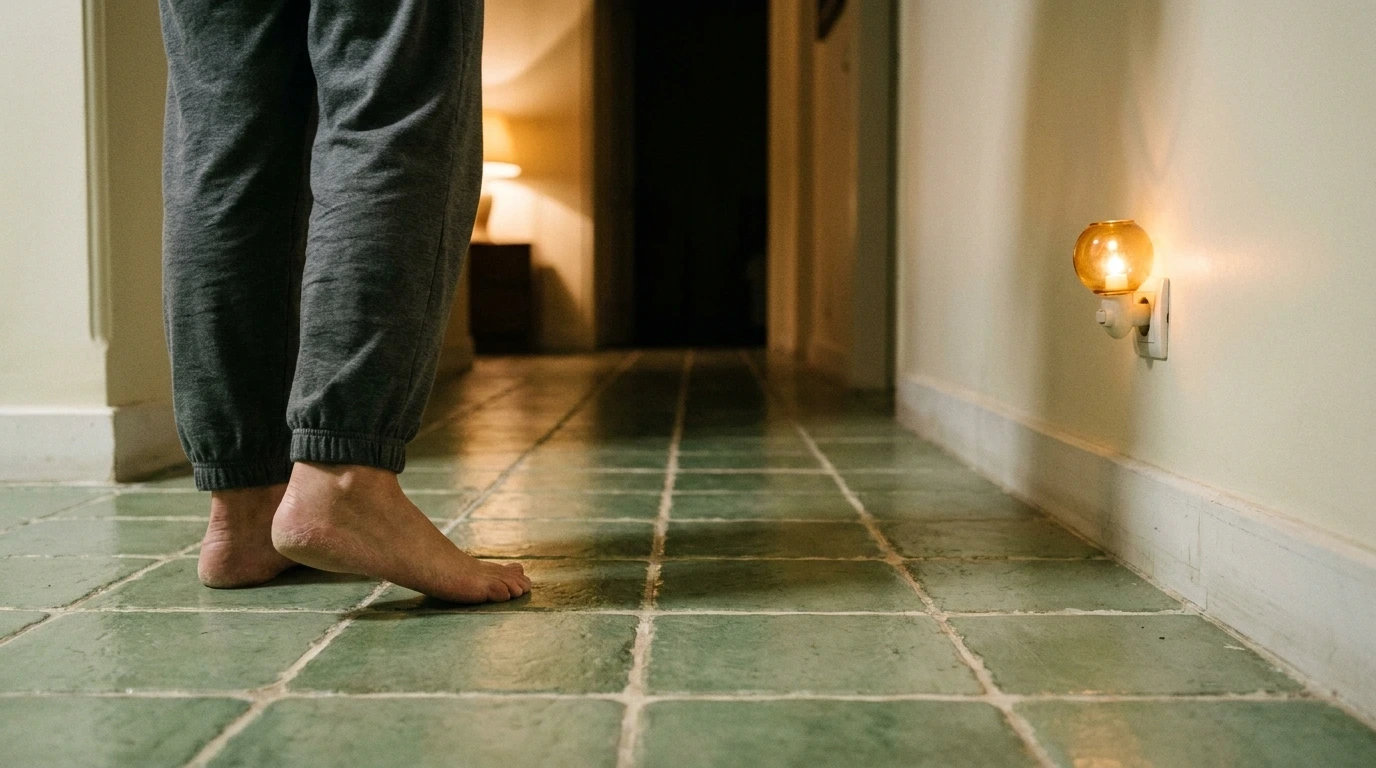
It is past three in the morning and the soles of your feet are burning. You pull a foot out from under the blanket and it eases a little, then you tuck it back in and it burns again. You pick up your phone and type "burning feet". If you have diabetes, or worry you might, this burning and tingling is worth taking seriously, but there is no need to be frightened of it.
In a person with diabetes, burning and tingling in the feet most often comes from damage to the nerves of the feet, called peripheral neuropathy. But not every burning foot is diabetic, and other causes exist. More important than the burning itself is that feeling in the foot does not fade, because a foot that cannot feel will not notice a wound. Below we cover which pattern points to diabetes, what is safe to do tonight, and when you should not wait.
What do burning and tingling in the feet mean?
The nerves in your feet carry touch, pain and temperature to the brain. When they are damaged the messages go wrong: sometimes a signal arrives for no reason and sometimes none arrives at all. That is why neuropathy has so many faces:
- burning or heat in the soles;
- tingling and pins and needles, as if the foot had fallen asleep;
- sharp pain, like an electric shock;
- skin so sensitive that even a bedsheet hurts;
- numbness, which is feeling that has dimmed or gone.
These are not separate conditions. One person may have burning in the first months and only numbness years later.
Why is it worse at night?
There is no firm answer in every case, but a few explanations are plausible. By day our attention is pulled in a hundred directions, and at night nothing competes with what the feet feel. The foot is still and warms up under the blanket. People also tend to notice the burning most in the hours when sleep will not come. If your burning and tingling get worse at night you are not alone: it is one of the most common descriptions patients give of neuropathy.
Burning feet are not always about diabetes
Diabetes is a common cause of neuropathy, not the only one. Burning, tingling or numbness in the feet also has other causes:
- pressure on a nerve in the back, such as a slipped disc or sciatica, which usually affects one leg more;
- anaemia or a shortage of certain vitamins;
- an underactive thyroid;
- heavy alcohol use;
- kidney disease;
- tight shoes or local pressure on a nerve.
You cannot tell from an article which of these is your problem. So if you do not have diabetes and your feet burn, have the tests and examination your doctor advises rather than guessing.
Which pattern fits diabetes best?
None of these is a sure sign, but the more of them you have together, the more likely diabetic neuropathy becomes:
- both feet are affected, not just one;
- it began at the tips of the toes and has slowly moved up, sometimes to the calf, like a sock being pulled higher;
- it is worse at night;
- the skin of the foot has become dry, or the hair and nails have changed;
- blood sugar has been high for years, or you do not yet know what yours is.

If you have not had your blood sugar checked recently, ongoing burning in the feet is a good reason to do it.
More important than the burning: when feeling fades
Burning hurts, but it is also a warning: the foot is still telling you that something is wrong. The risk grows when the burning gives way to numbness. Some people take that for "getting better", when in fact the foot has stopped reporting.
A numb foot does not feel a pebble in the shoe, a blister, hot water or a cut, and its owner does not find out until the skin breaks. We have written about where a diabetic foot ulcer starts and what it looks like in What Does a Diabetic Foot Ulcer Look Like, and Where Does It Start?, and a real example of a foot whose numbness let a burn go unfelt is in Foot burns in diabetes.
What is safe to do tonight?
Examination and tests decide the actual treatment, but until then these steps are safe:
- Look at your feet in good light. Check the soles and between the toes. If you cannot do it yourself, a mirror or a family member will do. Note any sore, blister, redness or swelling.
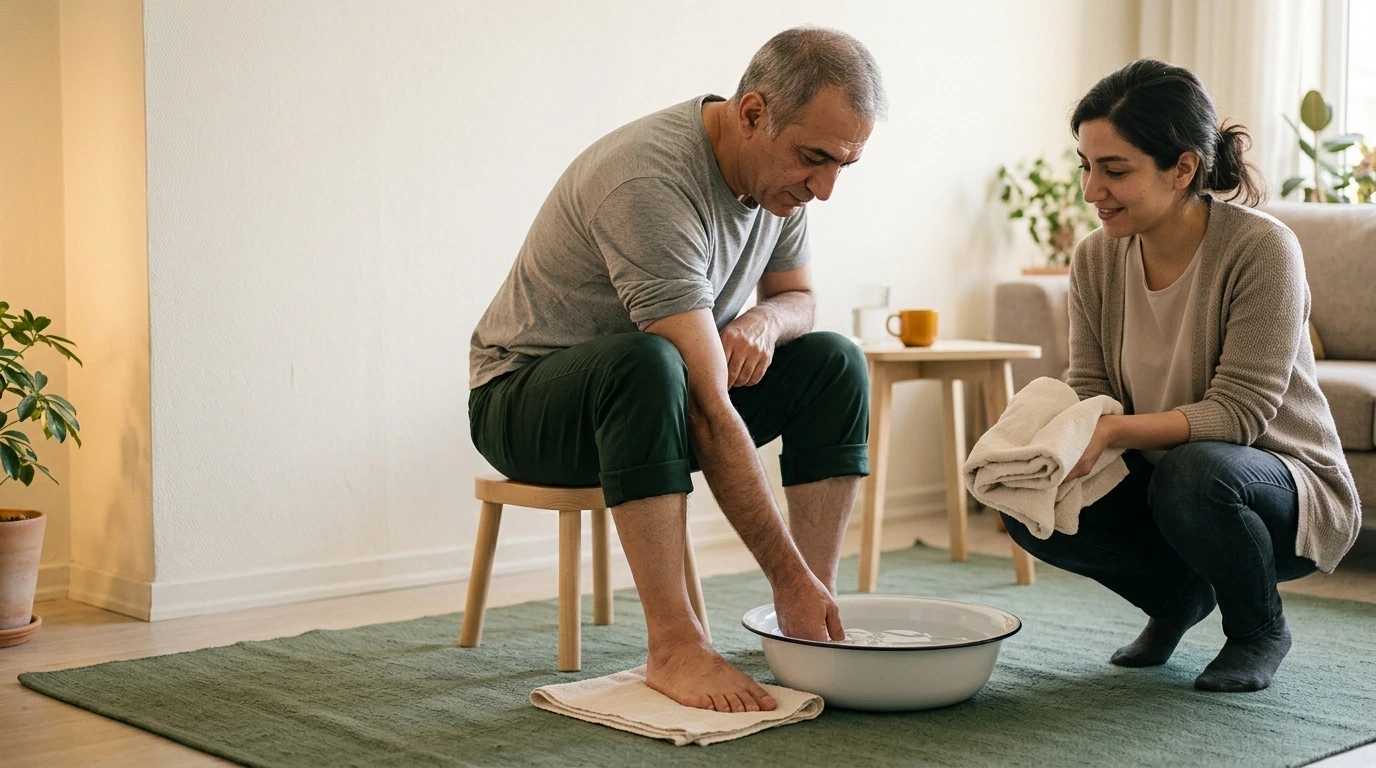
- Wash your feet in lukewarm water, not hot. Test the water with your elbow or hand, because a foot with reduced feeling cannot judge the temperature. Then dry thoroughly, especially between the toes.
- Keep hot-water bottles, electric blankets and heaters away from your feet. A foot that cannot feel can burn without its owner knowing.
- Wear soft cotton socks without prominent seams. Seams and creases in a sock irritate a sensitive foot.
- Do not put anything on the skin. Creams, home preparations and whatever else is suggested for "burning" can irritate the skin, and on a foot you cannot inspect well they can hide a sore.
- Do not take other people's medicines. Medicine for nerve pain is chosen by a doctor after an examination.

Book an examination for tomorrow. The burning easing tonight is no reason to put it off.
When should you not wait?
If you notice any of these, do not wait for your next appointment. See a doctor the same day:
- an open sore or blister on the foot, however small;
- warm redness or swelling that is spreading, or a fever;
- sudden weakness in the foot, or a foot that has suddenly gone numb.
If sudden numbness comes with loss of control of the bladder or bowels, go to an emergency department. You can also see the emergency signs of a diabetic foot ulcer in our frequently asked questions.
Which doctor should you see for burning feet?
A simple route:
- Your family doctor or an endocrinologist for a blood sugar check and the necessary tests;
- A specialist diabetes and wound centre such as Dialine for an examination of foot sensation and prevention of ulcers;
- A neurologist if the burning affects only one foot, comes with muscle weakness, or the examination points to another cause.
What helps?
The most effective long-term step is steady blood sugar control. Controlling blood pressure and blood fats, and stopping smoking, also slow the progress of nerve damage. No treatment reliably reverses nerve damage that has already happened, but it can be kept from getting worse. We explain this in the question "Is diabetic neuropathy reversible, or only manageable?"
For the pain itself, after an examination the doctor may prescribe medicines for nerve pain. The type and dose depend on the patient, and no prescription can be written without an examination. Daily foot care is part of treatment too: looking at the feet, washing and drying them, and suitable footwear. The details are in Daily care for the diabetic foot and Diabetic footwear and offloading. For the diagnosis and the types of neuropathy, read Diabetic peripheral neuropathy: identification, diagnosis and treatment.
Neuropathy assessment and treatment at Dialine
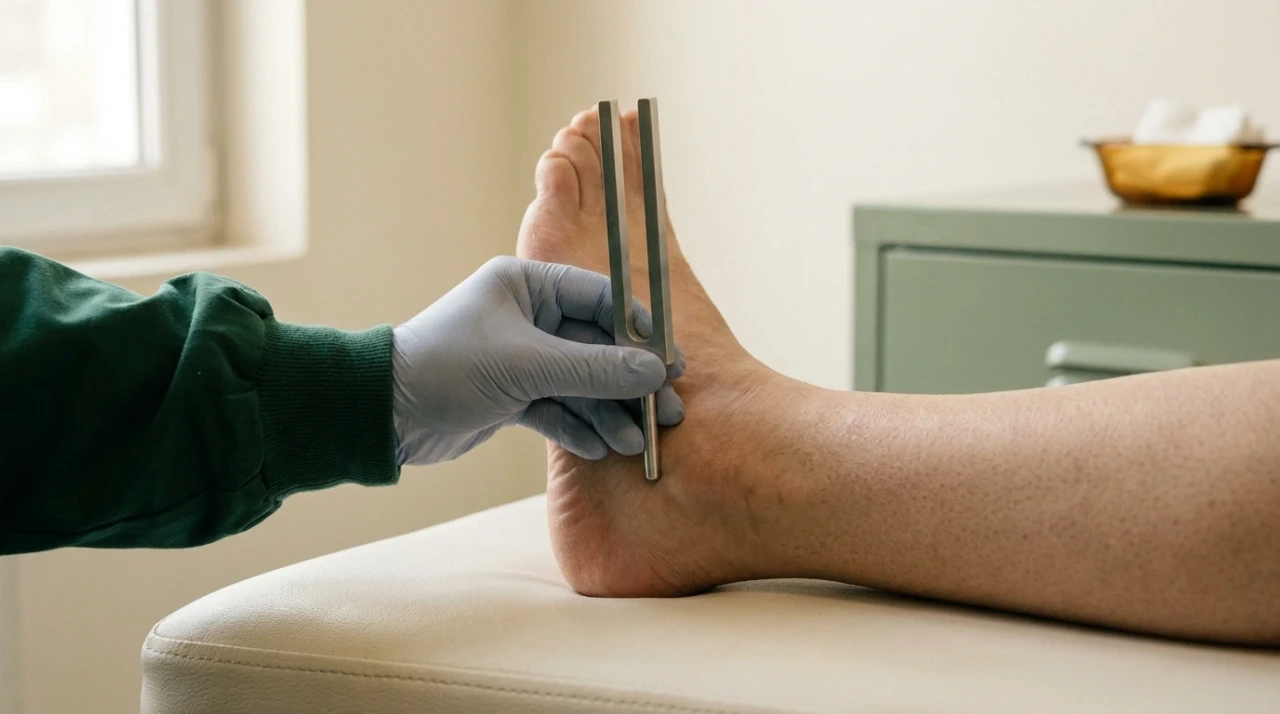
In Dialine's neuropathy treatment we measure foot sensation with simple, standard tools: a special filament (the monofilament) and a tuning fork. We check reflexes and, if needed, refer for further tests. The aim is to establish the type and severity of the nerve involvement and to rule out other causes. Treatment then continues on the basis of scientific guidelines, together with blood sugar control, which is followed up in diabetes management and treatment.
Frequently asked questions
Are burning feet a sign of diabetes?
They may be, but not always. If both feet are affected, the burning starts at the toes and is worse at night, diabetic neuropathy is more likely. To be sure, check your blood sugar and have your feet examined.
Are burning or tingling feet dangerous?
The burning itself is not dangerous, but it shows that the nerves are damaged, and nerve damage in the feet leaves them defenceless against wounds. Numbness is more dangerous than burning. If you see a sore, a blister or warm redness, see a doctor the same day.
Why does burning in the feet get worse at night?
The reason is not always clear. At night there are fewer distractions and the foot is still and warm under the blanket, and these seem to make the burning feel stronger. Getting worse at night is common in neuropathy.
Does numbness mean my condition has got worse?
Numbness can show that the nerve damage is advanced, but a doctor needs to examine you. Either way, look at a numb foot every day and wear soft, suitable shoes, because the foot will not warn you itself.
What should I do if I do not have diabetes and my feet burn?
There are other causes: a problem in the spine, anaemia, an underactive thyroid, alcohol or the kidneys. Do not guess; ask your family doctor to decide on tests and an examination. If only one foot is affected, or you also have muscle weakness, you will need to see a neurologist.
Which doctor should I see for burning feet?
First your family doctor or an endocrinologist for blood sugar and tests. For an examination of foot sensation and prevention of ulcers, a specialist diabetes and wound centre. And if the symptoms are one-sided or come with weakness, a neurologist.
Free consultation
If your feet burn or tingle at night, have them examined before the feeling fades. Call Dialine in Pasdaran, Tehran, and say you would like your foot sensation assessed; the first consultation is free. Dialine works in four areas: diabetes, chronic wounds, scars and neuropathy.
References
- Pop-Busui R, Boulton AJM, Feldman EL, et al. Diabetic Neuropathy: A Position Statement by the American Diabetes Association. Diabetes Care, 2017.
- Price R, Smith D, Franklin G, et al. Oral and topical treatment of painful diabetic polyneuropathy: practice guideline update summary. Neurology, 2022.
- Tesfaye S, Boulton AJM, Dyck PJ, et al. Diabetic neuropathies: update on definitions, diagnostic criteria, estimation of severity, and treatments. Diabetes Care, 2010.
- American Diabetes Association. 12. Retinopathy, Neuropathy, and Foot Care: Standards of Care in Diabetes—2024. Diabetes Care, 2024.
This article is not a substitute for an in-person medical consultation.