A burn on a foot that has lost sensation is usually discovered by the blister, not by the pain. A few hours later the patient takes off a sock and sees it; until that moment nothing had worried them.
The short answer: if a diabetic patient's numb foot has been burned, or you even suspect it has, it needs to be seen the same day. Until then, end contact with the heat, rinse the area with cool running water, cover it with a clean dressing, and leave any blister unbroken. Do not use pain as your guide. In this foot it is not a reliable one.
Why a numb foot burns without pain
In diabetic peripheral neuropathy, the sensory nerves of the foot are damaged, starting at the toes. Pain and heat are signals those nerves carry. When the signal weakens, the body does not react the way it normally would: the foot is not pulled away, shifted or lifted.
How deep a burn goes depends on two things: how hot the source was and how long the contact lasted. A healthy foot withdraws quickly, so contact stays short. A numb foot stays on the same spot for longer, so the same heat source does deeper damage.
Where this usually happens
Most of these burns happen at home, in ordinary routines, not in a major accident. These are the situations to recognise:
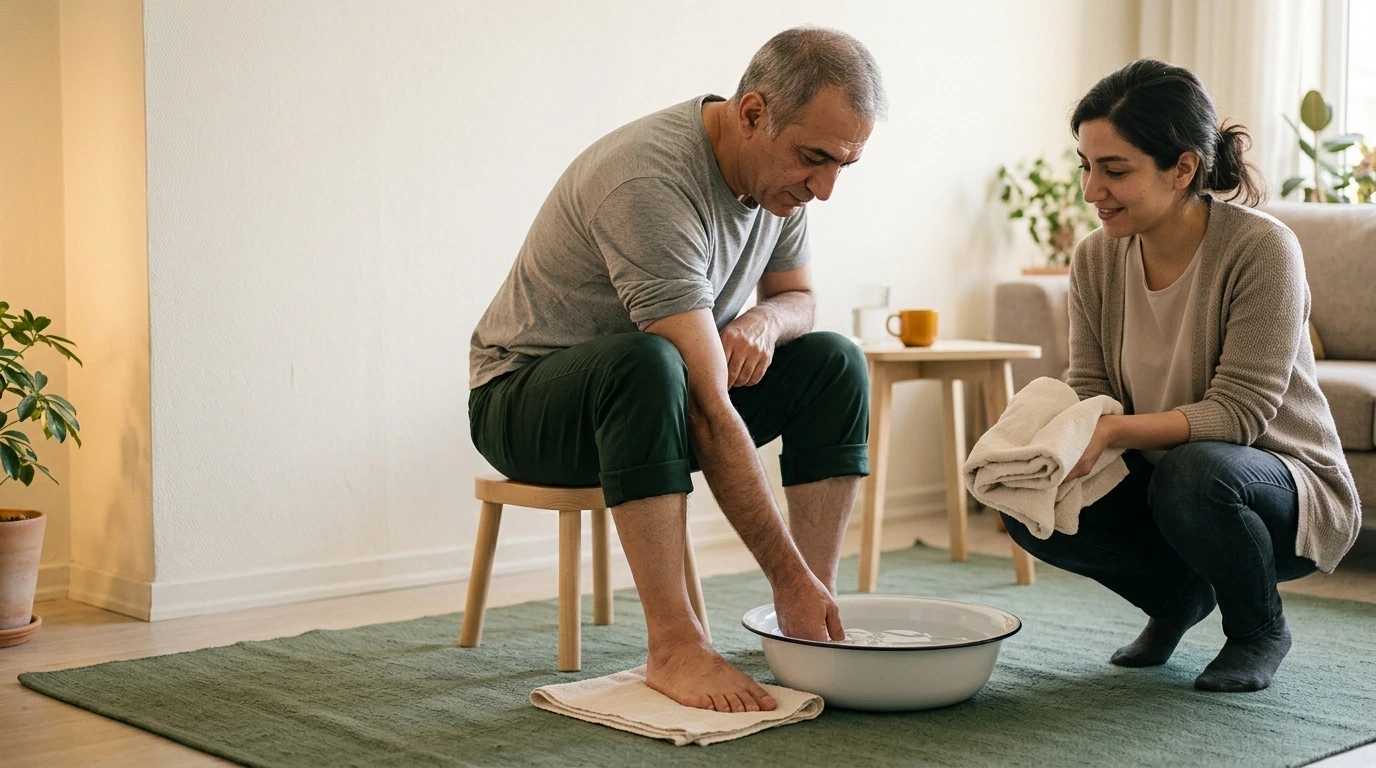
- A foot soak or basin of hot water tested with the foot itself. Sometimes patients do this on purpose to warm a cold foot, without knowing the risk.
- A hot-water bottle or electric blanket left beside or on the foot overnight.
- A heater, radiator or a korsi (a heated low table with a blanket), when the foot stays still near the heat for a long time.
- In summer: walking barefoot on asphalt, sand, a courtyard floor or the floor of a hot car.
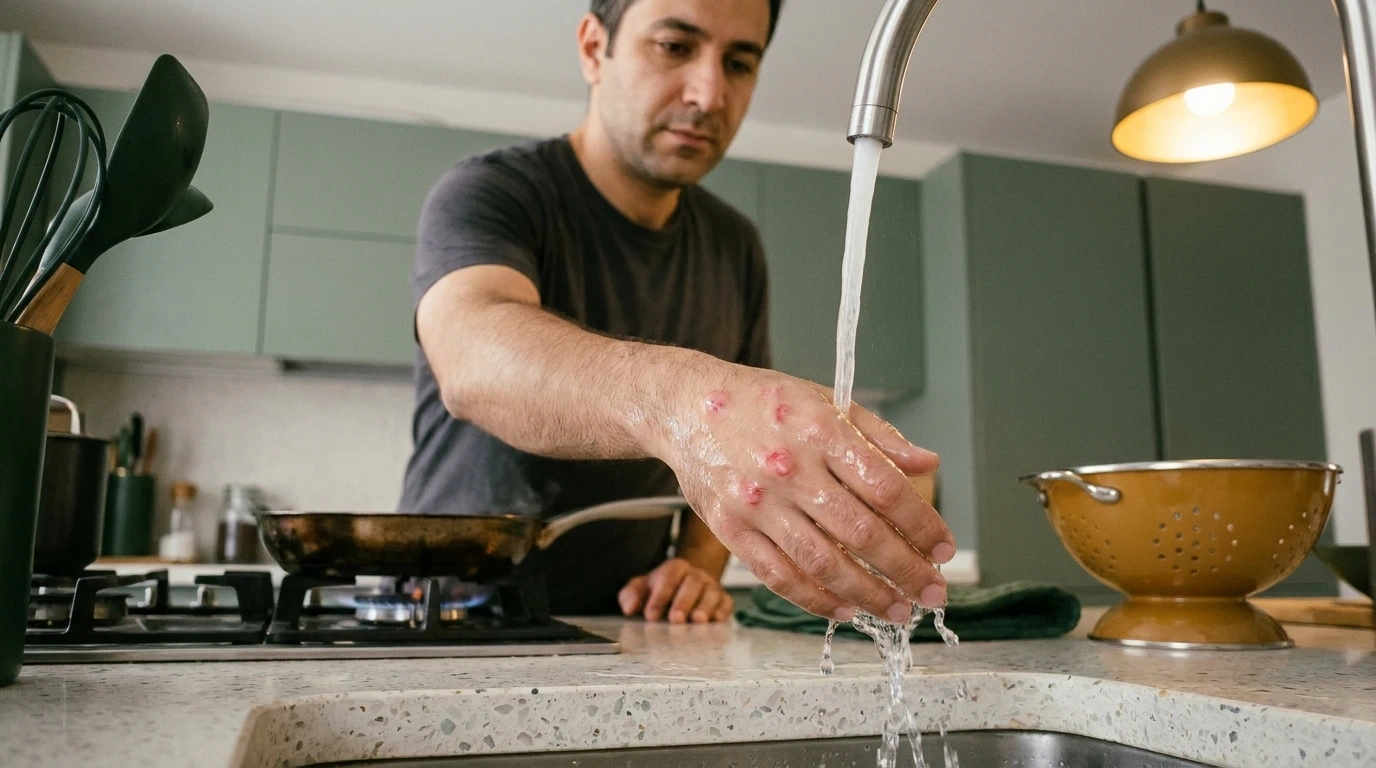
- Near a stove or hot cookware in the kitchen.
If you have just noticed it
Do these in this order:
- End the contact. Move the foot away from the heat.
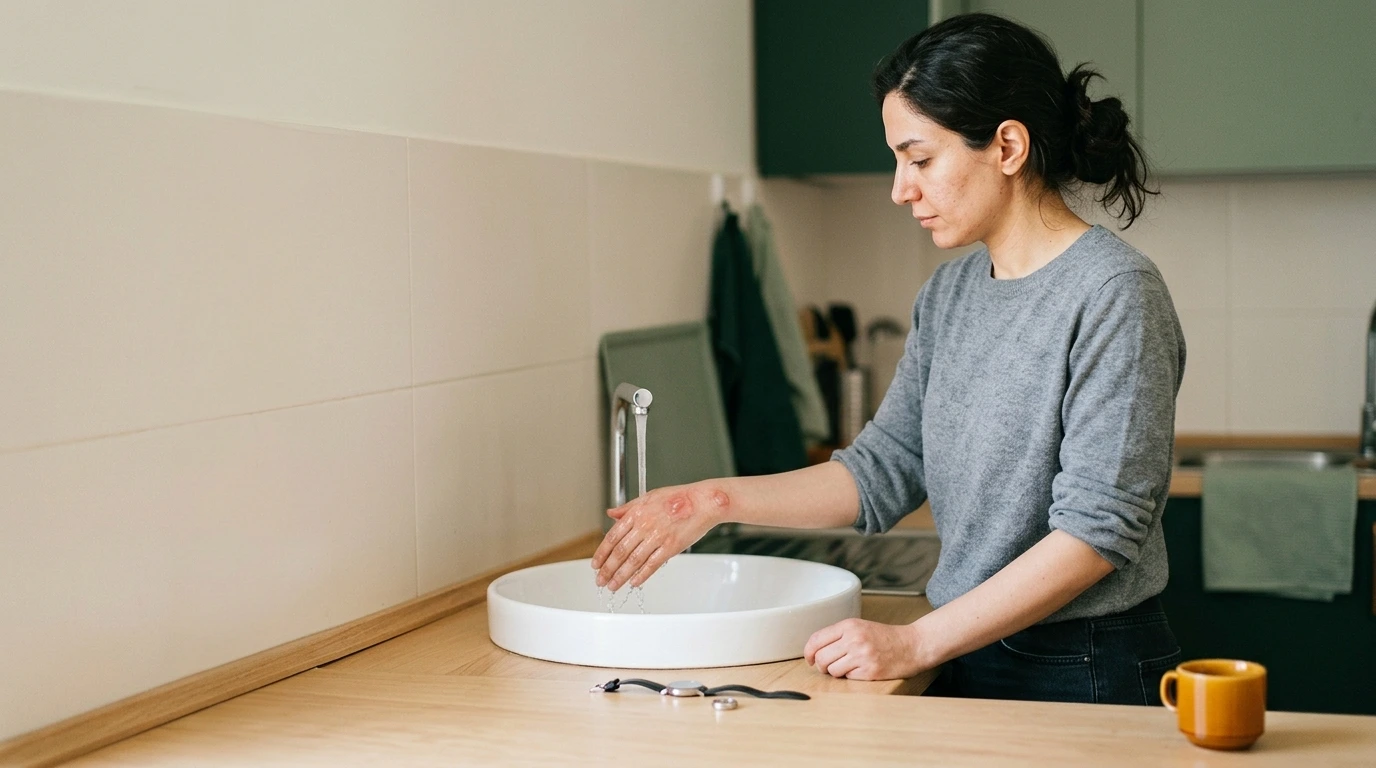
- Rinse with cool running water. The water should be cool, not icy. The usual duration for any burn is about twenty minutes, and the sooner you start, the more it helps.
- Take off socks, shoes and anything tight before swelling begins.
- Cover with clean, non-stick gauze or cloth. Keep it loose, because pressure harms a diabetic foot.
- Call a doctor and have the foot seen the same day. Do not wait to see whether it gets worse.
Also: do not pop a blister, do not put ice on it, and do not apply toothpaste, oil, honey or any other substance without a doctor's advice. The reasons are covered in burn degrees and first care.
Why waiting is not an option
On a diabetic foot even a small burn can turn into a long-lasting wound, for three reasons.
First, it is seen late. By the time the patient notices, the damage has had time to spread. Second, healing is slower in diabetes, especially when blood sugar is not controlled; blood sugar control and wound healing are directly linked. Third, infection sets in sooner and moves faster on a diabetic foot; learn the signs of infection in a diabetic foot wound.
There is one more reason that is talked about less: because the wound is painless, the patient keeps walking on it. Constant pressure on a wound holds back healing. Taking pressure off the wound (offloading) is part of treatment, and therapeutic footwear and offloading explains it.
When to be seen the same day
For a person with diabetes, the burn itself is reason enough, before any of the signs below: every burn on a diabetic foot, however small, should be seen. These signs mean it is more urgent:
- A blister, especially on the toes, sole or heel.
- Skin that has turned white, grey, brown or black.
- Redness spreading beyond the edge of the burn and wider each day.
- New warmth, swelling or pain, even if you felt nothing before.
- Pus-like discharge or a bad smell.
- Fever or chills.
If you have fever and chills or feel generally unwell, and cannot reach a doctor, go to an emergency department. More detail is in the FAQ answer when is a diabetic foot wound an emergency.
How we treat a diabetic foot burn at Dialine
At the first visit we assess the depth of tissue damage, the condition inside the wound and any signs of infection, and set the treatment to match. Depending on the wound, the plan may include:
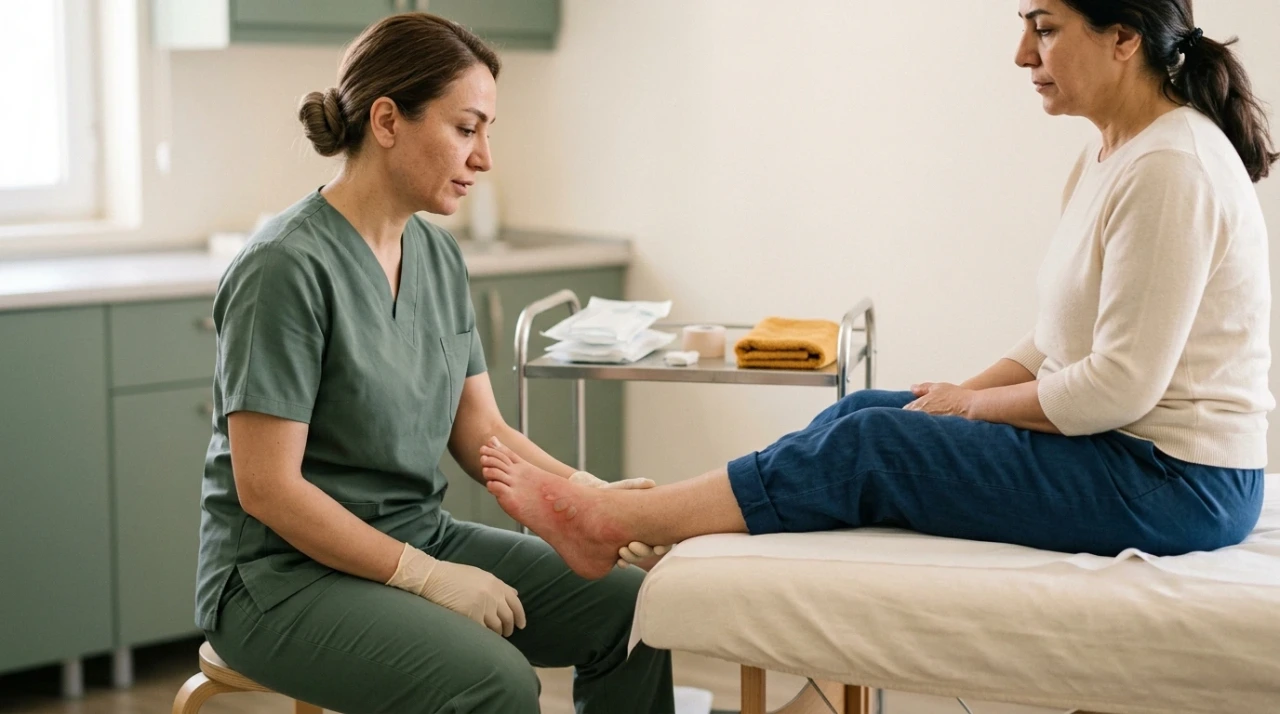
- Specialised debridement to remove dead tissue, when it is needed.
- Stage-by-stage dressings, matched to the amount of discharge and the stage of healing.
- Session-by-session follow-up with photographs of progress, the same record you see in our gallery.
- Attention to blood sugar control and to taking pressure off the wound, alongside the wound itself.
- Home wound care for patients who find travel difficult.
A real case from our gallery
A patient with diabetes and severe neuropathy saw the burn on their foot several hours after contact with heat. At the first session we assessed the depth of damage and signs of infection, and we have followed the healing regularly since. This patient's treatment is ongoing, and the gallery holds photographs from three sessions: a diabetic foot burn in severe neuropathy. The full collection is in our burn gallery.
Results differ from person to person, and one case cannot be used to judge another wound.
Prevention at home
Preventing this burn is simple and within your reach. The principle is the usual one for a diabetic foot: where the foot cannot feel, your eyes and hands take over.
- Test water temperature with your elbow or a thermometer, never with the foot.
- Do not soak the feet in hot water, even to bring back feeling.
- Do not put a hot-water bottle or electric blanket on the foot, and do not sleep beside one.
- Keep your distance from heaters, radiators and the korsi, and do not stay still near them for long.
- In summer too, wear shoes and socks outside the house.
- Look at the top and sole of your feet every evening. A hand mirror, or help from someone at home, makes the sole easier to see. The habit is described in detail in daily care for the diabetic foot.
Frequently asked questions
Why does a diabetic foot burn without pain?
Neuropathy reduces the foot's sense of pain and heat. The foot is not pulled away quickly, so contact with the heat lasts longer. Patients usually find out only when they see a blister or a change in colour.
Should I rinse a diabetic foot burn with cold water?
With cool running water, not ice water. The usual duration is about twenty minutes. Then cover the area with a clean dressing and have it seen the same day. Rinsing with water does not replace an examination.
Should I pop the blister?
No. An intact blister works like a natural covering that protects the wound beneath it. Popping it opens a way in for germs, and on a diabetic foot that risk is higher. If it breaks by itself, rinse it gently, cover it and have it seen.
Which foot burns must be seen by a doctor?
In a person with diabetes, every burn on the foot. If it comes with a blister, a change in skin colour, spreading redness, discharge or fever, the same day.
Can a foot burn in diabetes lead to amputation?
Amputation is not the inevitable outcome of a foot burn. The risk rises when the burn is seen late or becomes infected. A fuller answer is in diabetic foot ulcers and amputation.
How do I prevent foot burns in neuropathy?
Test water with your elbow, keep the numb foot off heat sources, wear shoes outside the house and look at your feet every evening. The full list is in the prevention section of this article.
Free consultation
If your foot has been burned, or a parent or diabetic family member has found something like this, call us. The specialists at Dialine, in Pasdaran, Tehran, will tell you whether you need to come in the same day. Read about specialised burn wound treatment, and you can also ask about diabetic neuropathy. Dialine offers treatment in four areas: diabetes, chronic wounds, scars and neuropathy.
This article is not a substitute for an in-person medical consultation.