A burn on the hand or face is seen at once, and for that reason it is quickly written off as small. But these two areas are not like the thigh or the shin: the hand is working every moment, the face is in front of everyone, and the eyes and the airway are right there too.
The short answer: cool the burn now with cool running water for about twenty minutes, and take off rings and watches before swelling starts. If a blister forms, if the burn is larger than your own palm, or if you see any of the emergency signs below, a doctor needs to see it the same day. Do not pop a blister, and do not use ice.
The first twenty minutes on the hand and face
The basics are in burns of the first, second and third degree: cool running water for about twenty minutes, not ice. On the hand and face, a few things are added to that.
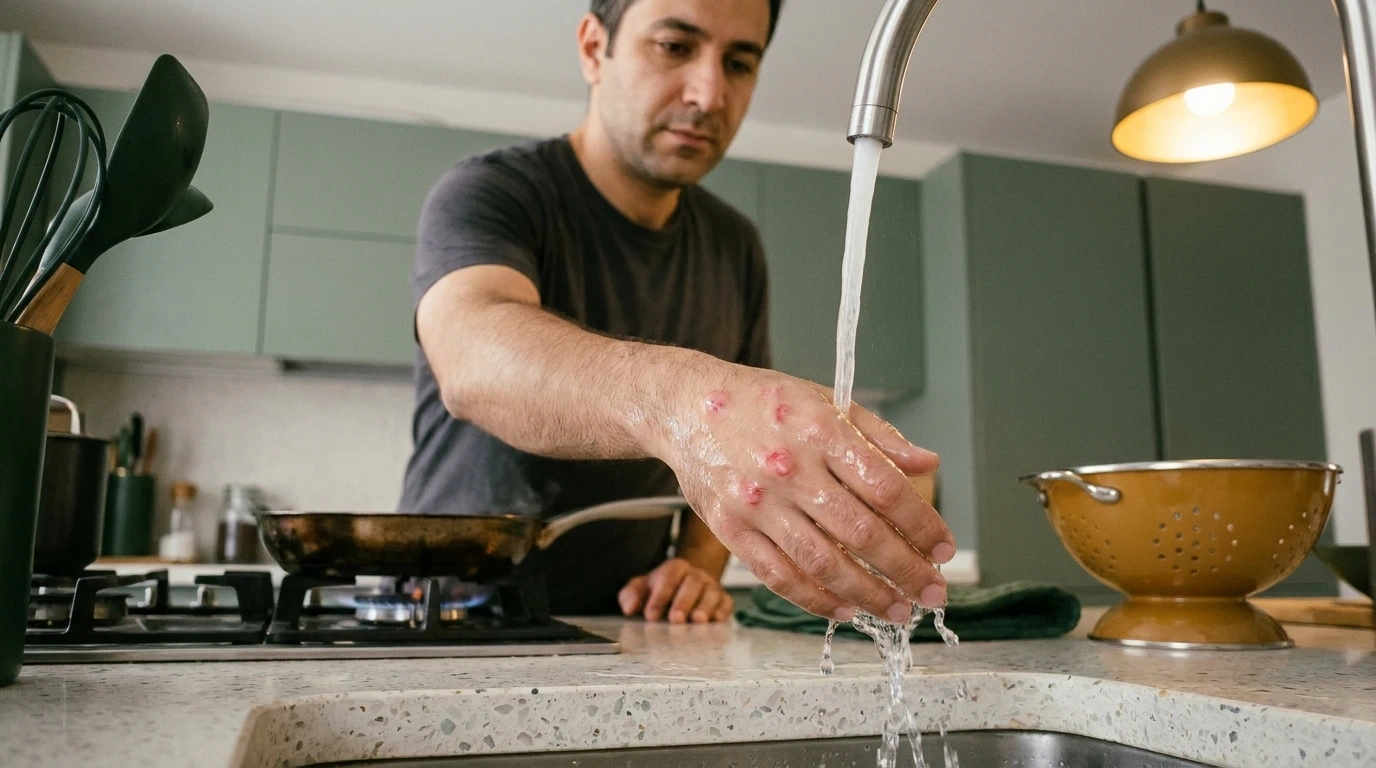
On the hand
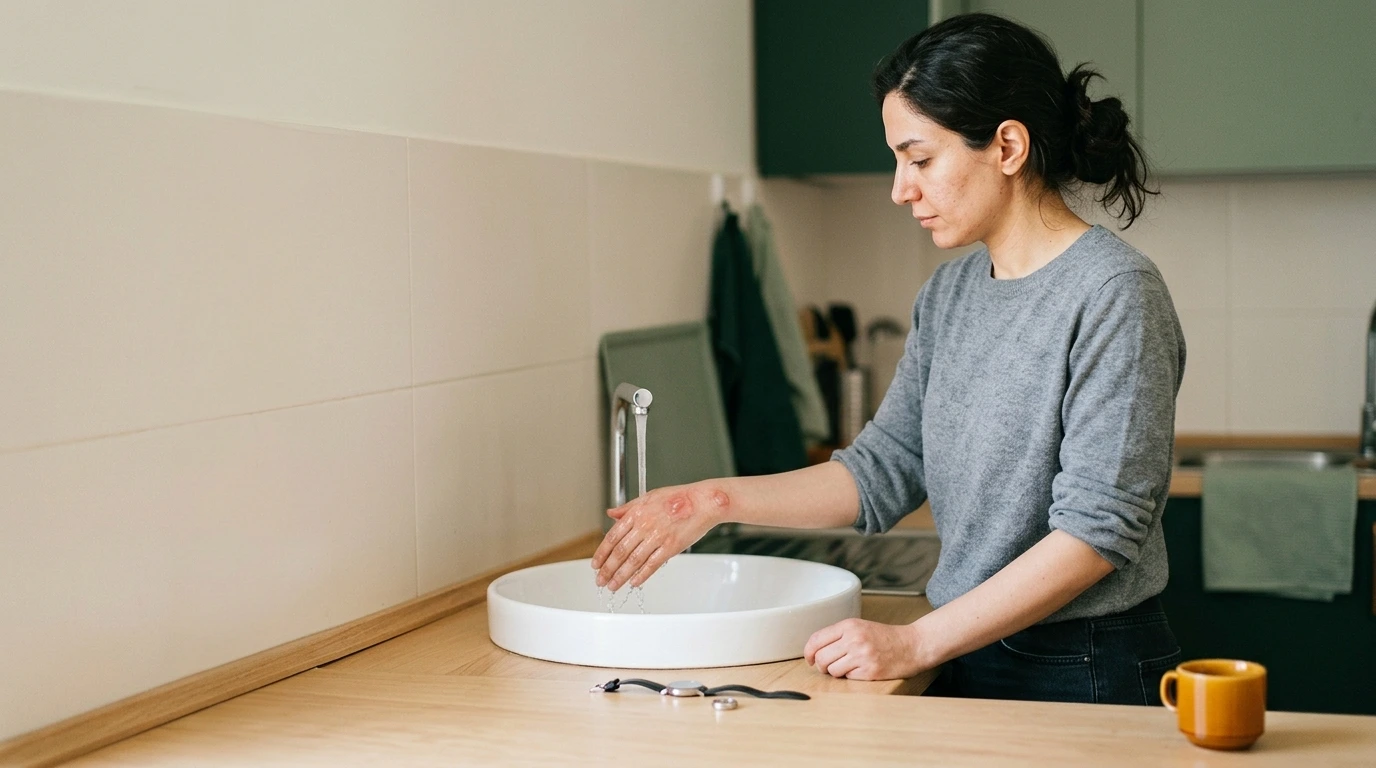
- Take off rings, watches and bracelets early. Swelling starts within minutes, and afterwards they are hard and painful to remove.
- Hold the hand under gently running water for the full twenty minutes.
- After cooling, keep the hand above the level of the heart to reduce swelling.
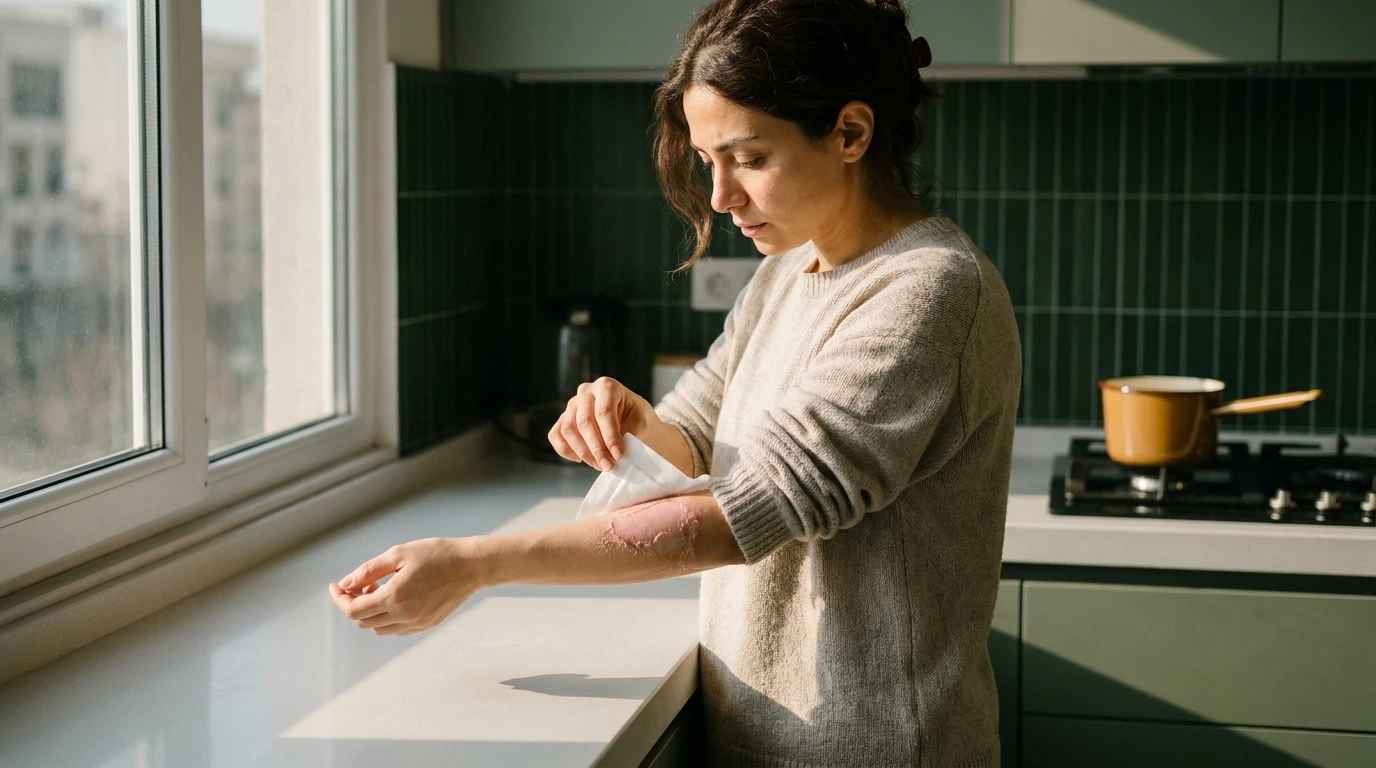
- Cover the burn loosely with clean, non-stick gauze or cloth.
On the face
- Hold the face under a low-pressure shower of cool water, or lay a clean, wet cloth on it and keep the cloth cool.
- Do not use ice, and do not run water hard over the eyes.
- Put no makeup, cream or any other substance on the burn. A doctor judges depth from how the skin looks, and some substances change that look.
Why the hand and face are different
The hand moves in everything you do: gripping, writing, washing. A burn on a finger, the palm or the wrist needs to be taken more seriously: where the skin is stretched over a joint, even a healed wound can limit movement. That is why follow-up for a hand burn does not stop at the point where the wound closes.
The skin of the face is thin, and the eyelids and lips are delicate. Everyone sees the face, so the colour and mark a burn leaves weigh more on the patient than they would elsewhere.
Both areas are close to the eyes, or to the mouth and nose, and some warning signs only make sense there. Burn referral guidelines say the same thing: a blistered burn on the face, hands or joints should be seen by a doctor.
Steam, hot water and wax: three common causes
These three happen often at home and in salons, and each has its own point to remember. Burns from an iron, a motorcycle exhaust and hot oil are covered separately in iron, exhaust and hot oil burns.
Steam and hot water
Boiling water usually causes a second-degree burn, but how deep it goes depends on the temperature and how long the contact lasted. A steam burn is also often deeper than it looks at first glance. One example is a patient whose wrist was burned by steam: first- and second-degree steam burn on the wrist. By the third session the surface had dried and only a faint mark of the burn was left.
Wax and hot wax
Hot wax sticks to the skin and keeps its heat on the same spot. So cool it first: pour cool water over the wax and the skin until the wax has cooled.
Do not force stuck wax off, because pulling it may take skin with it. If the burn is on the face, around the eyes or on the lips, or if it has blistered, a doctor needs to see it the same day. Until then, do not put cream, gel or oil on it either.
Signs that mean an emergency right now
With these signs, go straight to a hospital emergency department or call 115 (Iran's emergency number). Do not wait, and do not come to a clinic:
- A burn of the eyelid or around the eye, or an eye that hurts, stings or sees blurrily.
- A burn around the mouth and nose, with singed nose hairs, a cough or a hoarse voice, especially if you have breathed in hot steam or smoke.
- A white, waxy or leathery surface, especially if it does not hurt. A painless burn should not be taken as a good sign.
- A burn that goes all the way around a finger, the hand or the wrist.
- A large burn, or a burn from electricity or chemicals.
- Any burn in an infant or small child.
Outside this list too, a blister on the hand or face should be seen by a doctor the same day. Do not wait to find out whether it heals by itself. A fuller list is in burns of the first, second and third degree.
How we treat hand and face burns at Dialine
At the first visit, before anything else, we assess how deep the burn goes, because that depth sets the course of treatment. Then, depending on the case:
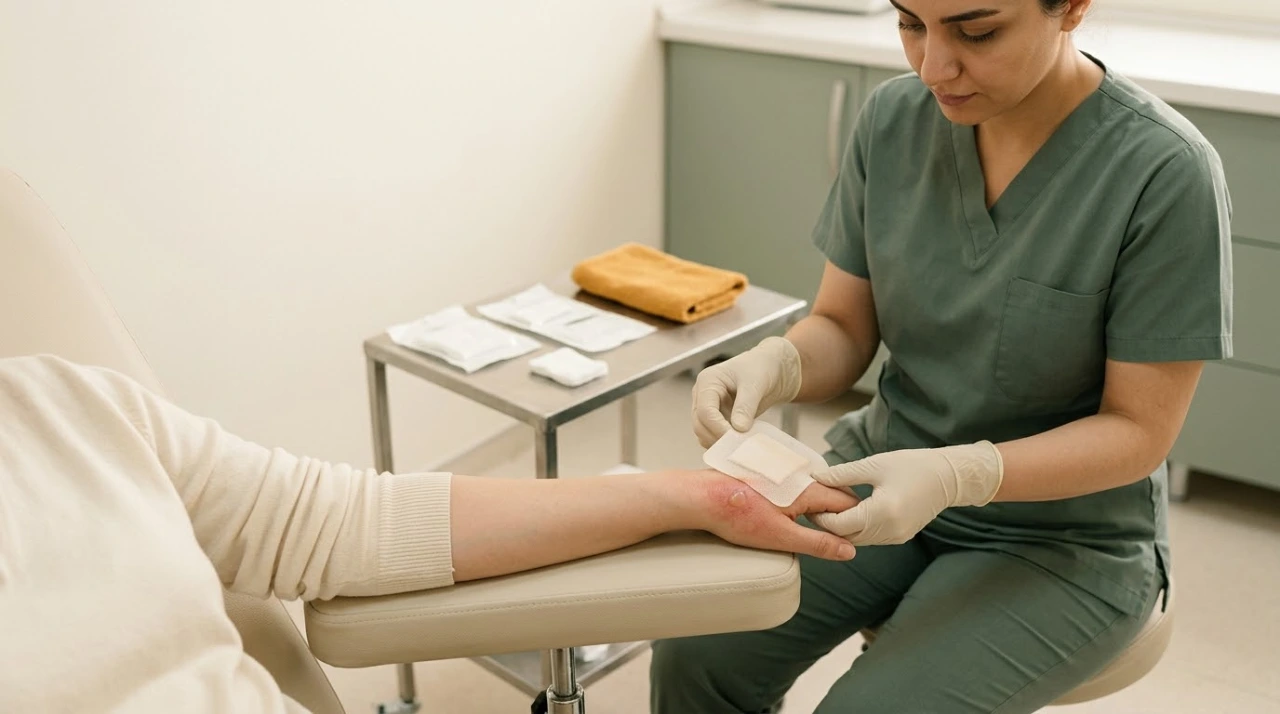
- Specialised debridement to remove dead tissue, when it is needed.
- Modern dressings, changed at each stage according to the discharge and how healing is progressing.
- Session-by-session follow-up: at each visit we reassess the wound and photograph it. Those photographs together make up the gallery.
- If travel is hard for you, home wound care is available too.
- Scar care once the wound has closed.
The full description of this service is on the page for specialised burn wound treatment. Our clinic is in Pasdaran, Tehran.
A real case from our gallery
This patient came to the clinic with first- and second-degree burns on the face, the back of the hand and the lower leg. The gallery photographs run from the first session to the end of the course. In the early sessions the burned surface is open, then a dark scab settles on it, and when that comes away fresh red tissue appears; in the final frames the skin has closed and matches its surroundings. The face, the back of the hand and the lower leg each have their own section: first- and second-degree burns of the face, hand and lower leg. You can see other patients' photographs in the burn gallery.
Results differ from person to person, and one case cannot be used to judge another burn.
After the wound has closed: skin colour and sun
New skin is thin and sensitive, and its colour may differ from the surrounding skin for a while. To make the mark fade, the most important thing is good care in the first weeks, and after that, keeping the new skin out of the sun.
Until we have seen the skin, we cannot say whether a mark will remain. If a mark or a change in colour worries you after the wound has closed, scar treatment is the next step, not something done at the same time as wound treatment.
Frequently asked questions
How should I cool a burn on the face?
With cool, gentle water: a low-pressure shower, or a clean, wet cloth that stays cool, for about twenty minutes. Do not use ice, and do not run water hard over the eyes. If the burn has reached the eyelid or the area around the eye, or the eye hurts and sees blurrily, go to an emergency department at once.
I have been burned by wax or hot wax. What should I do?
First cool the wax and the skin with cool water. Do not force stuck wax off, and do not put anything on the area. If it is on the face, around the eyes or on the lips, or if it has blistered, have a doctor see it the same day.
Can I dress a hand burn from boiling water or steam at home?
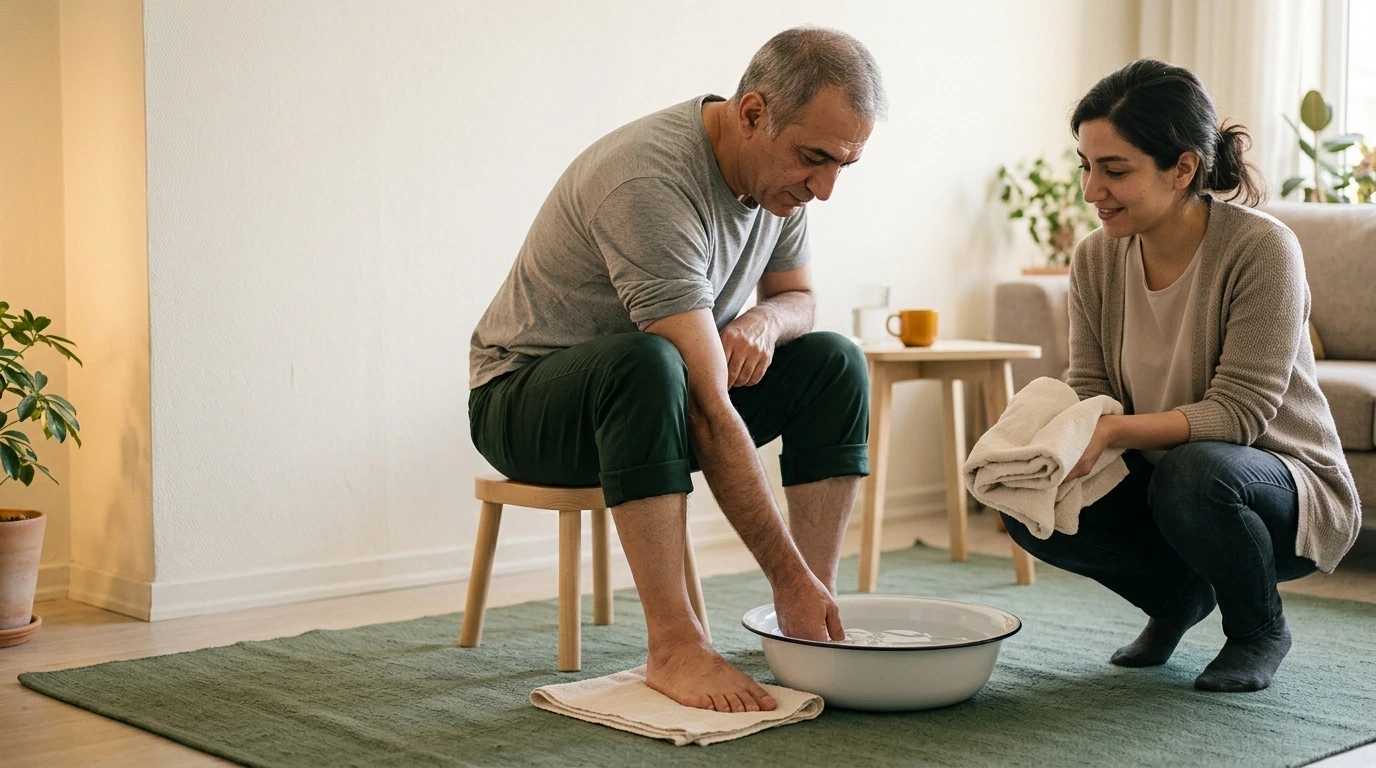
If it is small, has no blister and is no bigger than your own palm, you can cover it loosely with a clean, non-stick dressing after cooling it. A blister, a burn on a finger, the palm or the wrist, and any burn larger than a palm should be seen by a doctor. If the person burned has diabetes, the rule is different: read foot burns in diabetes.
Which signs mean an emergency right now?
A burn of the eyelid or around the eye, a burn around the mouth and nose with a cough or hoarse voice, a white or leathery surface, a burn that goes all the way around a finger or the hand, and any burn in an infant or small child. The full list is in the section "Signs that mean an emergency right now" in this article.
Will a burn on the face leave a mark?
The mark depends on depth: a first-degree burn usually heals without one, a second-degree burn sometimes leaves a change in colour or a mark, and a third-degree burn usually leaves a permanent one. What helps most in fading a mark is good care in the first weeks and keeping the new skin out of the sun.
How long does a hand burn take to heal?
There is no fixed number. Until we have seen the burn, no number can be given; any number is a guess. Depth, size, location and the patient's general health set the course.
A child has burned their hand with hot water. What should I do?
Any burn in an infant or small child needs a hospital emergency department. Until you arrive, cool the burn with cool running water, not ice, and keep the child warm.
Free consultation
If you have a burn on your hand or face and are not sure how serious it is, call us. The specialists at Dialine, in Pasdaran, Tehran, will tell you whether you need to come in the same day. But do not leave the emergency signs to a phone call; go straight to an emergency department. Dialine works in four areas: diabetes, chronic wounds, scars and neuropathy.
This article is not a substitute for an in-person medical consultation.