
A fresh burn tends to look either worse than it is or calmer than it should. And almost everyone does the same thing first: they search for photographs of burns and hold their own up against them.
The short answer is that three signs will get you most of the way to the degree: how the skin looks, whether a blister has formed, and how much it hurts. Those three are usually enough to decide whether you need to be seen. But one thing has to be said at the outset, because the rest of this article rests on it: in the first hours the true depth of a burn has not yet declared itself, and it cannot be judged from a photograph. A picture can tell you to worry. It cannot tell you not to.
The following need a hospital emergency department within the first hour, not a clinic and not an internet search: extensive burns; burns to the face, hands, feet, major joints or genitals; a burn that encircles a limb or the chest; electrical and chemical burns; inhalation of smoke or hot steam; and any burn in an infant or small child. A white, leathery, painless burn is also an emergency — painlessness in a burn is not good news.
The first minutes: what actually makes a difference
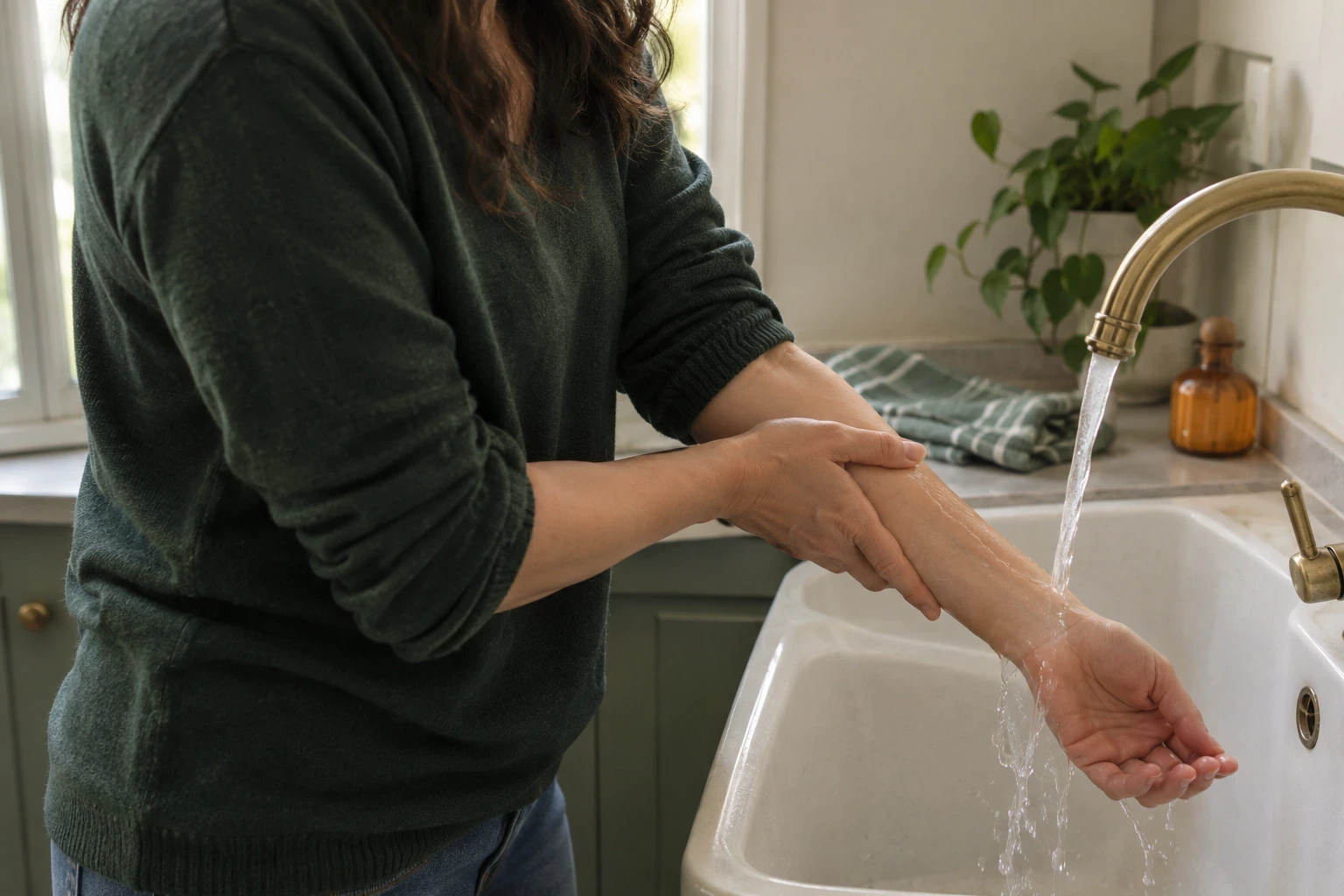
The most useful thing you can do for a fresh burn is simple and happens at home: cool it under cool running water for about twenty minutes. This is World Health Organization guidance, and the sooner it starts the more it helps. The water should be cool, not iced.
- Take off watches, rings, bracelets and tight clothing near the burn straight away. Swelling begins within minutes and they become difficult to remove afterwards.
- Do not pull away clothing that has stuck to the skin. Leave it, and show it to a doctor as it is.
- Cover the area with a clean, non-adherent dressing or cloth.
A short list of remedies common in Iranian households, each of which makes things worse: ice, which damages the skin in its own right; toothpaste; oil and butter; egg white; and deliberately bursting a blister. Put nothing else on a burn without medical advice either. Some of these substances make the examination harder, because they change the colour and surface of the skin, and that surface is exactly what a clinician reads depth from.
The degrees of a burn, and what each one looks like
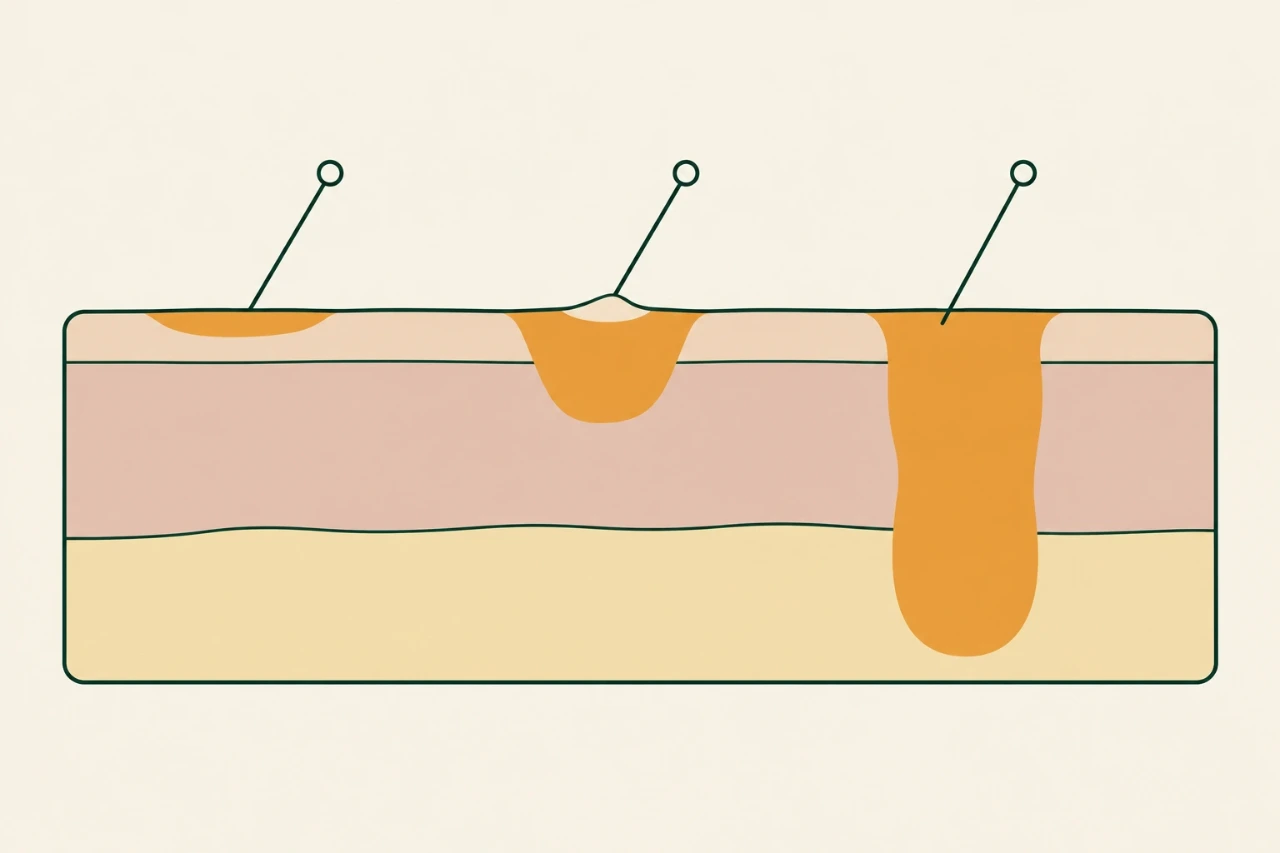
Grading a burn answers one question: how far down through the skin the injury has reached. The deeper it goes, the slower the healing and the likelier a lasting mark.
First degree: the surface layer only
The skin is red, dry and painful, with no blister. Sunburn is the familiar example. Press it with a finger and the area blanches, then flushes red again. This kind of burn usually settles within a few days and leaves no permanent mark.
Second degree: it blisters
The blister is what defines second degree. Beneath it lies a moist, pink, exquisitely tender surface, and the pain is usually severe. There are two ends to this range: the shallower it is, the pinker and more painful, and the better it heals; the deeper it goes, the paler and more mottled it becomes, and the less it hurts.
Which brings up the counter-intuitive point that misleads people most: less pain is not necessarily better news. Pain is generated by the nerve endings in the skin, and as a burn goes deeper those same endings are damaged. A deep second-degree burn needs to be seen.
Third degree and deeper: the skin no longer does its job
The skin turns white, waxy, brown or charred, and dries into something leathery. The burned area is often painless, because the nerves in the skin have been destroyed. A burn like this does not heal on its own and its treatment is specialist work.
Real photographs of burn treatment at Dialine
If you are looking for images to compare against, a complete course of treatment tells you more than scattered pictures from around the internet. We publish our own patients' photographs, session by session:
- A first- and second-degree steam burn to the wrist: from the blistering and inflammation of the first session through to a dry surface and new skin forming.
- A foot burn in a diabetic patient with severe neuropathy: an example of exactly what the next section describes.
The full set is in the burn gallery, and it is updated with each treatment session.
When a burn needs to be seen
Beyond the emergencies listed above, these signs mean home care is no longer enough:
- A burn larger than the patient's own palm.
- Any blister on a hand, foot, face or joint.
- A burn that looks pale or mottled, or that hurts surprisingly little.
- Pain that does not ease over the following days, or that increases.
- A burn in someone with diabetes, an older patient, or anyone whose immune system is weakened.
- A burn that has not grown smaller after several days.
On healing time, let us be honest: there is no fixed number, and any answer that commits to one before seeing the burn is guessing. The real depth, the size, the site and the patient's general health set the course.
Blisters: burst them or not?
No. An intact blister is a natural sterile covering, and the fluid beneath it protects the raw surface from drying out and from contamination. Bursting it opens a route for bacteria.
If a blister tears on its own, wash it with mild soap and water and cover it. Large or tense blisters, and blisters over a joint or on the palm or sole, are a decision for a clinician: controlled drainage is sometimes appropriate, and that is a different thing from bursting one at home.
Why a foot burn is different in diabetes
For our patients this is the most important section of the article. In diabetic peripheral neuropathy the foot loses much of its sense of pain and temperature, and the consequence is simple and serious: the foot burns without its owner noticing.
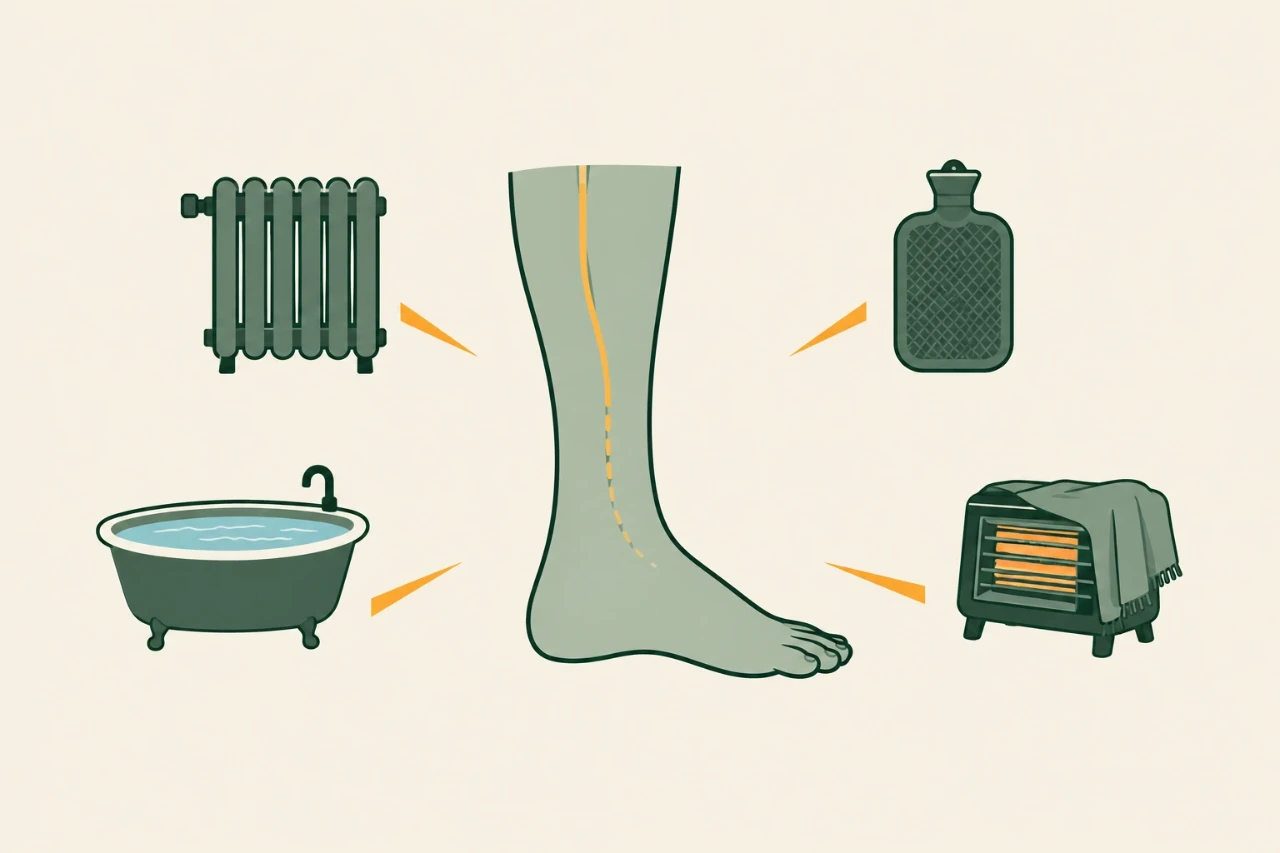
We see the same routes into it again and again at the clinic. Bath water never tested by hand; heaters, radiators and the korsi; hot courtyard paving in summer; hot water bottles; standing too close to a heat source while cooking. The patient finds out hours later, when they see a blister or a change in colour.
Three things separate this from an ordinary burn. It is found late, so the injury has had time to advance. Healing runs slower in diabetes, particularly where blood sugar is not well controlled. And the risk of infection is higher, while infection in a diabetic foot moves faster.
So our advice to anyone with diabetes is unambiguous: every burn on the foot, however small, should be looked at. Preventing it is straightforward: test water temperature with your elbow or a thermometer rather than your foot, avoid hot water bottles and direct heating of the feet, and check your feet every night. That nightly habit is set out in detail in daily diabetic foot care.
Signs of infection
Infection usually declares itself a few days in rather than on the first day. These signs mean you should be seen the same day:
- Redness spreading outward from the edge of the burn, wider each day.
- Increasing warmth and swelling around the area.
- Purulent discharge or an unpleasant smell.
- Fever or chills.
- Pain that has increased rather than eased.
An infected burn sometimes needs a course of antibiotics, but that decision belongs to a clinician and is made after seeing the wound — not from a description over the phone, and not from a photograph.
How we treat burns at Dialine
What we do first, before anything else, is assess the depth properly, because that single judgement sets the course of everything that follows. After that, depending on the situation:
- Specialist debridement to remove dead tissue where it is needed.
- Staged, modern dressings matched to the level of exudate and the stage of healing.
- Session-by-session follow-up with photographic records of progress, which is what you see in the gallery.
- Wound care at home for patients who find travelling difficult.
- For a diabetic foot burn, wound treatment runs alongside attention to blood sugar control and the condition of the foot.
There is more detail on the burn wound treatment page. If your concern is a lasting mark, scar treatment is the stage after the wound has closed, not something done alongside it.
The clinic is in Pasdaran, Tehran, and consultation is available in person. If you are contacting us from outside Iran, photographs are useful for following a course of treatment already under way, but not for a first assessment.
Frequently asked questions
What degree is my burn?
Red and dry with no blister is most likely first degree. Blistered, with a pink and painful surface beneath, is second degree. White or leathery and painless is deeper, and an emergency. This is enough to decide whether to seek care; it does not replace an examination.
What degree is a boiling-water burn?
Usually second degree, though the depth depends on the temperature of the water and how long it was in contact. Steam burns are often deeper than they first appear.
Why doesn't my burn hurt?
That is not a good sign. Either the burn is deep enough to have damaged the nerves, or — in someone with diabetes — neuropathy is masking it. Both need examining.
Will my burn leave a scar?
First-degree burns usually heal without a trace. Second degree may leave discolouration or a mark, and third degree usually leaves a permanent one. Careful treatment in the early weeks, and keeping new skin out of the sun, does the most to fade it.
Can I send a photo so you can tell me how serious it is?
Photographs are useful for following the course of treatment, but not sufficient for a first diagnosis. The depth of a burn cannot be established by looking at an image, and we do not diagnose on that basis.
How is a diabetic foot burn different?
It is noticed later, heals more slowly, and carries a higher risk of infection. For someone with diabetes, no burn on the foot counts as minor.
Free consultation
If you have a burn and are unsure how serious it is, contact us. We say this particularly to anyone with diabetes, and to anyone whose burn is on the foot. The Dialine team in Pasdaran, Tehran will advise you on whether you need to be seen.
This article is not a substitute for an in-person medical consultation.